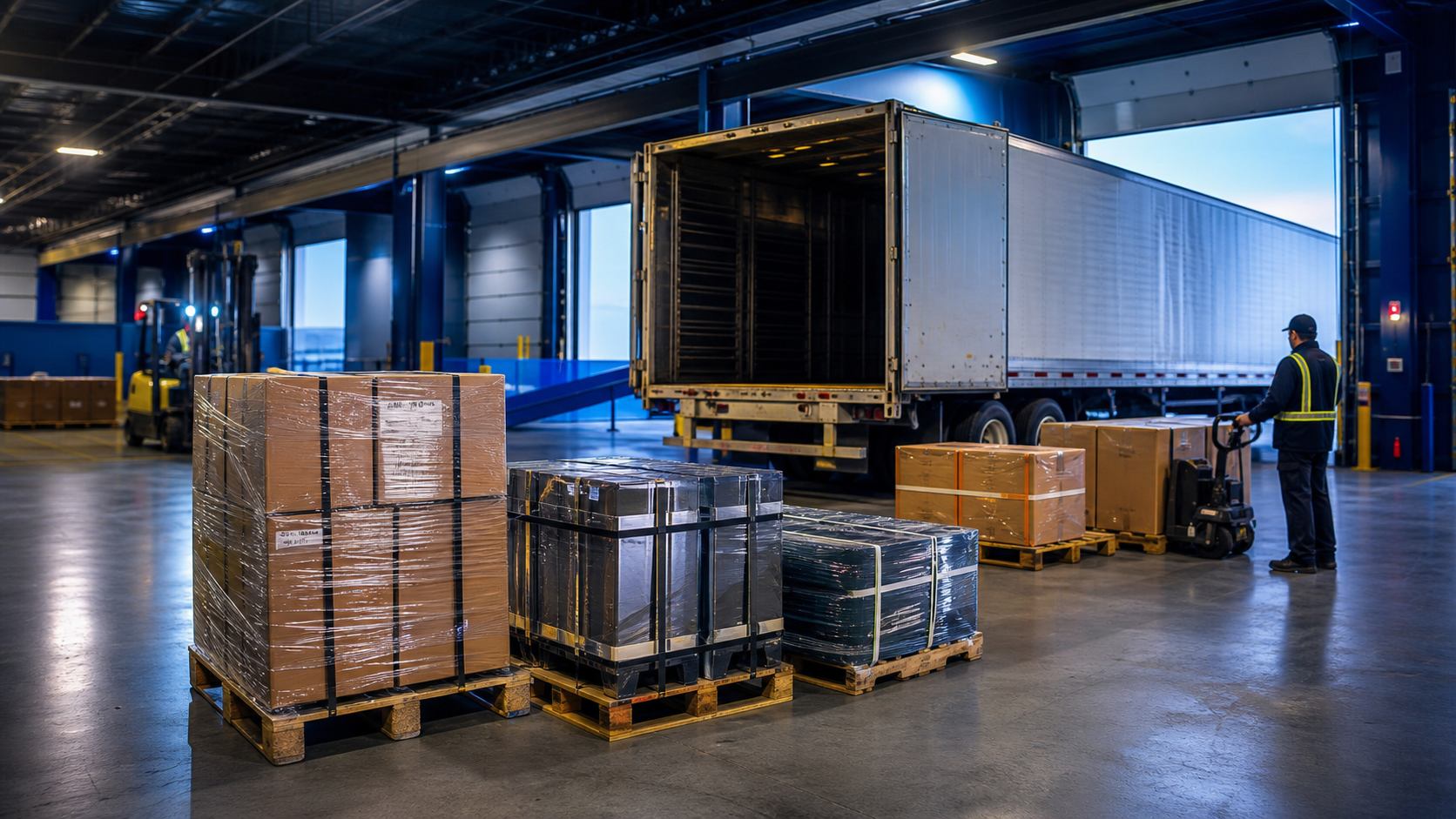
How to Package a Pallet for LTL Shipping
Prepare an LTL pallet step by step: choose a sound pallet, stack without overhang, protect, wrap, band, label, measure, and document it.
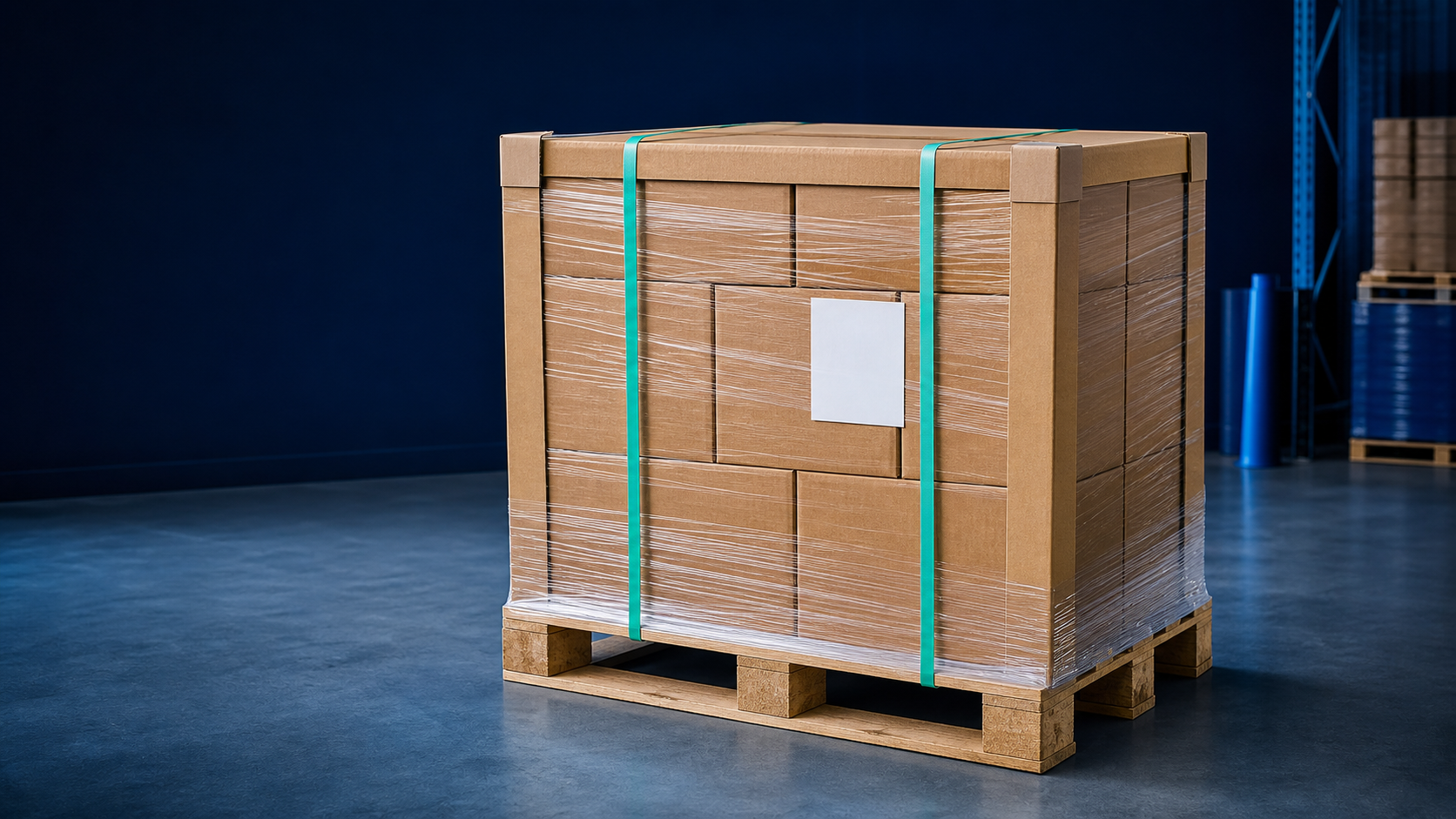
To package a pallet for LTL shipping, start with a sound pallet, keep every item inside its edges, build a stable load, protect exposed surfaces, secure the freight to the pallet, and measure the finished handling unit. The pallet and its contents should behave as one unit when moved by a forklift or pallet jack.
Packaging requirements vary by commodity and carrier. Use this guide as a practical baseline, then check the rules attached to your selected carrier and any product-specific requirements.
What materials do you need?
Gather the materials before building the load:
- A sturdy, undamaged pallet sized for the freight
- Shipping cartons or a crate appropriate for the commodity
- Interior cushioning or blocking where movement is possible
- Corrugated sheets or a protective top cap
- Corner and edge protectors
- Quality stretch film
- Approved plastic or metal strapping and the correct tensioning tools
- Labels and document pouches
- A scale, tape measure, and camera
The FedEx freight packaging recommendations call for a sturdy four-way-entry pallet, no freight overhang, corner or edge boards, and freight secured to the pallet. Those are useful fundamentals even when another carrier handles the shipment.
How do you choose the right pallet?
Use a pallet that supports the entire load without cracked boards, missing deck boards, exposed fasteners, or damaged blocks and stringers. The base must be compatible with normal freight-handling equipment.
Match the pallet footprint to the product. A pallet that is too small creates overhang and exposed corners. A pallet that is much larger than the load consumes unnecessary trailer space and leaves the freight more vulnerable to shifting.
Do not assume a visibly familiar pallet size is automatically acceptable. Confirm that the pallet construction and capacity fit the weight and shape of the actual shipment.
How should cartons be stacked?
Build the heaviest, strongest layer first and keep the weight centered. Align cartons so the load stays square, with no boxes extending beyond the pallet deck.
For cartons of consistent size:
- Place heavier cartons on the bottom.
- Keep each layer level and fully supported.
- Use an interlocking pattern when the carton strength and contents allow it.
- Fill large voids that would let cartons shift inward.
- Keep the top flat enough to protect and secure.
Overhang is not a harmless cosmetic issue. It exposes box edges to impact, reduces vertical support, changes the shipment dimensions, and can make the unit harder to place beside other freight. Old Dominion includes avoiding pallet overhang in its guidance on common packing mistakes.
If the product cannot be stacked into a stable carton load, use a suitable crate, frame, custom base, or other engineered packaging instead of forcing it onto a standard pallet pattern.
How do you protect the load?
Protect both the product and the package:
- Use interior cushioning, blocking, or bracing to stop movement inside cartons or crates.
- Add corner and edge boards where wrap or straps could crush packaging.
- Use a top cap to spread strap pressure and protect the upper surface.
- Cover or shield sharp projections that could puncture wrap or damage nearby freight.
- Keep product surfaces from directly contacting rough pallet boards when abrasion is possible.
Packaging should be designed for the commodity. Fragile, high-value, hazardous, liquid, temperature-sensitive, and unusually shaped freight can require specialized methods and carrier approval.
How do you stretch-wrap a pallet?
Stretch film should bind the load to the pallet, not simply circle the cartons.
- Anchor the film at the pallet base.
- Wrap the lower portion several times so the load and pallet are connected.
- Move upward with overlapping passes while maintaining consistent tension.
- Reinforce the upper layers and corners.
- Finish with the film secured so it cannot unravel in handling.
The wrap should control movement without crushing cartons. Clear film also allows handlers to see damage or movement, but opaque film may be useful for some products. Follow any visibility, labeling, or inspection rules that apply to the shipment.
Should you band the freight to the pallet?
Banding can add vertical restraint and help keep heavy loads attached to the pallet. Run the straps through or around the pallet structure as appropriate, use edge protection, and tension them evenly.
Do not place a high-tension strap directly across an unprotected carton edge. It can cut or collapse the packaging. Do not rely on loose strapping that can slip off or catch handling equipment.
The right strap material, count, orientation, and tension depend on load weight and construction. Heavy machinery and concentrated loads may need engineered blocking, bolting, or bracing rather than ordinary bands and film.
Where should labels go?
Place the shipping label on a flat, visible vertical surface. Avoid putting it across a box seam, under a strap, on the top where other freight could cover it, or on an area likely to be removed.
Remove or completely cover old shipping labels and barcodes. If the handling unit has more than one required identifier, make sure they agree with the bill of lading and booking record.
Do not use the label as a substitute for a specific commodity description in the shipping documents.
When should you weigh and measure the pallet?
Weigh and measure after packaging is finished. Include the pallet, wrap, corner boards, bands, top cap, and any overhang in the final numbers.
Measure:
- Length at the longest point
- Width at the widest point
- Height from the floor or pallet base to the highest point
- Total gross weight of the complete handling unit
Round and report dimensions according to the carrier or quote workflow. Do not reuse carton dimensions after the cartons have been built into a larger handling unit.
Final size and weight affect both trailer planning and classification. Review how LTL freight class works before entering the shipment details.
What should you document before pickup?
Take clear photos of:
- All four sides and the top of the finished pallet
- The pallet base and securing method
- The label and handling-unit count
- Tape-measure views that show the outer dimensions
- The scale reading, when safe and practical
- Any existing marks or package condition before tender
Keep the photos with the quote, bill of lading, packing list, and pickup record. This documentation helps your team verify what was tendered and can be useful if a measurement or condition question arises later.
Final pallet inspection checklist
Before the driver arrives, confirm:
- The pallet is sound and supports the full load.
- Nothing hangs over the pallet edge.
- Heavy items are low and the weight is centered.
- Contents cannot shift inside their packaging.
- Corners, edges, and exposed surfaces are protected.
- Wrap connects the load to the pallet.
- Bands or restraints are secure and do not crush the freight.
- Old labels are removed or covered.
- The current label is visible and matches the documents.
- Final dimensions and gross weight are recorded.
- Photos are saved before pickup.
If you are new to the mode, read what LTL freight is and how it moves. Once the finished pallet is measured and your pickup and delivery requirements are known, start a Shipocity quote.