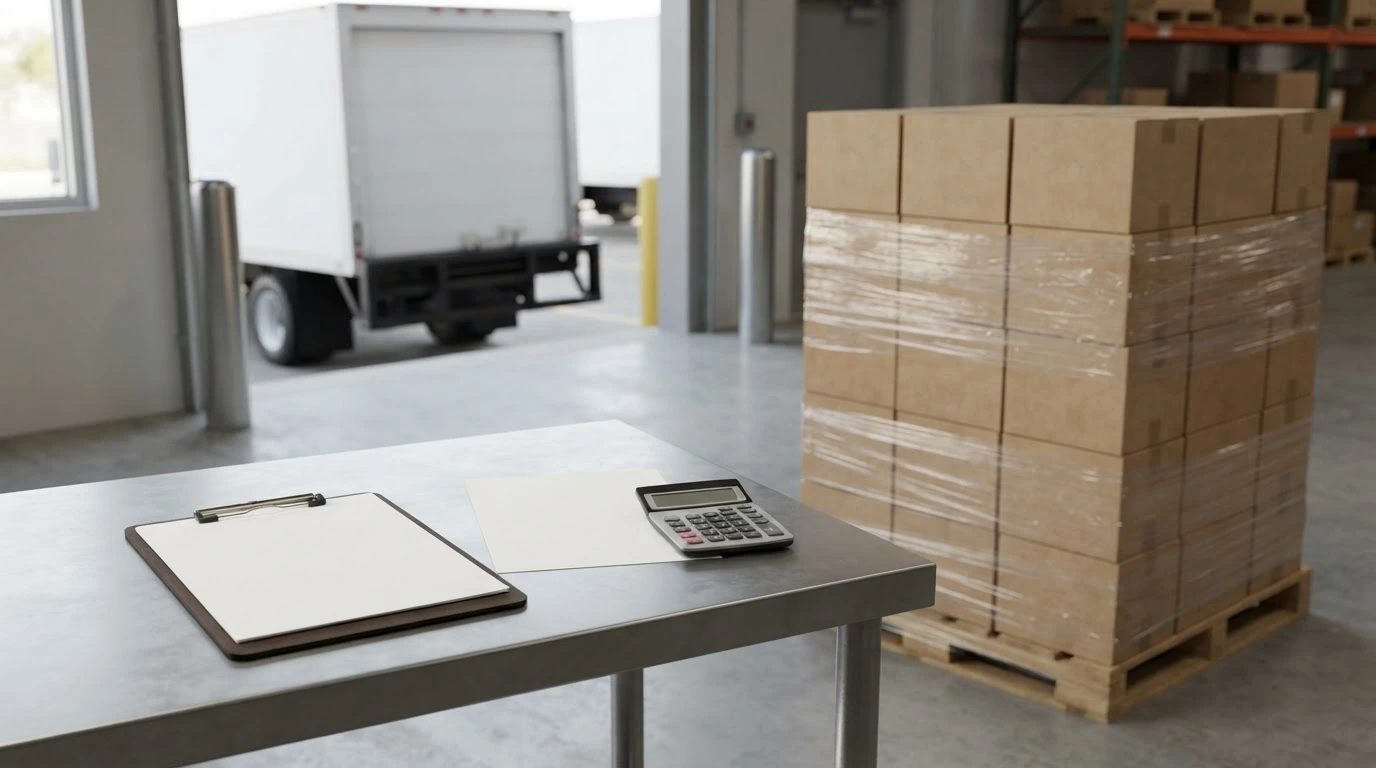
When Do You Need Liftgate Service?
Learn when freight needs liftgate service, how to check both stops, and what size, weight, access, and quote details to confirm before booking.
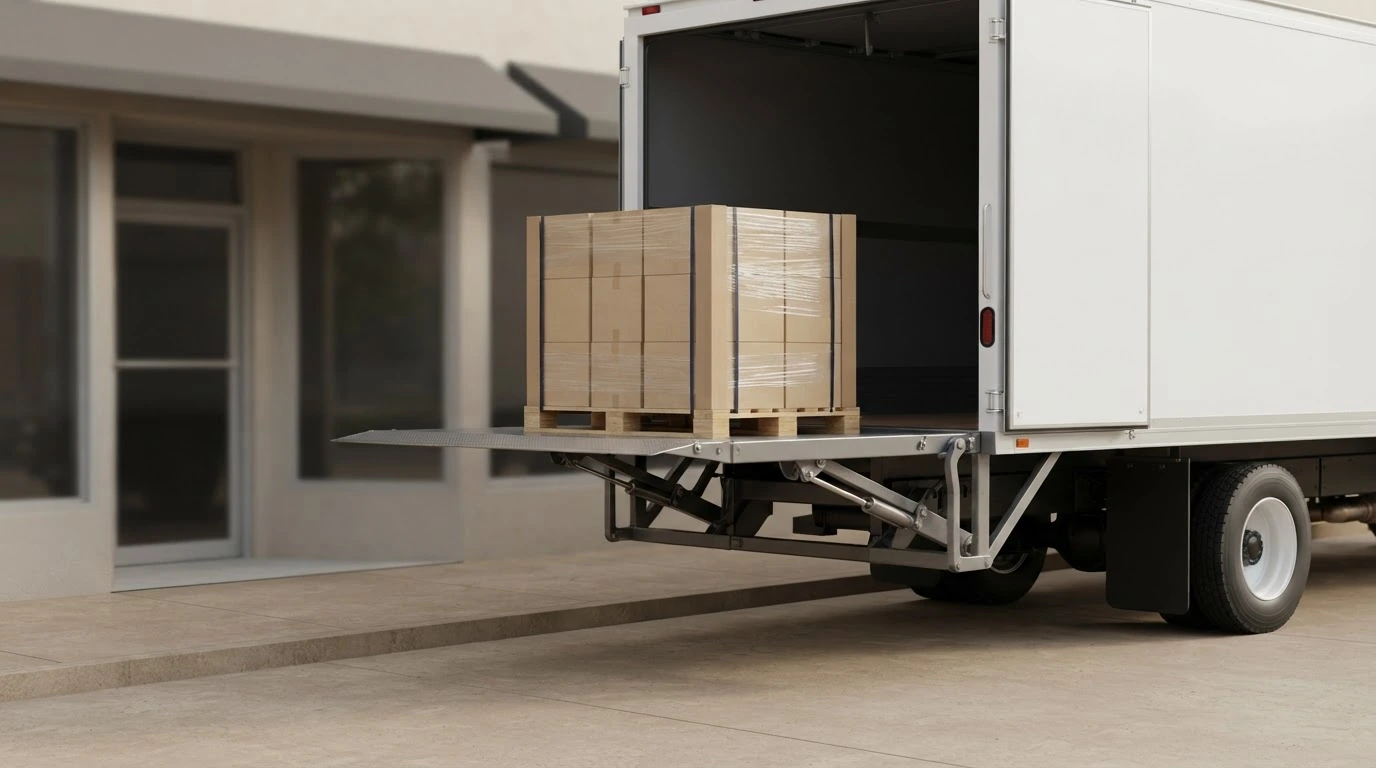
You need liftgate service when a pickup or delivery stop cannot safely transfer the finished handling unit between ground level and the trailer. In practice, that usually means the site has no usable loading dock and no suitable, authorized forklift or other equipment for the job.
Check the origin and destination separately. Liftgate at pickup, liftgate at delivery, residential service, limited-access service, and inside service are distinct quote choices. One does not automatically include another.
A quick decision table
| Stop condition | Likely quote choice | What to verify |
|---|---|---|
| Usable raised dock and clear trailer access | No liftgate is usually needed | Dock height, receiving hours, truck access |
| No dock, but an authorized forklift can safely reach and handle the freight | A liftgate may not be needed | Forklift capacity, fork access, operator availability |
| No dock and no suitable unloading equipment | Request liftgate service | Pallet size, gross weight, surface, space behind the truck |
| Dock or forklift availability is uncertain | Confirm before booking | Ask the person who will physically load or receive the freight |
| Freight must cross a threshold or move beyond the carrier’s normal unloading point | Liftgate may be needed, plus a separately defined inside or final-mile service | Exact endpoint and carrier service rules |
Carrier guidance supports this location-first test. R+L Carriers identifies origin and destination liftgate as separate services used when a loading dock is unavailable. FedEx similarly tells freight shippers that a stop without a dock calls for a liftgate request, while XPO’s public rate form lists liftgate separately for pickup and delivery.
What a liftgate actually does
A freight liftgate is a powered platform mounted at the rear of a truck. It raises a handling unit from the ground to the trailer floor at pickup or lowers it from the trailer to the ground at delivery.
That is a narrow but important job. Liftgate service does not, by itself, promise that the driver will move the freight through a doorway, down a hallway, up steps, into a particular room, or across a difficult surface. R+L’s service documentation treats inside delivery as a separate accessorial, and carrier definitions can vary. If ground-level delivery is not the actual endpoint, describe the requested endpoint before booking and confirm the appropriate service.
If you need more background on the equipment itself, read What Is Liftgate Delivery?.
Check pickup and delivery independently
A common mistake is to answer the liftgate question once for the whole shipment. The correct answer can differ at each end.
Consider a pallet moving from a warehouse to a storefront. The warehouse has an available dock, so the carrier can load at trailer height. The storefront has no dock or forklift, so the destination needs a liftgate. The quote should identify delivery liftgate, not pickup liftgate.
Reverse the equipment conditions and the decision reverses. If neither stop has a safe transfer method, both ends may need liftgate service. Carrier quote tools reinforce this distinction: R+L documents origin and destination liftgate separately, and XPO presents liftgate among both pickup and delivery services.
Do not decide from the address label alone. A commercial address can be a ground-level shop with no dock. A residence may have suitable equipment, although the carrier may still classify and price residential service separately. Ask what equipment will actually be present and usable during the service window.
Freight size and weight still matter
Requesting a liftgate does not guarantee that every pallet or crate can ride on it. The packaged handling unit must fit the assigned platform, remain stable, and stay within the carrier’s equipment limits.
This is one area where a universal online rule is misleading. FedEx’s current LTL freight packaging guidance publishes a liftgate limit of 78.75 by 30 inches and 4,000 pounds for its service. R+L publishes different limits for its equipment: a maximum of 48 by 60 inches and 2,000 pounds per pallet. Those are carrier-specific examples, not industry-wide dimensions.
Before requesting a quote, record the greatest packaged length, width, and height and the gross weight of each pallet, skid, or crate. Include the pallet and packaging in that weight. Flag long, wide, top-heavy, rolling, offset, or unusually dense freight instead of assuming a standard platform can handle it.
The handling unit should also be ready for movement. Product should be secured to a sound base, fork or pallet-jack openings should remain usable, and nothing should hang beyond the pallet where it can catch on the platform or truck.
Make sure the site can support the truck and platform
The liftgate needs more than a dockless address. The driver needs a safe place to position the vehicle and deploy the platform.
Confirm that the stop has:
- firm, reasonably level ground;
- enough clear space behind the truck;
- suitable vehicle access and overhead clearance;
- no curb, step, soft shoulder, steep grade, or obstruction that defeats the unloading plan;
- a contact who can answer access questions during the service window; and
- a workable plan to move the freight after it reaches ground level.
A pallet jack can move a compatible pallet on a suitable surface, but it does not perform the lift from trailer height. Grass, gravel, curbs, damaged pavement, and steep slopes can also prevent the pallet from moving safely after the platform is lowered. Tell the carrier about those conditions before dispatch.
Why the service should be selected during the quote
Liftgate is an accessorial: a service beyond normal dock pickup or delivery that can affect the rate and equipment plan. Old Dominion advises shippers to include required accessorials in the rate estimate and communicate needs early. Its guidance explains that a service center may need to plan for a liftgate-equipped trailer.
FedEx warns that omitting a needed liftgate can delay pickup or delivery and cause extra fees. The practical lesson is not that a particular fee or outcome is guaranteed. It is that the quote should describe the stop the carrier will actually encounter.
Selecting the service early helps the carrier price the shipment under its current tariff or agreement and plan suitable equipment. If the requirement appears only after dispatch, the carrier may need new authorization, a different vehicle, a revised rate, or a new service attempt. The result depends on that carrier’s rules and operating conditions.
For a focused discussion of pricing variables, see How Much Does Liftgate Delivery Cost?.
Worked example: warehouse to a ground-level retailer
A distributor is sending one secured pallet of boxed fixtures from a dock-equipped warehouse to a small retail shop.
The finished pallet measures 48 by 40 by 54 inches and weighs 760 pounds. The origin dock is open during the pickup window, and warehouse staff can present the pallet at the dock. No pickup liftgate is requested.
At destination, the manager confirms there is no dock, forklift, or other equipment that can reach the trailer. The parking area is level concrete with adequate room behind a straight truck. Delivery liftgate is therefore requested.
The manager wants the pallet left at the carrier’s normal ground-level delivery point. If the manager instead expected the driver to move it through the storefront, the shipper would need to describe that endpoint and confirm whether inside or another final-mile service is available. Residential or limited-access service would be evaluated separately from liftgate based on the actual location and the selected carrier’s rules.
Before booking, the shipper should still confirm the selected carrier’s platform limits. The fact that the sample pallet fits one carrier’s published equipment does not prove it fits every truck or every carrier’s service.
Information to gather before quoting
For both origin and destination, gather:
- whether a usable loading dock will be available;
- whether a suitable forklift or other authorized equipment will be present;
- whether liftgate is needed at pickup, delivery, both, or neither;
- the greatest packaged dimensions and gross weight of each handling unit;
- pallet-jack or fork access and load stability;
- the location type under the carrier’s rules, including residential or limited access;
- receiving hours, appointment or notification needs, and a working contact;
- surface, slope, clearance, gate, parking, and vehicle-access constraints; and
- the exact point where the recipient expects the freight to be left.
Also have the origin and destination ZIP codes, piece or pallet count, commodity description, freight class or NMFC information when known, and any other requested pickup or delivery services. Accurate inputs make the rate comparison more useful and reduce the chance that the carrier encounters a different shipment or stop than the one quoted.
Build the quote around the real stop conditions
Shipocity is backed by a team with more than 40 years of combined logistics experience. Through established industry relationships, the platform helps businesses compare competitive freight rates for their specific shipment.
After checking both locations and the completed freight, build a quote with the right pickup and delivery services.