How Many Pallets Can You Ship by LTL?
Most LTL carriers accept one to six pallets per shipment. Learn the typical range, weight and linear-foot thresholds, and what changes when pallets exceed LTL.
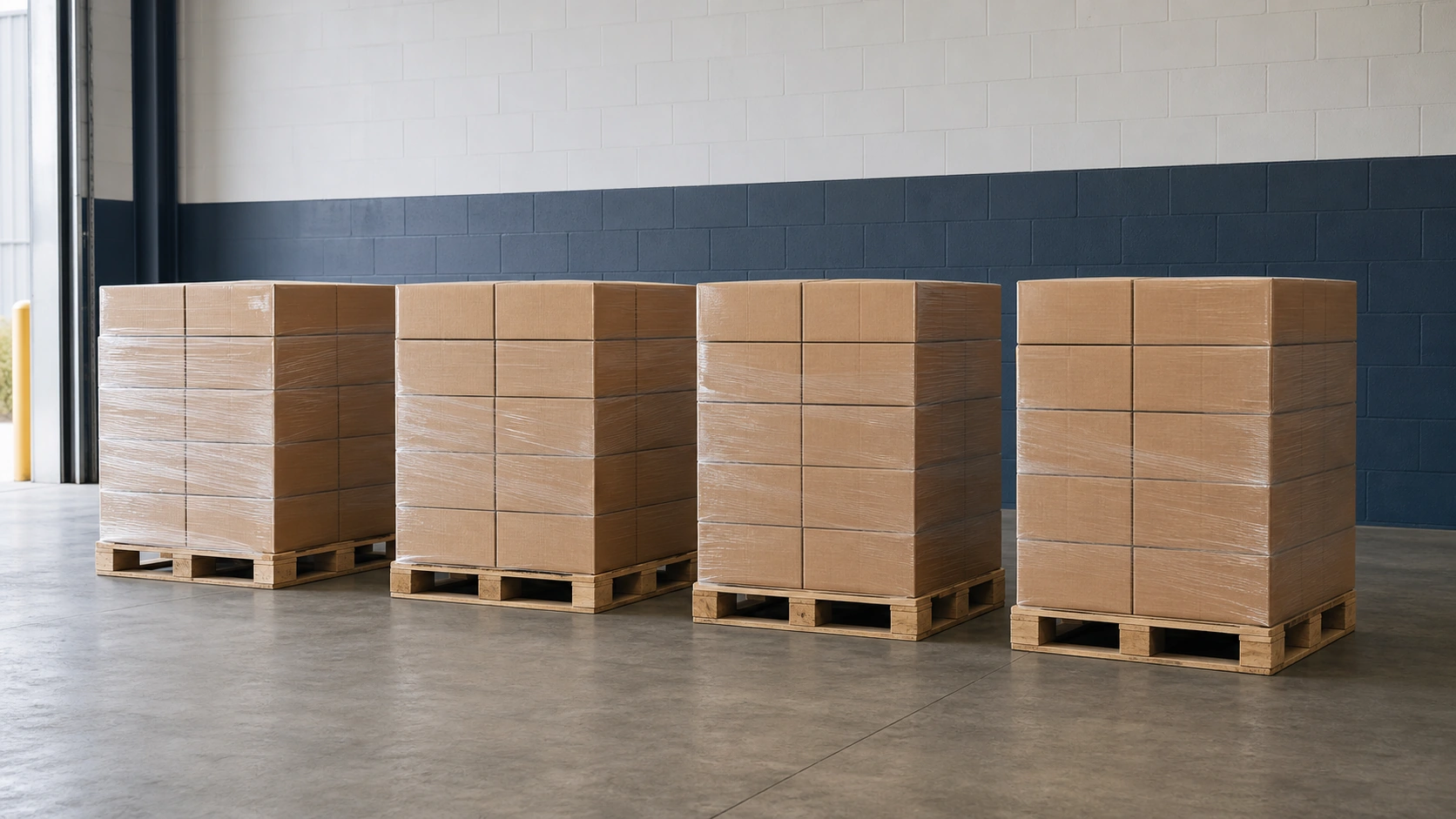
One to six pallets is the most commonly cited range for standard LTL shipping. It is not a universal maximum. Some providers publish standard LTL guidance that reaches higher when the shipment remains within their weight, dimension, and trailer-space limits, while others move larger shipments into a Volume LTL or another service.
Use pallet count as a starting signal, not the final decision. The quoting provider’s current rules and the shipment’s fully packaged weight, dimensions, linear space, commodity, stackability, lane, and service needs determine which options are available.
Why one to six pallets is the usual answer
LTL freight shares trailer capacity with shipments from other businesses. A carrier must be able to combine those shipments efficiently as freight moves through its network.
NMFTA’s LTL packaging guidance says most shipping companies use a limit of six pallets per shipment for standard LTL and notes that some companies may accept more under a volume shipment model. Freightquote also describes most LTL shipments as consisting of one to six pallets.
That makes one to six a useful general answer for planning. It does not mean a seventh pallet is automatically rejected or that every six-pallet shipment fits standard LTL. Carrier requirements and the physical shipment still control the quote.
Some providers publish a broader standard LTL range
Industry guidance is not identical. Worldwide Express describes standard LTL using a combination of pallet count, weight, and linear feet, with its general range extending beyond six pallets when the other limits are satisfied.
This difference is important. A pallet count that fits one provider’s published standard range may fall into another provider’s volume or spot-quote process. The number of pallets cannot be separated from how much weight and trailer space they represent.
When freight is near a published boundary, do not select a service solely from a general article. Request a quote with the complete shipment details and compare the options that are actually returned.
Pallet count does not tell the whole story
Two shipments with the same pallet count can use very different amounts of capacity. These factors matter alongside the count:
Packaged dimensions
The carrier needs the final length, width, and height of each pallet, including any material that overhangs the pallet deck. Oversized or irregular freight can consume more trailer space than its pallet count suggests.
Total and per-pallet weight
XPO describes most LTL shipments as occupying only part of a trailer and falling within its general LTL weight range. Other providers publish different limits. Include the total packaged weight and the weight of each pallet when available; a shipment can fit a provider’s total range while one handling unit creates a separate constraint.
Linear trailer space
Pallet orientation, footprint, overhang, and gaps affect how much trailer length the freight uses. A provider may assess shipment fit using linear space as well as pallet count.
Stackability
Freight that can safely support another pallet may use capacity differently from non-stackable freight. Never mark a pallet stackable unless its packaging and contents can actually carry the load.
Commodity and handling needs
The commodity, freight class, packaging, accessorial services, pickup and delivery locations, and any special handling constraints can affect the quoted service. Freight class is not determined by pallet count or density alone.
What happens above the common standard range
A larger pallet count does not point to one automatic replacement service. Depending on the shipment and provider, it may be appropriate to compare Volume LTL, Partial Truckload, Full Truckload, or another available option.
Roadrunner’s LTL shipping guide, for example, describes a pallet range for its spot or volume quote process. That is a provider-specific service description, not an industry-wide threshold.
The practical distinction is:
- Standard LTL is generally designed for freight that uses a smaller share of shared trailer capacity
- Volume LTL addresses larger shipments that can still move within an LTL-style network or service
- Partial Truckload and Full Truckload may use different pricing, routing, equipment, or handling arrangements
Service names and boundaries vary. Compare the actual quote terms instead of assuming two providers use the labels in exactly the same way.
Avoid these pallet-count mistakes
Assuming six is a hard industry cap
Six pallets is common guidance, not a law or universal carrier rule. Check the provider’s current service requirements.
Counting pallets without measuring them
A count cannot reveal overhang, unusual height, oversized bases, or the linear space the load occupies. Quote the fully packaged freight.
Using product weight instead of packaged weight
Include pallets, crates, wrapping, protection, and other packaging in the weight supplied for the quote.
Treating every pallet as interchangeable
Mixed dimensions, weights, stackability, or handling needs should be reported per pallet when possible. Do not average details in a way that hides an oversized or heavy unit.
Choosing a mode before comparing the actual options
General ranges are useful for preparation. They are not a substitute for provider- and lane-specific availability, rates, transit estimates, and terms.
How to prepare an accurate palletized-freight quote
Gather:
- The number of pallets and total piece count
- Packaged length, width, and height for each pallet
- Total packaged weight and per-pallet weight, when available
- Commodity description and freight class, when known
- Whether each pallet is safely stackable
- Origin and destination ZIP codes
- Pickup date and delivery requirements
- Needed services such as a liftgate, appointment, residential service, inside service, or limited access
- Any special handling constraints
Keep the details consistent when comparing quotes. If one option is based on different dimensions, weight, or services, it is not a like-for-like comparison.
For a closer look at the other common constraint, read How Much Weight Can You Ship by LTL?.
Compare the options for your pallet count
Shipocity is backed by a team with more than 40 years of combined logistics experience. Through established industry relationships, the platform helps businesses compare competitive freight rates for their specific shipment.
Enter the pallet count, fully packaged dimensions and weight, commodity, locations, and service needs to view the quote options available for your freight. Compare the displayed rates and terms, then create an account to continue with the option that fits.
Price this pallet or freight shipment