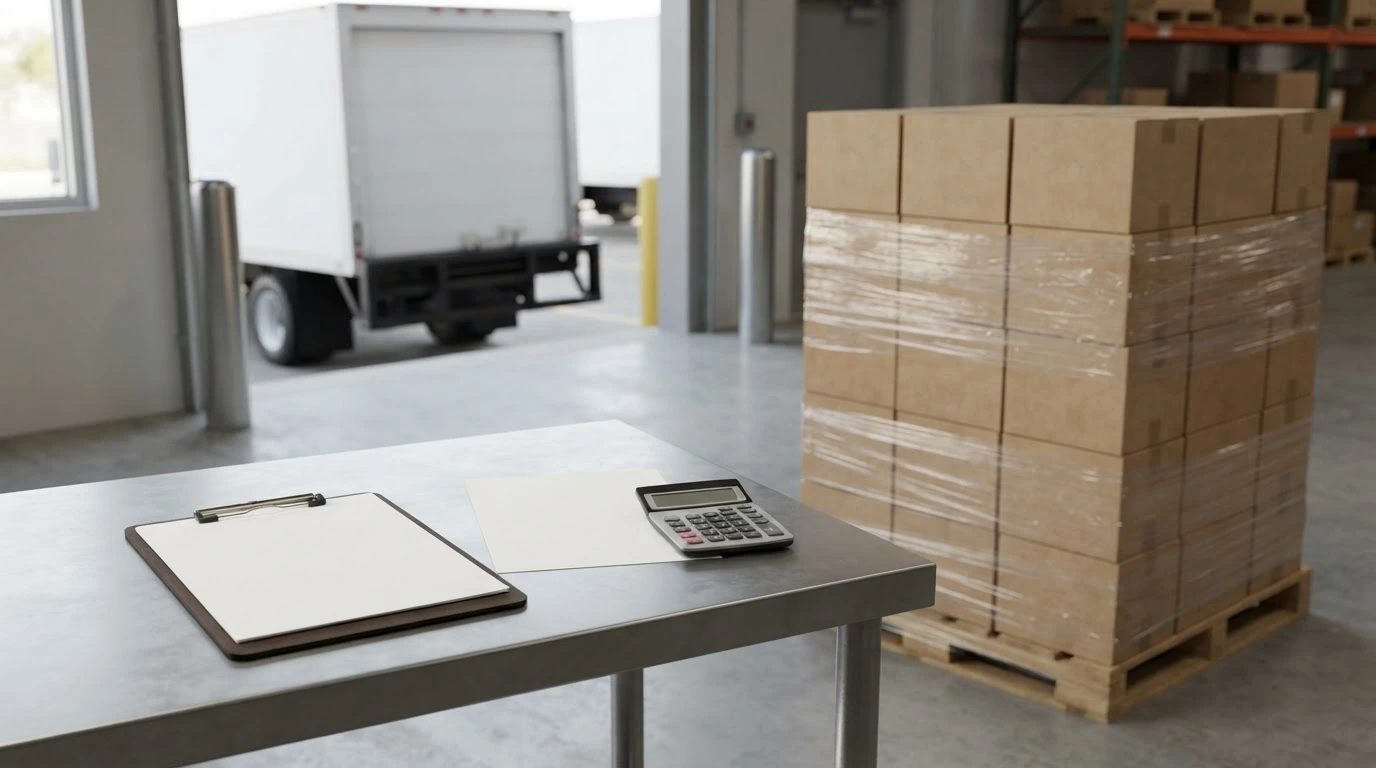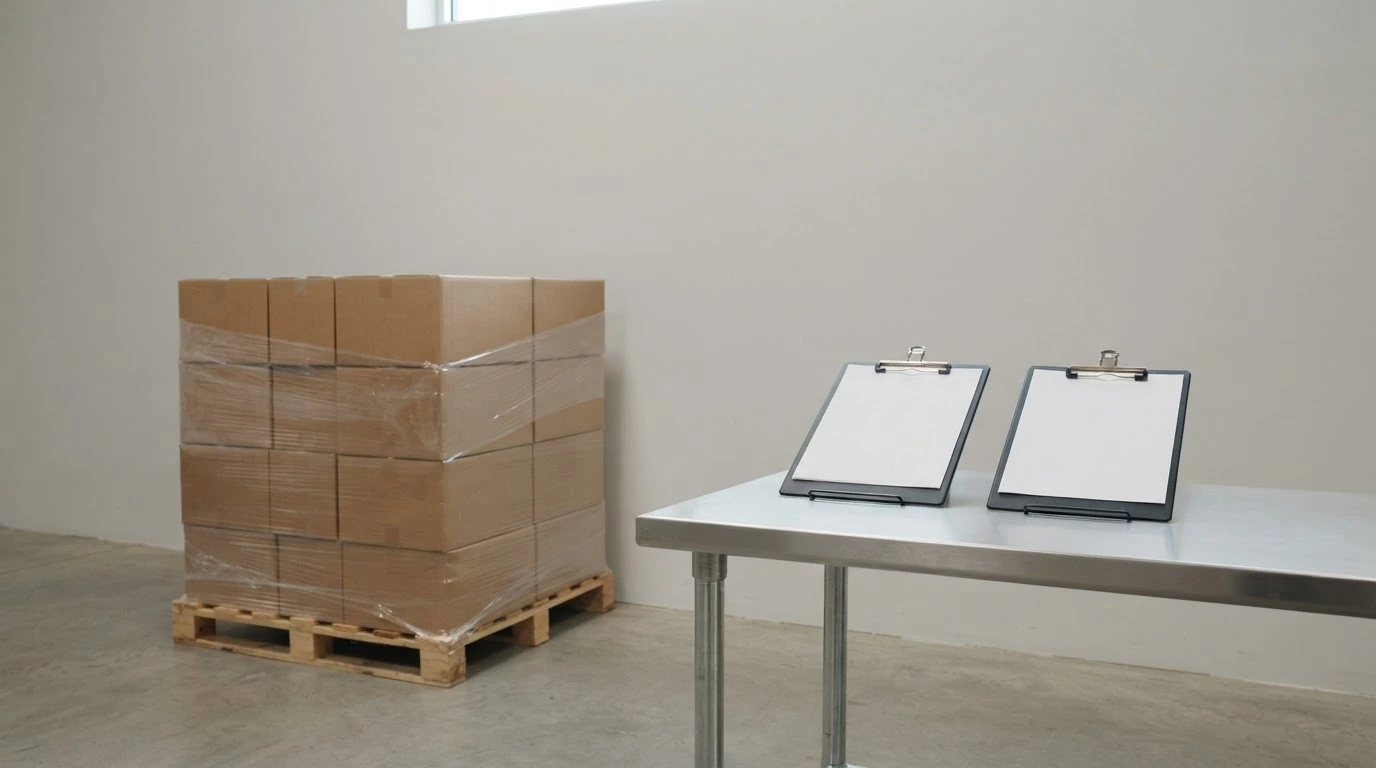
Why Pallet Overhang Causes Damage and Reclassification
Pallet overhang is treated as a packaging defect under NMFTA rules. Here's why it weakens freight, raises damage risk, and can change the billable freight class.
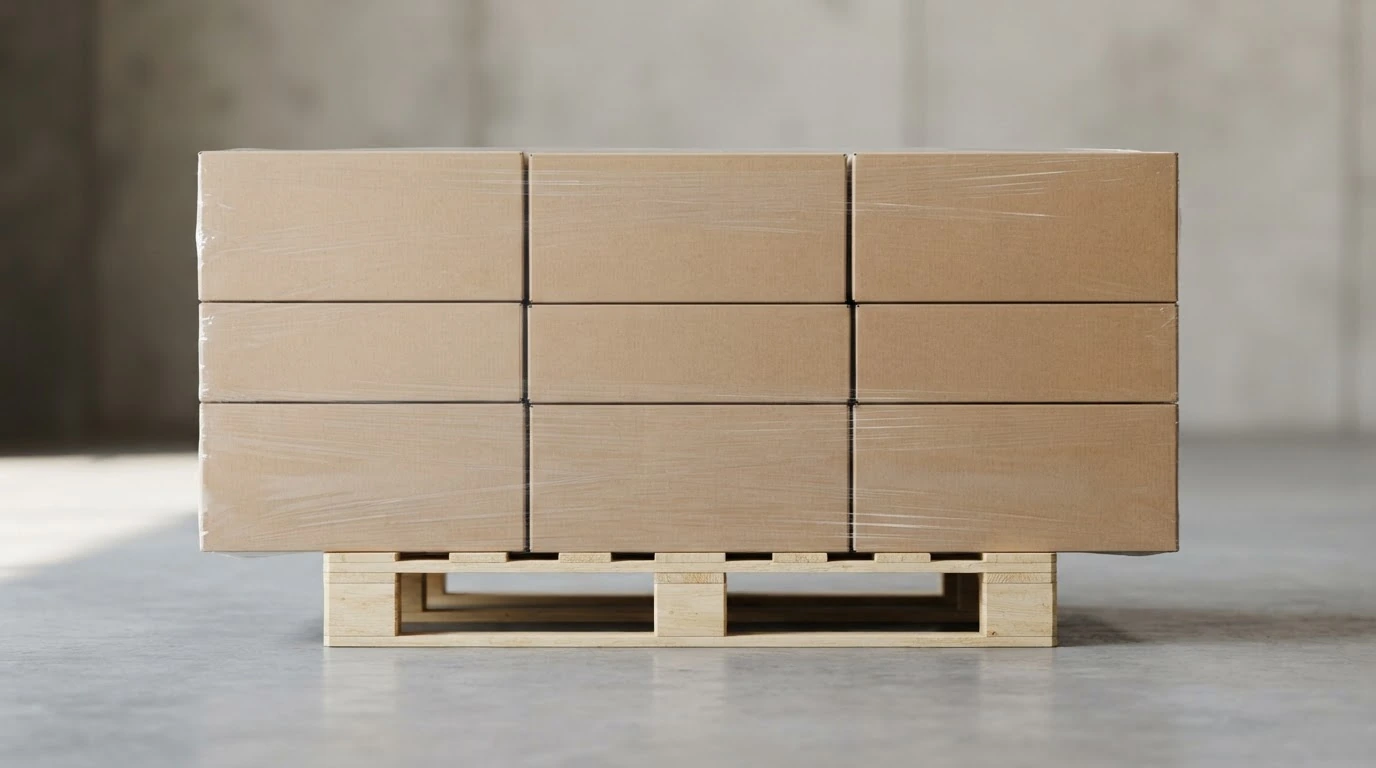
Pallet overhang occurs when cartons, crates, or other freight extend beyond the supporting pallet deck. The unsupported edges are more exposed to impact and lose part of the support needed to resist compression. Overhang also changes the shipment’s finished dimensions and can create handling or stowability concerns.
That can lead to a carrier remeasurement, rerating, or—in some cases—a classification adjustment under the applicable NMFC provision. Overhang does not automatically assign a new freight class. The outcome depends on what the carrier verifies, the commodity, the package, and the governing tariff.
Overhang is a structural problem
A pallet does more than provide forklift access. Its deck supports the package and helps transfer the load through a stable base. When a carton corner or crate edge hangs beyond that deck, the support path is interrupted.
FedEx advises never allowing products to overhang a pallet because overhang can reduce package compression strength and increase the risk of tears, punctures, and product damage. ABF Freight’s current LTL packaging guide likewise shows overhang and corner misalignment as causes of lost box strength.
Stretch film and bands do not restore the missing deck support. Pulling an overhanging stack inward with more tension may deform the cartons while leaving their bottom edges unsupported.
How overhang exposes freight to damage
Unsupported carton edges
Corrugated cartons perform best when their load-bearing areas are aligned with dependable support below. An overhanging bottom carton can bend, crease, or crush where it extends beyond the pallet. Damage at the base can affect the layers above it.
Direct contact
Freight beyond the deck is more exposed to forklift tines, pallet-jack components, adjacent freight, trailer walls, racks, and other handling surfaces. The pallet can no longer serve as the outermost buffer on that side.
Reduced unit stability
An offset load changes the handling unit’s footprint and weight distribution. If the overhang results from loose stacking or internal movement, the unit may also lean or shift independently of the pallet.
Weaker wrapping and banding geometry
Film and straps work best against a stable, properly supported load. Overhanging edges can create sharp transitions, uneven tension, and exposed contact points. Corner boards can spread force, but they cannot create support beneath the freight.
Remeasurement, rerating, and reclassification are different
These terms are often blended together, but they describe different events.
Remeasurement
The carrier records dimensions that differ from those provided by the shipper. Current NMFTA guidance for Item 250100 permits carriers to verify shipment dimensions as well as weight.
Rerating
The carrier recalculates charges using verified shipment details and the applicable tariff. A dimensional change, service discrepancy, or other rating input may affect the billed amount without changing the freight class.
Reclassification
The carrier applies a different NMFC item, subprovision, or class than the one shown on the shipping documents. Item 250100 requires bill-of-lading commodity descriptions to match the applicable tariff information, including the package, NMFC item, subprovision, and class.
Overhang can contribute to these events, but it is not a universal class-change switch. The important question is which shipment fact was incorrect or which NMFC provision applies to the freight as tendered.
How overhang changes the dimensional record
Measure the finished handling unit at its greatest length, width, and height, including every projection. NMFTA’s current density guidance expressly includes projections as the shipment is tendered.
Suppose the pallet deck is narrower than the finished carton stack. Measuring only the pallet would understate the shipment’s width. The correct quote uses the outermost point of the packaged freight, not the nominal pallet size.
That wider measurement can change cubic volume and density. If density is relevant to the applicable NMFC provision, a different density value may affect the class or rate. It still does not mean every dimensional difference results in reclassification; some affect only the rating or handling outcome.
Handling and stowability may also matter
NMFTA identifies density, handling, stowability, and liability as the four principal classification factors. Overhanging freight may be harder to handle or stow because its unsupported projections are vulnerable and because the handling unit occupies more usable space than its pallet alone suggests.
Those factors must be applied through the correct NMFC provisions. Do not decide that overhang automatically moves freight to a higher class, and do not use density alone when the commodity or packaging rules require more.
The standard pallet size does not define the shipment
Many U.S. palletized shipments use a 48-by-40-inch pallet, but that footprint is not correct for every product. A standard pallet is only suitable when it supports the actual load and meets the carrier and packaging requirements.
If the product cannot fit without extending beyond the deck, use a larger or purpose-built pallet, an appropriate crate, or another validated packaging design. Do not divide the product dimensions by a standard pallet footprint and assume the carrier will ignore the projection.
Pallet overhang in warehouse-rack design is a separate topic. A pallet itself may be positioned relative to rack beams according to a rack design. That does not authorize freight to extend beyond the pallet deck during transportation.
How to fix pallet overhang before pickup
Rebuild the load pattern
Arrange cartons so each package is fully supported. Use a stable pattern suited to the carton and contents. Do not force a nominal piece count onto one pallet if it creates unsupported edges.
Use the right pallet
Choose a sound pallet whose deck supports the finished freight and whose capacity, stiffness, entry configuration, and dimensions suit the load and handling equipment.
Divide the shipment when necessary
Two properly built pallets may be safer and easier to rate than one pallet with an unstable or overhanging stack. Compare the packaging and freight implications rather than assuming fewer pallets always cost less.
Use suitable outer packaging
Irregular equipment may need a crate, blocking, bracing, or a custom base. A larger pallet alone does not protect exposed machinery or keep it from moving.
Reapply unitization
After correcting the footprint, apply the required film, bands, edge protection, top protection, blocking, or bracing. Make sure the load is attached to the pallet and does not shift back beyond the deck.
Inspect the finished pallet
Before tendering the shipment, walk around it and check:
- Every carton, crate, and component remains within the supported pallet footprint.
- Bottom edges and corners have full support.
- The load is square, stable, and free of leaning or loose pieces.
- Film and bands have not pulled the package out of alignment.
- Fork openings remain clear.
- Finished dimensions include the pallet and every projection.
- Gross weight includes all packaging and the pallet.
- Commodity, package, NMFC item, class, and piece count match the BOL when applicable.
If the freight still projects beyond the pallet by design, do not conceal it. Quote and document the true finished dimensions and confirm the packaging and carrier requirements before pickup.
Avoid these common mistakes
- Measuring the pallet instead of the finished load
- Treating a small overhang as a cosmetic issue
- Using stretch film to pull unsupported cartons inward
- Adding corner boards without correcting the footprint
- Assuming a 48-by-40-inch pallet fits every product
- Guessing a new class from dimensions alone
- Confusing a carrier remeasurement with an automatic reclassification
- Reusing quote dimensions after rebuilding or repackaging the freight
Quote the pallet as it will be tendered
Record the greatest finished dimensions, gross weight, handling-unit count, commodity description, package type, NMFC item and class when applicable, stackability, origin and destination ZIP codes, and required pickup or delivery services.
Shipocity is backed by a team with more than 40 years of combined logistics experience. Through established industry relationships, the platform helps businesses compare competitive freight rates for their specific shipment.