Who Signs the Bill of Lading?
At pickup, an authorized shipper representative and the carrier usually accept the BOL. Learn how hazmat and delivery signatures differ.
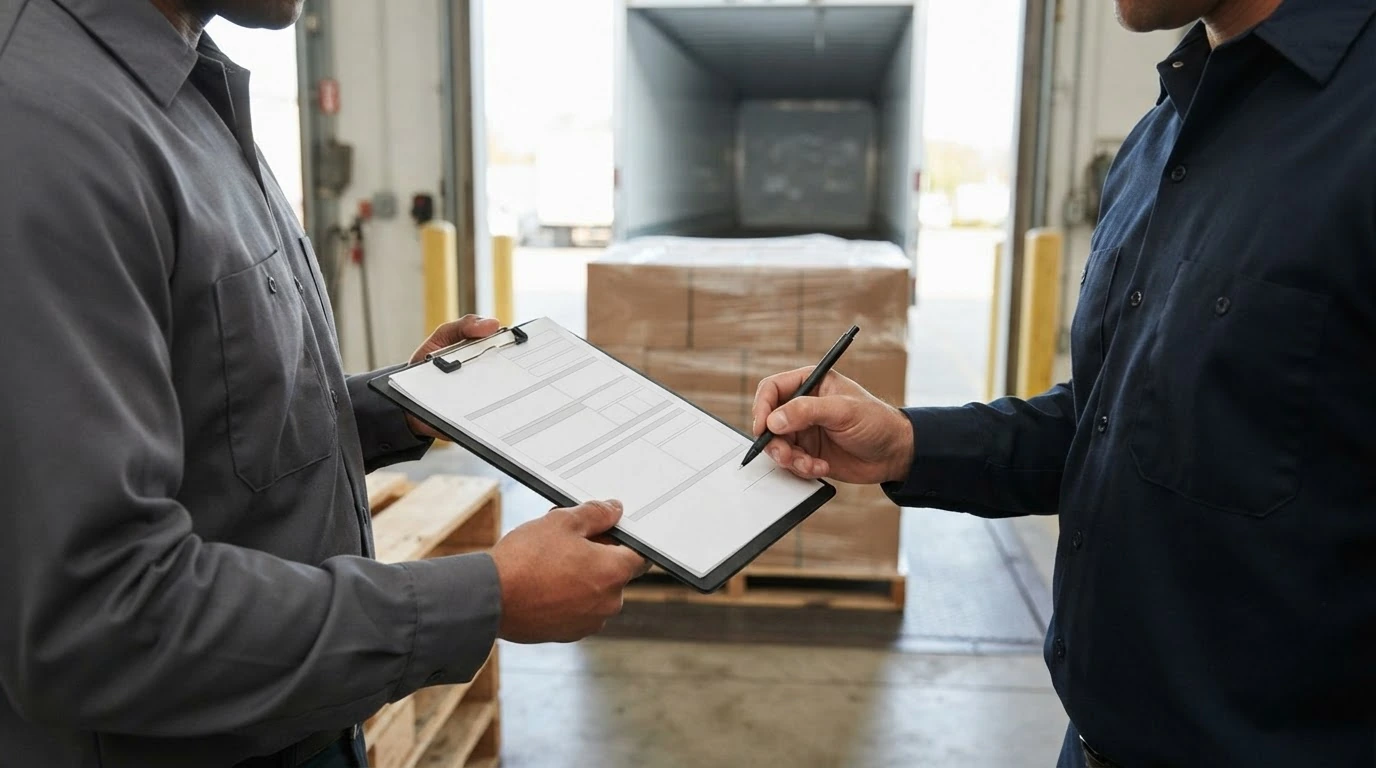
For a typical domestic LTL pickup, the bill of lading should be signed or otherwise accepted by an authorized representative of the shipper and by the carrier’s driver or other authorized agent. The shipper-side acceptance confirms the shipping information being tendered; the carrier-side acceptance records receipt of the freight, subject to any exceptions noted at pickup.
A broker or third-party logistics provider may prepare the BOL, but preparing the document and signing at the physical handoff are different jobs. At destination, the consignee or receiving employee usually signs the carrier’s delivery receipt or proof of delivery. In some carrier systems that record may be a copy of, or electronically connected to, the BOL, so the document title alone does not tell you which signature is being requested.
This is the practical answer, not a universal legal rule for every mode, commodity, or carrier form. Federal motor-carrier rules require covered carriers to issue a receipt or bill of lading with core shipment information, but 49 CFR Part 373 does not prescribe one generic signature block for every motor-freight shipment. Use the actual carrier document, applicable tariff or service terms, and shipment-specific requirements.
The signature map: pickup, transit, and delivery
The easiest way to avoid confusion is to tie each signature to a moment in the shipment rather than to a job title.
| Shipment moment | Person who ordinarily signs or accepts | What the record is meant to show |
|---|---|---|
| Freight is tendered at origin | Shipper’s authorized warehouse, shipping, or office representative | The shipment details have been reviewed from the shipper’s side |
| Carrier takes possession | Driver or another authorized carrier agent | The carrier received the listed freight, with any visible exceptions recorded |
| Hazardous materials are offered, when certification is required | A principal, officer, partner, employee of the shipper, or the shipper’s agent | The shipper’s certification required by the hazardous-materials rules |
| Freight is delivered | Consignee’s authorized receiving representative | Delivery or proof of delivery, including visible shortage or damage notes |
The company that booked the shipment does not necessarily supply the person at the dock. If a broker or 3PL creates the BOL, someone authorized by the shipping location can still handle the origin review and signature. NMFTA similarly distinguishes the shipper that creates or authorizes the BOL, the carrier that accepts it, the consignee that signs the delivery receipt, and the 3PL that may prepare the document.
Preparation is not the same as acceptance
A BOL can be generated by the shipper, carrier, or a logistics provider acting for the shipper. That preparation step assembles names, addresses, commodity details, handling units, weight, classification information when applicable, and service instructions. It does not eliminate the need for the people handling the actual freight to compare the document with what is being tendered.
Before the freight leaves the origin, the shipper-side representative should check the document against the packaged shipment. The carrier’s representative should record any difference the carrier observes rather than signing a clean receipt for details that do not match. Each party should retain the version accepted at pickup, including its shipment or PRO identifier and any exception notes.
An electronic BOL changes the medium, not the need for a reliable handoff record. Depending on the carrier’s process, acceptance may be captured with an electronic signature, user identity, timestamp, scan, or other audit trail. Confirm the carrier’s procedure instead of assuming that a paper signature is always required or that clicking a button has no consequence.
What federal rules establish
For covered interstate motor freight, 49 CFR 373.101 says the carrier must issue a receipt or bill of lading showing the consignor and consignee, origin and destination, number of packages, freight description, and weight, volume, or measurement when it affects rating. The rule assigns the issuance duty to the carrier, but it does not say that one missing handwritten signature automatically voids the shipment record.
That distinction matters because 49 U.S.C. 14706 states that failure to issue a receipt or bill of lading does not affect the liability imposed on a covered carrier. A shipper should still insist on an accurate, accepted pickup record; the statute simply makes an automatic “no signature, no liability” conclusion unsafe. Claim rights and outcomes depend on the facts, the governing terms, and applicable law.
Hazardous materials add a separate signature issue. When the shipper’s certification under 49 CFR 172.204 is required, it must be signed by an eligible person for the shipper or the shipper’s agent. PHMSA has explained that the signature may appear elsewhere on the same page as the certification when it is not assigned to a different statement, although a form with a dedicated certification line should be completed clearly to avoid confusion. This certification is not interchangeable with the carrier’s pickup acknowledgment.
What to check before anyone signs
Treat the signatures as the last step in a short verification, not as permission to skip the details.
- Match the shipper, pickup location, consignee, and destination to the booking.
- Count the handling units and describe the inner pieces when that detail is important to receiving, such as cartons secured on pallets.
- Use the fully packaged weight and dimensions supplied for the shipment.
- Check the commodity description and freight class or NMFC item when applicable.
- Confirm requested accessorial services and pickup or delivery instructions.
- Add required hazardous-materials information and certification only through a qualified process.
- Note visible package damage, shortage, or other pickup exceptions before the carrier leaves.
- Make sure both sides can retrieve the accepted version of the document.
Never sign a blank BOL or rely on a version that no longer matches the freight. If a material detail changes after acceptance, follow the carrier’s correction process and preserve the original record rather than silently replacing it.
Edge cases that change the signer or the record
No shipper employee is at the dock. A fulfillment warehouse or other authorized origin agent may handle the shipper-side review. Authority should be established before pickup, and the carrier’s process should be confirmed rather than improvised when the driver arrives.
The carrier prefilled the BOL. Carrier preparation does not make the shipper’s review unnecessary. The shipping location should still compare the document with the actual freight and booking instructions before release.
A 3PL prepared the paperwork. The 3PL can create or authorize the document on the shipper’s behalf. The origin and carrier representatives should still document the physical handoff, and the party signing a regulated certification must be eligible to do so.
The receiver sees damage or a shortage. The consignee should follow the carrier’s delivery process and describe visible exceptions on the delivery record before signing. A notation documents what was observed; it is not, by itself, a complete freight claim or a guarantee of a particular claim outcome.
The platform calls everything a BOL. Some systems display pickup acceptance, an in-transit BOL, and proof of delivery in one record. Check the stage, fields, and requested acknowledgment instead of assuming every signature has the same purpose.
Prepare the shipment record before booking
Gather the origin and destination ZIP codes, packaged dimensions and weight, handling-unit count, commodity description, freight class when known, and required accessorial services before requesting rates. After selecting a service, compare the resulting shipment document with those same details before the freight is released.
Shipocity is backed by a team with more than 40 years of combined logistics experience. Through established industry relationships, the platform helps businesses compare competitive freight rates for their specific shipment.
Book a shipment and let Shipocity prepare the paperwork
This article provides general operational information, not legal advice. Carrier terms, tariffs, modes, commodities, and applicable regulations can change which document is used and who may sign it.
Sources
- What Is a Bill of Lading in Shipping? - NMFTA
- Everything You Need to Know about a Bill of Lading - NMFTA
- 49 CFR Part 373 - Receipts and Bills - eCFR
- 49 U.S.C. 14706 - Liability Under Receipts and Bills of Lading - U.S. House of Representatives
- PHMSA Interpretation 08-0015 - Shipper Certification Signature