What Is Inside Pickup Service?
Learn what inside pickup covers, how it differs from liftgate and limited-access service, and what route and handling details to confirm before booking.
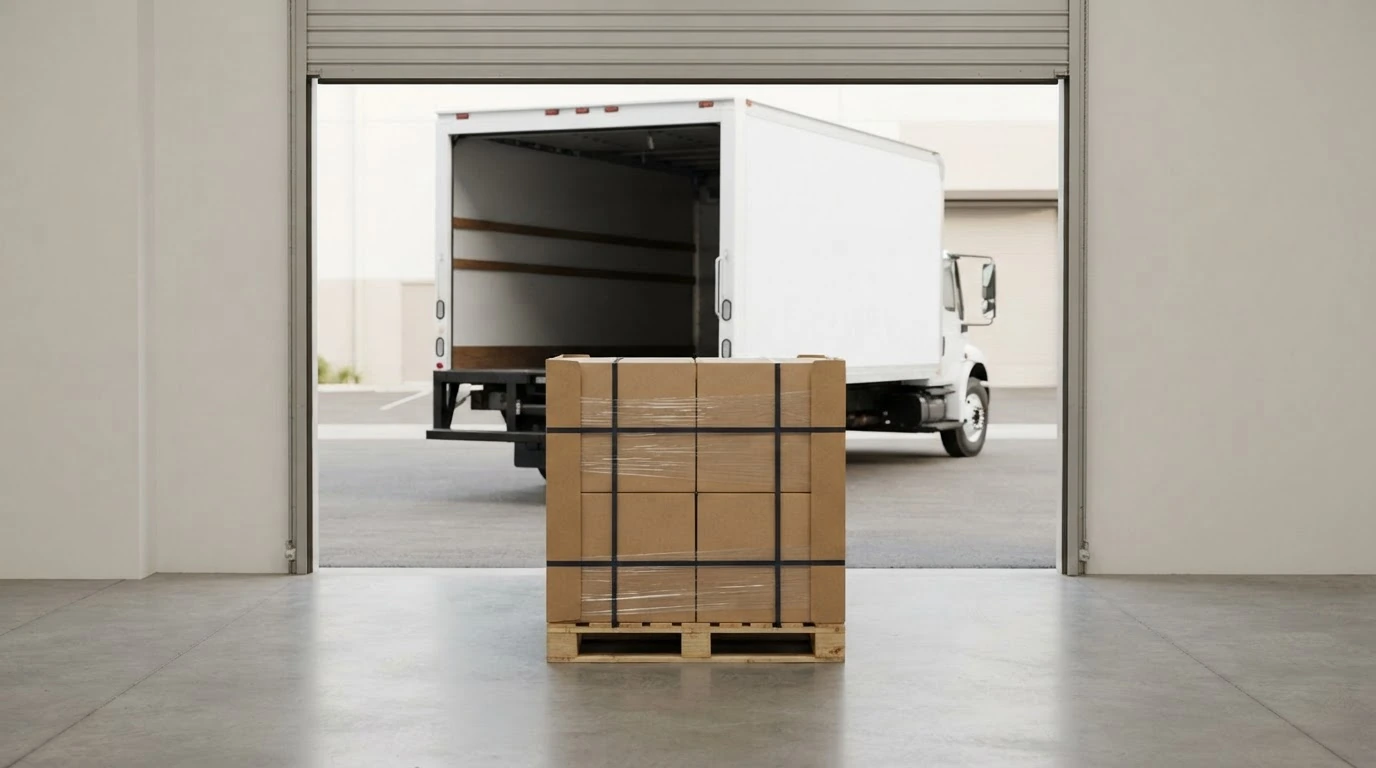
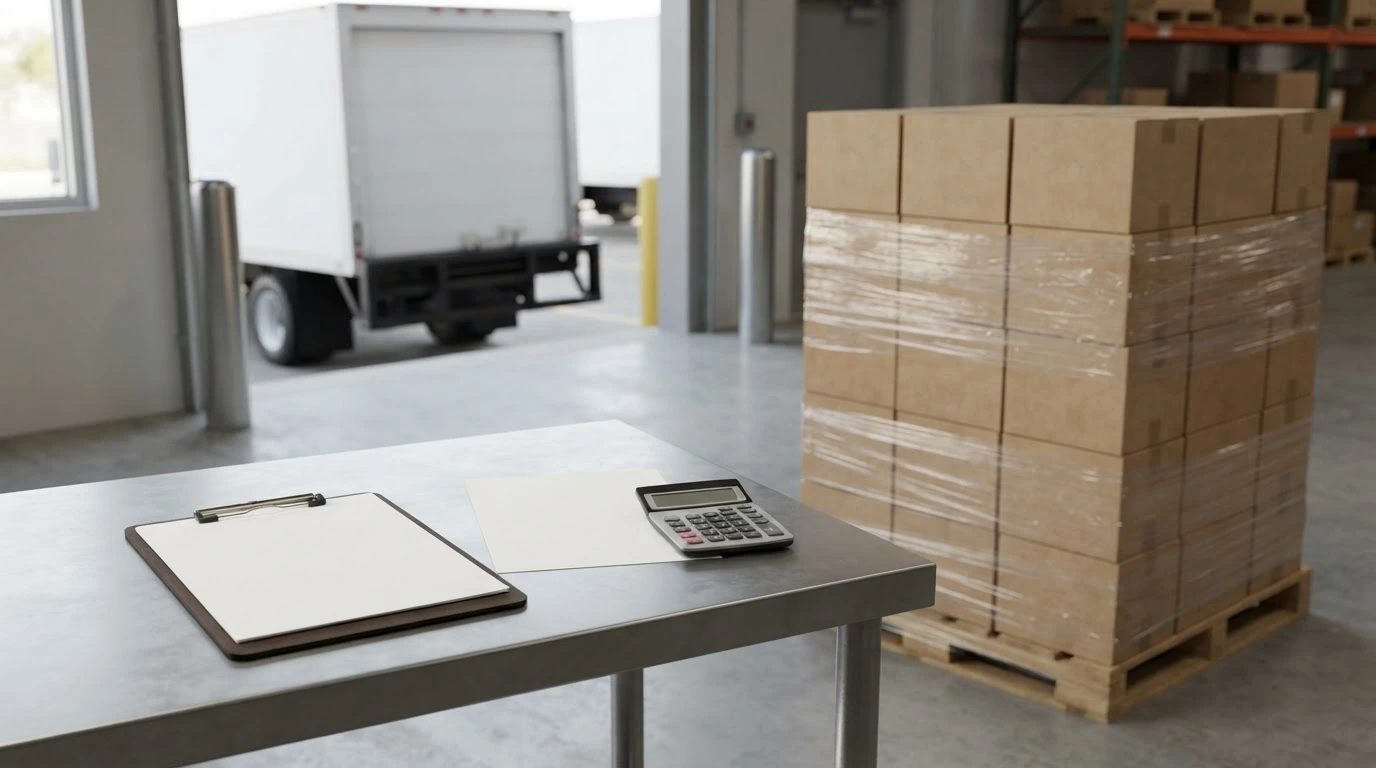
Inside pickup is a freight accessorial used when the carrier must collect a shipment from a position beyond the normal pickup point immediately adjacent to the vehicle or shipping dock.
Despite the name, it is not a universal promise that a driver will enter any room, move freight from anywhere in a building, package it, carry it down stairs, or supply a moving crew. The applicable carrier tariff defines the service boundary, availability, equipment, and charges.
What “inside” means in freight pickup
Carrier language is more useful than the everyday meaning of the word.
ArcBest’s current pickup tool describes inside pickup as the option used when freight loading is not from a position immediately next to the vehicle. Estes defines inside pickup and delivery as service to a location other than the shipping dock. A current Old Dominion tariff similarly describes movement from or to a position beyond the immediately adjacent truck loading or unloading position.
Those definitions share one idea: the carrier has to go beyond the standard handoff point. They do not establish one universal distance or room boundary.
Inside pickup can apply at a commercial location, residence, storage facility, office, or another site if the requested pickup point falls outside the carrier’s standard service. Whether the carrier will perform the movement depends on its rules and operating conditions.
Standard pickup versus inside pickup
| Question | Standard freight pickup | Inside pickup |
|---|---|---|
| Where is the freight presented? | At the carrier’s normal loading position, such as an accessible dock or position next to the vehicle | Beyond that normal loading position |
| Who moves freight to the normal handoff point? | The shipper or facility | The carrier performs additional movement within its service limits |
| Is additional handling included? | Normally limited to the standard pickup service | Only the movement defined by the carrier’s inside-pickup rule |
| Is liftgate included? | No | No; request it separately if needed |
| Are stairs or elevators included? | Not applicable to the normal handoff | Carrier-specific and subject to operating and safety limits |
| Is packaging included? | No | No, unless a separate service expressly says otherwise |
The cleanest test is: Will the freight be ready where the driver can load it under the carrier’s standard pickup conditions? If not, inside pickup or another specialized service may be required.
When inside pickup may be appropriate
Common decision patterns include:
- A packaged handling unit is staged in a ground-floor back room rather than at the shipping door.
- A pickup location has no conventional dockside staging position.
- The freight is inside a storage or commercial area and the carrier must move it to the vehicle.
- Building or security rules prevent the shipper from staging freight outside.
- The carrier’s standard pickup point is inaccessible to the shipper, but the requested movement falls within the carrier’s inside-pickup rules.
These are not guarantees of service. A long interior route, stairs, uneven surfaces, narrow doors, tight turns, restricted elevators, or an unsafe handling unit can put the request outside ordinary inside pickup.
Inside pickup does not replace shipment preparation
The freight should still be ready for transportation unless the quote expressly includes a different preparation service.
Before the driver arrives:
- Package the commodity for the freight network.
- Secure cartons or pieces to a suitable pallet or other handling unit when appropriate.
- Provide accurate packaged dimensions and weight.
- Apply required labels and shipping documents.
- Remove obstacles from the route.
- Confirm that doors, elevators, floors, and surfaces can accommodate the handling unit and equipment.
- Obtain any building approval needed for the pickup.
Inside pickup does not automatically include packing, palletizing, disassembly, sorting, debris removal, disconnecting equipment, or moving loose household contents. If any of those tasks are needed, identify a service that expressly covers them.
How it differs from related accessorials
Inside pickup answers one question: must the carrier move freight from beyond the normal pickup position? Other conditions require separate decisions.
Liftgate pickup
A liftgate moves freight between ground level and trailer height. A site may need inside pickup to move the freight from an interior point to the vehicle and liftgate service to raise it into the trailer. Neither automatically includes the other.
Limited-access pickup
Limited access addresses the facility type or controlled-access conditions under the carrier’s rules. A school, construction site, secured facility, or other tariff-defined location may need limited-access pickup whether or not the freight is staged inside.
Residential pickup
Residential pickup identifies a home or other carrier-defined residential location. It does not guarantee that a driver will enter the dwelling. Residential inside pickup availability and placement limits must be confirmed with the carrier.
Appointment or notification
Coordinating a pickup time is different from moving the freight. A site can require an appointment without inside pickup, or require both.
Specialized final-mile or white-glove service
Requests involving stairs, a particular room, two-person handling, unpacking, disassembly, or other complex movement may require a specialized service rather than ordinary inside pickup.
What can limit or prevent the service
Carrier rules and safety judgment control. Potential constraints include:
- Packaged weight or dimensions incompatible with available equipment
- Freight that is unpackaged, unstable, leaking, or unsafe to move
- Stairs without an approved service or suitable equipment
- Elevators that are unavailable, too small, or not approved for freight
- Narrow doors, tight corners, low clearance, or long interior routes
- Soft, uneven, steep, wet, or damaged surfaces
- Restricted areas the driver cannot enter
- A request that requires more people or equipment than the booked service provides
- Freight located above or below the vehicle-accessible level
Old Dominion’s current Alaska tariff provides a concrete carrier example: service to floors above or below the vehicle-accessible level is available under that item only when elevator service exists, and the carrier is not obligated to provide service it considers impractical or unsafe. Those provisions belong to that tariff, but they demonstrate why the exact rule must be checked rather than assumed.
How inside-pickup charges work
Inside pickup is generally priced separately from the base freight movement. The method can vary by carrier, tariff, geography, shipment weight, vehicle count, minimum or maximum charge, and customer-specific pricing agreement.
Current carrier materials list inside pickup or delivery separately from liftgate, limited access, residential service, appointments, and other accessorials. Do not use an undated online “typical fee” as the expected cost for a shipment.
Review:
- The carrier and tariff version
- Whether the service is needed at pickup, delivery, or both
- How the tariff defines the normal loading position
- The actual distance and route from freight to vehicle
- Any per-hundredweight calculation, minimum, or maximum
- Geographic exceptions
- The equipment and personnel included
- Customer-specific pricing terms
What happens when the need is discovered at pickup
If freight is not at the normal handoff point and inside pickup was not requested, the driver may not be able to complete the pickup as planned. The result can include a service correction, added accessorial charge, delay, rescheduling, or a requirement that the shipper move the freight to an acceptable position.
The outcome is carrier- and situation-specific. Avoid promising that a driver will improvise an inside move or that the carrier will always refuse it.
Describe the route and request the service before dispatch so the carrier can plan equipment, time, and personnel.
Questions to ask the pickup location
Confirm:
- Where will the packaged freight be staged when the driver arrives?
- Is that position immediately adjacent to an accessible dock or vehicle loading point?
- What is the distance and route to the vehicle?
- Are there doors, turns, thresholds, stairs, elevators, slopes, or surface changes?
- What are the narrowest width and lowest clearance on the route?
- Is a dock, forklift, pallet jack, or other handling equipment available?
- Is liftgate service needed at the vehicle?
- Does the building require an appointment, security check, certificate, or escort?
- Is the handling unit fully packaged, stable, and labeled?
- Can the carrier’s expected vehicle enter and operate safely?
“Inside the building” is not enough detail. Give the carrier a physical description of the starting point and route.
Quote-preparation checklist
Prepare:
- Complete pickup and delivery addresses and ZIP codes
- Facility type at each end
- Pickup contact and working phone number
- Number and type of handling units
- Packaged dimensions and weight for each handling unit
- Commodity description and freight class, when known
- Exact interior starting point
- Distance and route from freight to vehicle
- Door, stair, elevator, turn, surface, grade, and clearance constraints
- Dock, forklift, pallet jack, or other equipment availability
- Liftgate, limited-access, residential, appointment, or other service needs
- Required pickup date and facility receiving hours
Confirm that the returned quote includes inside pickup before booking.
Plan the handoff before the driver arrives
Inside pickup is additional movement from beyond the carrier’s normal pickup position. It is not an unlimited moving service, and its boundary depends on the carrier’s current rules and the actual conditions at the stop.
Shipocity is backed by a team with more than 40 years of combined logistics experience. Through established industry relationships, the platform helps businesses compare competitive freight rates for their specific shipment.
Once you know where the freight is staged, how it reaches the vehicle, and which equipment and accessorials are required, get a freight quote from Shipocity with inside pickup included when appropriate.