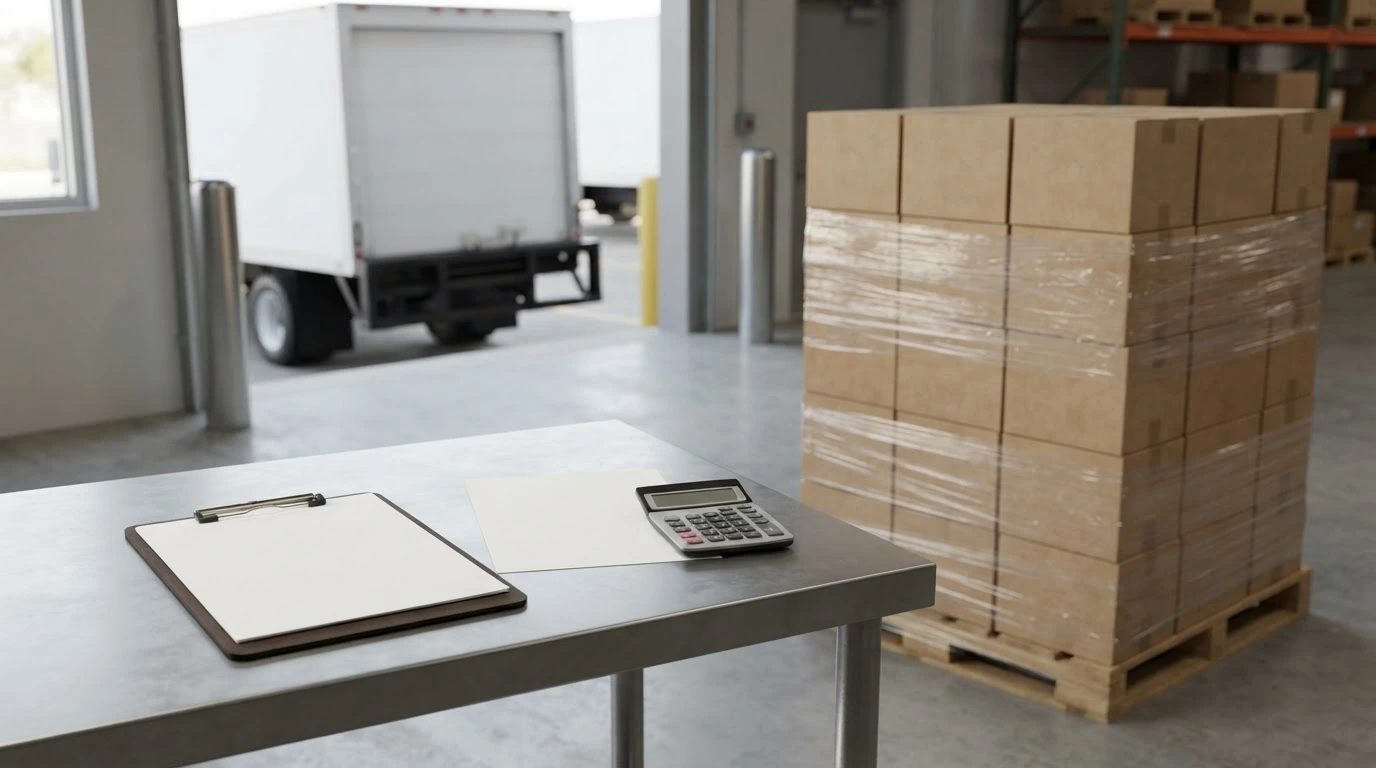
What Is Inside Delivery Service?
Learn what inside delivery covers, where ordinary service may end, and when liftgate, residential, limited-access, or specialized final-mile service may also be needed.
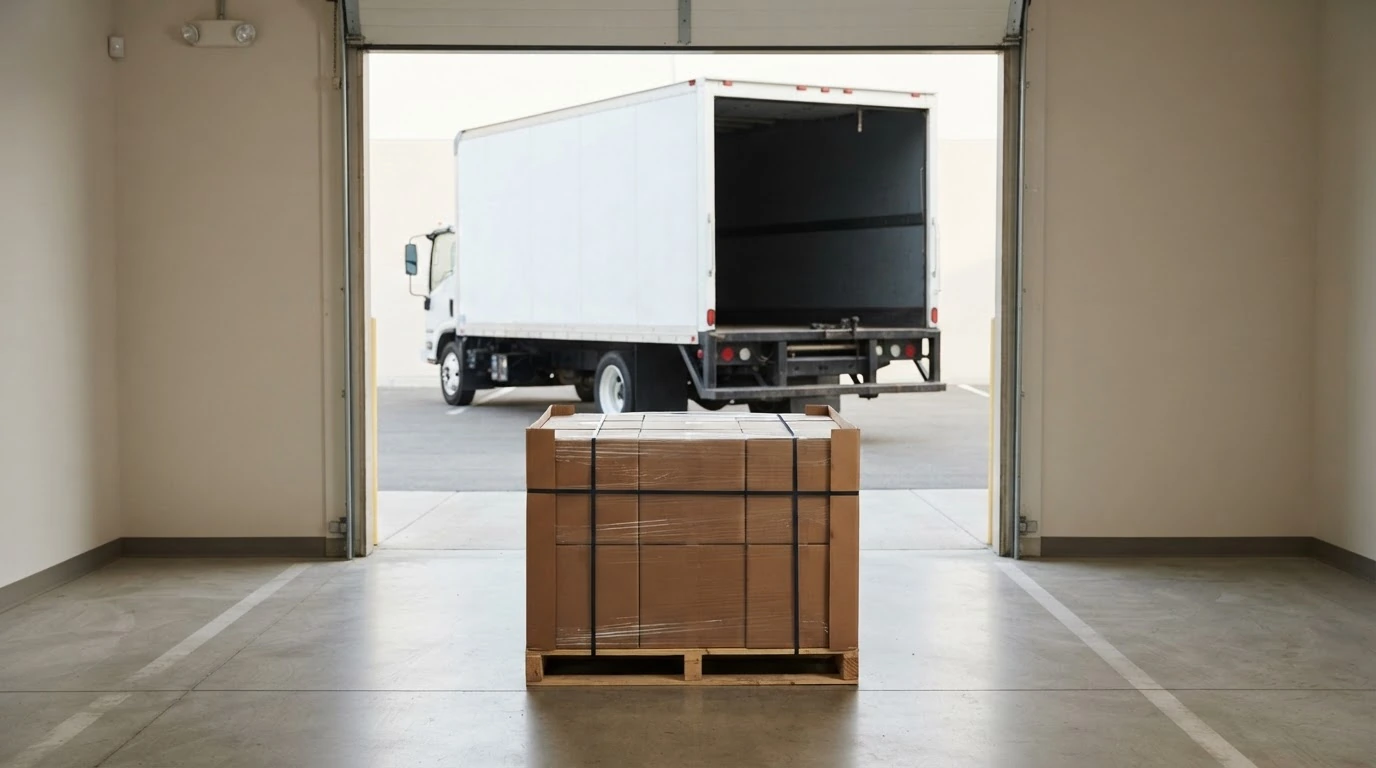
Inside delivery is a freight accessorial used when the carrier must move a shipment beyond its normal unloading position. Depending on the carrier’s rules and the conditions at the destination, that can mean movement away from a dock or vehicle-adjacent handoff point to an approved location on the property.
It does not automatically mean delivery to any room the receiver chooses. It also does not automatically include a liftgate, unpacking, assembly, stair carries, debris removal, or white-glove service. The carrier’s current tariff or service guide controls what is available and where the service ends.
What “inside” means in freight delivery
The everyday meaning of “inside” can create the wrong expectation. Freight carriers often define the service by the normal unloading position rather than by a building’s front door.
Estes describes inside pickup and delivery as service to a location other than the shipping dock. A current Old Dominion tariff describes it as movement beyond the truck loading or unloading position immediately adjacent to the vehicle. ArcBest identifies inside delivery as an accessorial charge outside standard pickup and delivery.
The shared principle is additional movement beyond the ordinary handoff. The exact distance, permitted route, equipment, and endpoint are carrier-specific.
That distinction matters at locations such as offices, storefronts, storage facilities, warehouses without docks, and residential properties. A shipment can be technically “inside” a property’s boundary while still being outside the service a receiver imagined. Never use the phrase alone as an instruction to take freight to a particular room.
Standard delivery versus inside delivery
| Question | Standard freight delivery | Inside delivery |
|---|---|---|
| Where is the normal handoff? | At the carrier’s standard unloading position, such as an accessible dock or position next to the vehicle | Beyond that standard unloading position, within the carrier’s service limits |
| Who moves the freight farther? | The receiver or facility | The carrier performs the additional movement included in the booked service |
| Is a liftgate included? | No | No; request it separately when freight must move between trailer height and ground level |
| Is room-of-choice placement included? | No | Not unless the carrier expressly includes or separately quotes it |
| Are unpacking and assembly included? | No | No, unless a different service explicitly includes them |
| Can the carrier decline an unsafe move? | Yes | Yes |
The most useful question is not simply, “Does the receiver want inside delivery?” Ask instead: Where can the carrier safely unload under standard service, and where must the handling unit ultimately be placed? The physical route between those two points determines which services may be needed.
What inside delivery commonly includes
When available and booked correctly, inside delivery generally covers extra movement of transport-ready freight beyond the normal unloading point to an approved location. The destination still needs to be compatible with the shipment and the carrier’s equipment.
A workable request typically has:
- A packaged, stable handling unit that can be moved safely
- A clear, level, adequately wide route
- A doorway and interior area large enough for the freight
- A receiver who is present and authorized to accept delivery
- Accurate advance information about the destination
- Any other required accessorials selected separately
Inside delivery does not convert an ordinary LTL stop into an open-ended moving job. If the request requires stairs, a long interior carry, a freight elevator, special floor protection, extra personnel, unpacking, equipment installation, or removal of packaging, describe those needs before booking. A specialized final-mile or white-glove service may be more appropriate.
Inside delivery and liftgate service solve different problems
These services are often needed together, but they are not interchangeable.
A liftgate moves freight vertically between the trailer and ground level when the location does not have a usable dock or forklift. Inside delivery addresses the additional movement beyond the normal unloading position.
Consider a ground-level storefront with no loading dock. The carrier may need a liftgate to lower a pallet from the trailer and inside delivery to move that pallet from the vehicle-adjacent position to an approved point beyond the doorway. Selecting only inside delivery does not guarantee the truck will have a liftgate. Selecting only liftgate service does not include movement through the building.
Current carrier materials reinforce this separation. Old Dominion and FedEx Freight list inside pickup or delivery and liftgate service as distinct accessorials with separate tariff items and charges.
Inside delivery is also different from residential and limited-access service
The destination type and the requested movement are separate facts.
Residential delivery applies when the destination meets the carrier’s definition of a residence. Limited-access delivery applies to carrier-defined locations where access, security, staffing, or operating conditions differ from a typical commercial stop. Inside delivery concerns how far the freight must move beyond the standard unloading position.
A shipment can therefore require more than one accessorial. For example, a residential destination may also need a liftgate and inside delivery if the carrier offers the requested combination. A school or construction site might need limited-access delivery without inside delivery if the receiver can accept freight at the normal unloading point.
Do not assume a residential or limited-access charge includes interior placement. Do not assume inside delivery cancels the destination-type charge. Quote the actual conditions at the stop.
Where the service may stop
There is no universal promise that ordinary inside delivery reaches a reception desk, back room, upper floor, or exact room of choice. The carrier’s rules, operating conditions, and safety assessment determine the limit.
A current Old Dominion tariff offers a useful example of how specific these rules can be. Its Alaska inside-delivery item permits service to floors above or below the vehicle-accessible level only when elevator service is available. It also says the carrier is not obligated to provide service it considers impracticable or unsafe. Those provisions apply to that tariff, not every carrier, but they show why a shipper must confirm the actual service rather than rely on the label.
Conditions that can limit or prevent an inside move include:
- Freight that is unstable, unpackaged, leaking, or too large for the route
- Narrow doors, tight turns, low ceilings, or inadequate clearances
- Stairs or unavailable elevators
- Soft, steep, wet, broken, or uneven surfaces
- Restricted areas the driver cannot enter
- A need for more people or specialized equipment than the service provides
- An interior location that cannot support the handling unit or equipment
- A vehicle that cannot safely reach the unloading position
The receiver should measure the route and report constraints before the carrier is dispatched.
What inside delivery does not normally cover
Unless a specific service agreement says otherwise, do not expect ordinary inside delivery to include:
- Packing, crating, palletizing, or reworking the shipment
- Breaking down a pallet or sorting individual pieces
- Unpacking or removing protective material
- Assembly, installation, calibration, or equipment connection
- Moving existing furniture or clearing an obstructed route
- Wall, floor, or doorway protection
- Debris or packaging removal
- A two-person crew
- Guaranteed placement in a particular room
ArcBest’s final-mile materials illustrate why enhanced delivery is a separate category: final-mile options can include services such as room-of-choice delivery, assembly, installation, and packaging removal. If those outcomes matter, use a service designed and quoted for them rather than assuming they are included in inside delivery.
How inside-delivery charges work
Inside delivery is generally charged separately from the base freight transportation. The calculation and service terms can vary by carrier, tariff, geography, shipment weight, number of vehicles, and negotiated pricing agreement.
Current Old Dominion and FedEx Freight materials show that inside pickup or delivery has its own tariff item and can be subject to a per-hundredweight rate, minimum, and maximum. Those published amounts can change and may not represent a shipper’s contracted pricing, so they should not be treated as a universal estimate.
Before booking, check:
- Whether the service is needed at pickup, delivery, or both
- The tariff or service guide that governs the shipment
- The carrier’s definition of the normal unloading position
- Whether liftgate, residential, limited-access, notification, or appointment service is also required
- The permitted endpoint and any distance, floor, or equipment limits
- Geographic exceptions and customer-specific terms
Compare the complete quoted total, not just the base transportation charge.
What happens when inside delivery was not requested
If the receiver asks for extra movement after the driver arrives, the carrier may be unable to complete it under the booked service. Depending on the carrier and circumstances, the shipment could receive an added accessorial charge, be left at the standard handoff point, require updated authorization, or need a new delivery attempt.
Estes advises customers to contact the delivering terminal when an unplanned accessorial such as a liftgate or inside delivery is required. The exact outcome remains shipment-specific, so the safest course is to identify the need before dispatch.
Avoid telling the receiver that the driver will “figure it out.” The delivery route, equipment, and service authorization should be settled before the truck arrives.
Questions to ask the destination
Gather physical details, not just a yes-or-no request for inside delivery:
- Where can the truck safely park and unload?
- Is there a usable loading dock or forklift?
- Must freight move between trailer height and ground level?
- What exact point should receive the freight?
- How far is that point from the vehicle-accessible unloading position?
- Are there curbs, slopes, thresholds, stairs, elevators, turns, or surface changes?
- What are the narrowest width and lowest clearance on the route?
- Is the destination residential or limited access under the carrier’s rules?
- Does the facility require an appointment, notification, security check, escort, or certificate?
- Will someone authorized to receive the freight be present?
If the answer involves a specific room, upper floor, unpacking, installation, or debris removal, ask for a service that expressly includes those tasks.
Quote-preparation checklist
Have these details ready:
- Origin and destination addresses and ZIP codes
- Facility type at both ends
- Pickup and delivery contacts with working phone numbers
- Handling-unit count and type
- Packaged dimensions and weight for every handling unit
- Commodity description and freight class, when known
- Standard unloading point and requested final placement point
- Interior distance, door, turn, threshold, stair, elevator, surface, and clearance details
- Dock, forklift, pallet jack, and liftgate availability
- Residential, limited-access, appointment, notification, or other service needs
- Receiving hours and any site restrictions
Confirm that the returned quote explicitly includes inside delivery and every other required accessorial before booking.
Define the handoff before choosing the service
Inside delivery is additional movement beyond the carrier’s normal unloading position. Its name does not promise unlimited interior placement, and it does not replace liftgate or specialized delivery services.
Shipocity is backed by a team with more than 40 years of combined logistics experience. Through established industry relationships, the platform helps businesses compare competitive freight rates for their specific shipment.
Once you know the standard unloading point, requested endpoint, route, equipment, and facility constraints, get a freight quote from Shipocity with the appropriate delivery services included.