
What Is Detention in Freight Shipping?
Learn how LTL detention works, why free time and clock rules vary by carrier, and how to reduce or review pickup and delivery waiting charges.
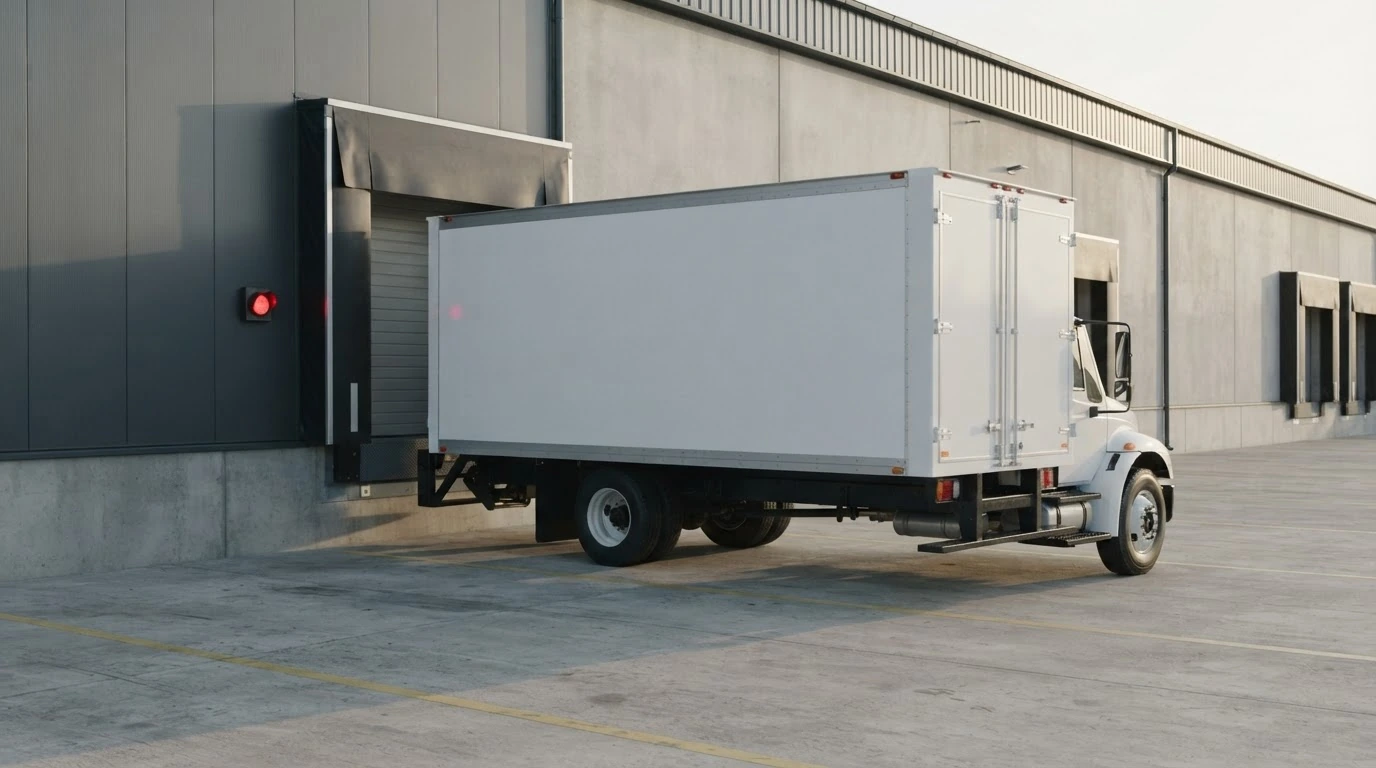
Detention in LTL freight is an accessorial charge that can apply when a carrier’s vehicle is delayed at a shipper’s or consignee’s location beyond the free time allowed for loading or unloading.
The charge is based on the governing tariff or contract. Free time, clock rules, billing increments, minimum charges, equipment type, and the responsible payer vary by carrier and service.
Detention does not mean every delay at a facility is automatically billable. The tariff defines when time begins, which periods count, what loading or unloading activity is covered, and when the vehicle becomes available to leave.
How LTL detention works
A typical powered-equipment detention event has four stages:
- The carrier arrives for pickup or delivery. The driver reports arrival or checks in under the carrier’s process.
- Free time is measured. The applicable tariff allows a period for loading or unloading before detention charges begin.
- The stop exceeds free time. The vehicle remains delayed because loading, unloading, paperwork, access, or another covered activity is not complete.
- Charges accrue until release. The tariff defines the end event, billing increment, minimum, exclusions, and payer.
FedEx Freight’s tariff says its detention clock runs from driver arrival at the pickup or delivery location until driver departure. XPO’s current rule similarly measures from arrival at the location through completion of loading or unloading and departure, using driver or carrier electronic records. Estes uses more detailed provisions tied to the driver’s notice to the responsible shipper or consignee representative and the loading or unloading process.
Those differences make a universal statement such as “detention always starts at check-in” unsafe. Read the actual rule.
Detention with power versus detention without power
Carrier tariffs often separate two equipment situations.
| Type | Basic situation | Typical charging basis |
|---|---|---|
| Detention with power | The tractor and driver remain with the vehicle while loading or unloading is delayed | Short time increments after applicable free time, often with a minimum |
| Detention without power | A trailer is spotted or dropped for the customer to load or unload without the tractor remaining | Longer periods, such as days or 24-hour increments, after applicable free time |
With-power detention is the most familiar LTL scenario: a route driver is waiting at a dock. Without-power detention applies when the carrier leaves equipment at a site and the customer keeps it beyond the allowed period.
The rules are not interchangeable. XPO, for example, publishes separate items for detention with power and detention without power. FedEx Freight’s tariff also separates the two and uses different free-time and charge structures.
Free time is not universal
There is no single industry-wide allowance such as 30 minutes or two hours.
Some LTL tariffs use shipment weight to determine free time. Current FedEx Freight and XPO rules, for example, publish different allowances across weight bands for powered equipment. Other provisions can address multiple shipments, meal periods, added loading or unloading activity, and specialized services.
Free time can also differ based on:
- Powered versus spotted equipment
- Shipment weight or combined weight at the stop
- Pickup versus delivery
- Number of shipments handled
- Carrier assistance with loading, unloading, counting, or checking
- Special-event or trade-show service
- Customer contract or pricing agreement
- Geography and service type
Do not borrow a free-time value from a truckload contract, another LTL carrier, or an old invoice.
What can cause detention at pickup
Pickup detention can arise when the driver arrives under the applicable conditions but the shipment or facility is not ready to release the vehicle.
Common operational causes include:
- Freight is still being packed, palletized, labeled, or counted
- The bill of lading or required shipping documents are incomplete
- The correct handling units are not staged or accessible
- A dock, forklift, pallet jack, or employee is unavailable
- Security or gate check-in takes longer than planned
- The carrier is asked to load, sort, count, or verify freight beyond the booked process
- Multiple shipments are being tendered at the same stop
- The pickup contact is unavailable or the location is closed
These conditions do not prove a valid charge by themselves. The driver’s arrival, free-time calculation, cause of delay, and end time still need to fit the governing rule.
What can cause detention at delivery
Delivery detention can arise when the vehicle cannot complete unloading and leave within free time.
Potential causes include:
- No dock or unloading equipment is available
- Receiving staff are occupied or unavailable
- The consignee has not cleared space for the freight
- Required references, payment, or paperwork are not ready
- The receiver delays signing or completing the delivery process
- Gate, security, or facility access is slow
- Freight must be counted, checked, or moved under an added service
- A scheduled appointment does not match actual dock capacity
If the vehicle leaves with freight still on board and later returns, storage or redelivery rules may also apply. FedEx Freight’s tariff specifically describes storage and redelivery consequences when loading or unloading cannot be completed and the powered vehicle returns to the carrier’s premises.
Detention is different from storage, redelivery, and extra labor
Related charges address different resources.
Storage
Storage concerns freight or equipment held in carrier custody beyond applicable free time or under undelivered-freight rules. Detention concerns delayed equipment at or near the shipper’s or consignee’s premises.
Redelivery
Redelivery concerns another delivery tender after a qualifying unsuccessful attempt. A long first stop can produce detention; a later return can produce redelivery. Both may apply if the tariff supports each event.
Extra labor
Extra labor covers additional personnel or labor services. It is not the same as the driver’s waiting time, although both can occur during one stop.
Loading or unloading service
The carrier’s standard responsibility and any shipper-load or consignee-unload terms affect who performs the work. A request for the carrier to handle additional work can trigger its own service charge and may also consume detention time under some rules.
Appointment service
An appointment coordinates delivery timing. It does not guarantee that the facility will load or unload within the detention allowance.
How detention charges are calculated
Powered-equipment detention is often billed per vehicle in short increments, or a fraction of an increment, after free time. A minimum charge may apply. Without-power detention can use a daily or 24-hour structure after a different free period.
Current official materials illustrate the variation:
- FedEx Freight publishes with-power detention in 15-minute increments and without-power detention in 24-hour periods, with separate amounts and rules.
- XPO publishes a per-vehicle 15-minute structure for powered detention and a daily structure for spotted trailers.
- Old Dominion’s 2026 accessorial brochure lists detention with power and detention without power as separate services.
- Estes publishes detailed computation, free-time, multiple-shipment, storage, and redelivery provisions within its detention rules.
The amount on a shipment can depend on:
- Vehicle or trailer count
- Chargeable time after free time
- Billing increment and minimum
- Shipment or combined stop weight
- Whether the equipment has power
- Number of shipments at the stop
- Contract or customer pricing exceptions
- Work performed by the carrier
Confirm the current tariff and customer agreement rather than estimating from an industry average.
Who is responsible for detention?
The invoiced party is determined by the transportation terms, tariff, and pricing agreement. It may be the linehaul payer, the party requesting the service, the party for whom the service is performed, or another contractually responsible party.
Carrier rules differ. XPO’s powered-detention rule assesses its charge against the freight payer, while its without-power item contains separate payment provisions. FedEx Freight reserves rights against the payer for loading and unloading detention under its rule.
The party whose facility caused the delay is not necessarily the party the carrier invoices first. Shippers can allocate detention responsibility in customer or vendor agreements, but that commercial allocation does not automatically change the carrier’s billing rights.
How to reduce detention exposure
Stage freight before requesting the truck
Complete packaging, palletizing, labels, counts, and documents before the pickup window. Freight should be accessible to the carrier under the booked service.
Match appointments to real dock capacity
Do not schedule more vehicles than the facility can process. Include check-in, security, paperwork, and equipment movement in the plan.
Assign a responsible contact
The pickup or receiving contact should know the shipment, answer during the scheduled period, and have authority to resolve a problem.
Prepare equipment and space
Reserve the dock, forklift, pallet jack, staging area, and staff before arrival. Identify liftgate, inside delivery, limited-access, or extra-labor needs during quoting.
Record arrival and release events
Keep appointment confirmations, gate logs, dock logs, time-stamped messages, warehouse records, and delivery documents. Carrier electronic records may control under the tariff, but facility records can support a prompt review.
Escalate delays while the truck is still present
If the stop is approaching free time, notify the responsible dock supervisor and carrier contact. A fast operational fix is usually more useful than disputing the invoice weeks later.
Reviewing a detention charge
Check the charge against the rule and event record:
- Which tariff or contract governed the shipment?
- Was the equipment with power or without power?
- What event started the clock?
- What event ended the clock?
- How much free time applied to this stop?
- Were any meal periods or other exclusions relevant?
- Were multiple shipments combined for free-time purposes?
- What billing increment and minimum applied?
- Who was responsible for payment under the rule?
- Do carrier records and facility records agree?
If there is a discrepancy, submit the appointment confirmation, BOL, gate and dock records, carrier tracking events, delivery documents, and written communications through the carrier’s billing process.
Detention in trucking versus ocean-container detention
The word detention also appears in ocean and intermodal shipping, where it can refer to keeping carrier equipment outside a terminal beyond allowed free days. Demurrage can refer to cargo or equipment remaining at a marine terminal beyond free time.
Those container rules, invoices, and regulations are different from LTL driver-and-vehicle detention. This article addresses over-the-road LTL pickup and delivery. For an ocean or intermodal shipment, review the ocean carrier, terminal, chassis, and equipment rules separately.
Quote-preparation checklist
Before booking, gather:
- Origin and destination addresses and ZIP codes
- Facility type and truck-access conditions
- Pickup and receiving hours
- Appointment requirements
- Handling-unit count, packaged dimensions, and weight
- Commodity description and freight class, when known
- Dock, forklift, and pallet-jack availability
- Liftgate, inside, limited-access, residential, or extra-labor needs
- Gate, security, parking, and check-in instructions
- Estimated loading or unloading process
- Responsible contacts at both ends
Ask which detention rule applies and make sure the facilities can process the vehicle within the applicable free time.
Plan the stop, not just the linehaul
Detention is the cost of holding carrier equipment beyond the allowed loading or unloading time. It is best managed with accurate facility details, realistic appointments, ready freight, available equipment, and clear event records.
Shipocity is backed by a team with more than 40 years of combined logistics experience. Through established industry relationships, the platform helps businesses compare competitive freight rates for their specific shipment.
Once the shipment and facility requirements are confirmed, get a freight quote from Shipocity with the services needed for an efficient pickup and delivery.