
What Is a Freight Terminal and Why Does LTL Use Them?
A freight terminal is the carrier facility where LTL freight is sorted, consolidated, and transferred between local pickup trucks and linehaul trailers. Learn how the network works and what it means for your shipment.
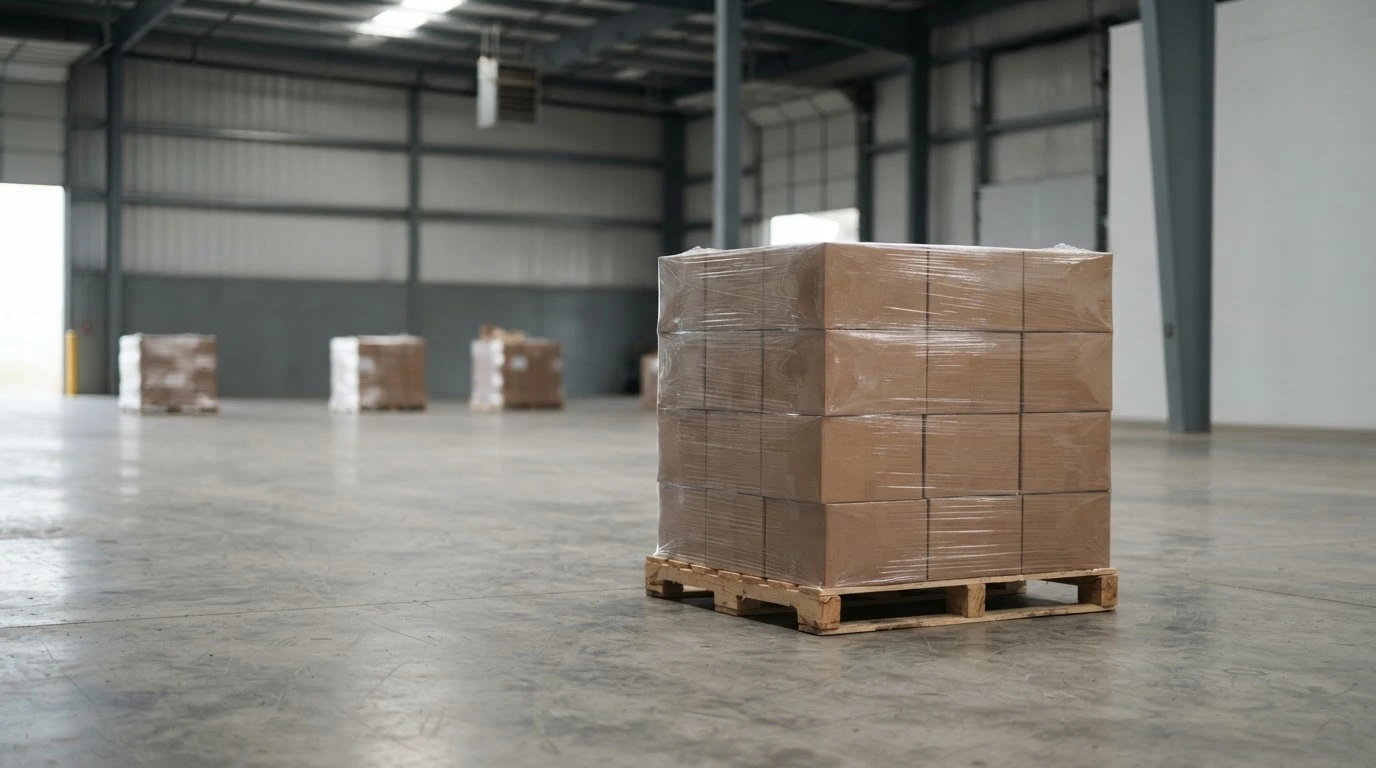
A freight terminal is a carrier facility where LTL shipments are received, sorted, consolidated, and transferred between local pickup-and-delivery equipment and linehaul trailers. LTL carriers use terminals because many shipments share trailer capacity. The terminal network lets a carrier combine freight moving in the same direction, move it between service areas, and separate it again for local delivery.
The exact route varies by carrier and lane. Some shipments move through fewer facilities than others, and a terminal scan or transit estimate is not a guaranteed delivery commitment.
What happens at an LTL freight terminal
An LTL terminal is an operating point in the carrier’s network. It is not a storage warehouse for the shipper’s inventory and it is not a Shipocity facility. Carriers may also call these locations service centers or hubs, depending on their own terminology.
In a common terminal-based move, the network performs several distinct jobs:
- A local pickup-and-delivery truck brings freight into an origin-area terminal.
- The terminal sorts shipments by destination or next network point.
- Freight traveling in compatible directions is consolidated for linehaul movement.
- A linehaul trailer moves the freight to another terminal or service area.
- A destination-area terminal sorts the freight for local delivery.
That is a common operating pattern, not a fixed sequence for every shipment. A carrier may use different hubs, transfers, equipment, and routing based on its network, the lane, and current operating conditions.
Why LTL carriers use terminals
Less-than-truckload freight does not require an entire trailer. Moving each shipment directly from its pickup location to its final destination would leave carriers with many small, inefficient point-to-point moves.
Terminals give carriers a way to build density. Freight from different shippers can be collected locally, grouped with other shipments traveling toward the same region, and moved on linehaul equipment. At the other end of the network, the freight can be separated for local delivery.
This hub-and-spoke structure helps LTL carriers serve many origins and destinations while sharing trailer capacity across shipments. It also explains why an LTL shipment may change trailers or pass through more than one service area before delivery. Carrier networks differ, so the number and location of transfers cannot be predicted from the term “LTL” alone.
Local trucks and linehaul trailers do different work
The equipment serving a terminal usually falls into two broad operating roles.
Local pickup-and-delivery equipment serves businesses and delivery locations around a terminal. These routes collect outbound freight and deliver inbound freight within the local service area.
Linehaul equipment connects terminals over longer distances. It carries consolidated freight between network points rather than visiting every individual pickup and delivery location.
Separating those roles lets the carrier combine local route activity with longer-distance movement. It does not mean every carrier uses identical trailer types, schedules, or handoff counts.
What terminal handling means for packaging
NMFTA’s LTL packaging guidance notes that LTL freight may be transferred multiple times and should be prepared for mechanical handling. Packaging therefore needs to protect the freight through normal terminal movement, not just during the first pickup.
Practical preparation includes:
- Using a sound pallet when the shipment is palletized
- Keeping cartons within the pallet footprint when possible
- Securing the load so pieces do not shift independently
- Protecting corners and vulnerable surfaces
- Applying stretch wrap or other restraint appropriate to the freight
- Making the handling unit suitable for normal forklift or pallet-jack movement
- Removing or covering old labels that could create routing confusion
Packaging requirements depend on the commodity and carrier terms. A strong pallet and secure wrap do not make every item suitable for ordinary LTL handling, so unusual, fragile, high-value, or regulated freight may require additional preparation and review.
How terminals affect transit expectations
Terminal networks add sorting and consolidation steps to LTL transportation. Those steps are part of how shared trailer capacity works, but they also mean an LTL transit estimate should not be treated as a simple driving-time calculation.
Origin, destination, pickup day, carrier network, transfer schedule, weather, capacity, and service selection can affect the estimate. A tracking update may identify a terminal or service center as freight moves through the carrier’s network, but the wording and status sequence vary by carrier.
If delivery timing is critical, review the service shown with the quote and the applicable carrier terms. An estimated transit time is not the same as a separately guaranteed service.
Can a shipper use the terminal directly?
Some carriers and quoting services support customer drop-off at an origin terminal or customer pickup at a destination terminal. Availability, hours, appointment requirements, handling procedures, and pricing depend on the carrier and location.
Do not arrive at a terminal without confirming the arrangement. The shipment must be booked correctly, and the carrier needs to identify the terminal and process available for that move. Terminal handoff is an option to evaluate, not a universal service or an automatic way to reduce cost.
What to prepare before requesting a quote
The carrier’s terminal routing happens after accurate shipment information is supplied. Prepare:
- Origin and destination ZIP codes
- Pickup date
- Number of pallets or pieces
- Fully packaged dimensions and weight
- Commodity description
- Assigned freight class when known
- Stackability and special handling needs
- Pickup and delivery location details
- Required services such as liftgate, appointment, residential, or limited-access delivery
Those inputs help determine the quote options available for the shipment. They do not let a shipper choose the carrier’s internal terminal path, and Shipocity does not control terminal processing or guarantee a transfer schedule.
From terminal network to shipment quote
Freight terminals are the transfer points that make shared-capacity LTL networks practical. They let carriers collect freight locally, consolidate it for linehaul movement, and sort it again for delivery. For the shipper, the useful response is accurate packaging and shipment data, realistic transit expectations, and careful review of the selected service. If you are also deciding how to access LTL capacity, compare LTL freight brokerage and direct carrier accounts.
Shipocity is backed by a team with more than 40 years of combined logistics experience. Through established industry relationships, the platform helps businesses compare competitive freight rates for their specific shipment. Enter accurate shipment details to review available quote options, then choose the service that fits the move.