The Four Freight Classification Factors: Density, Handling, Stowability, and Liability
LTL freight class comes from four NMFTA transportation characteristics: density, handling, stowability, and liability. Here is how each factor shapes your rate.
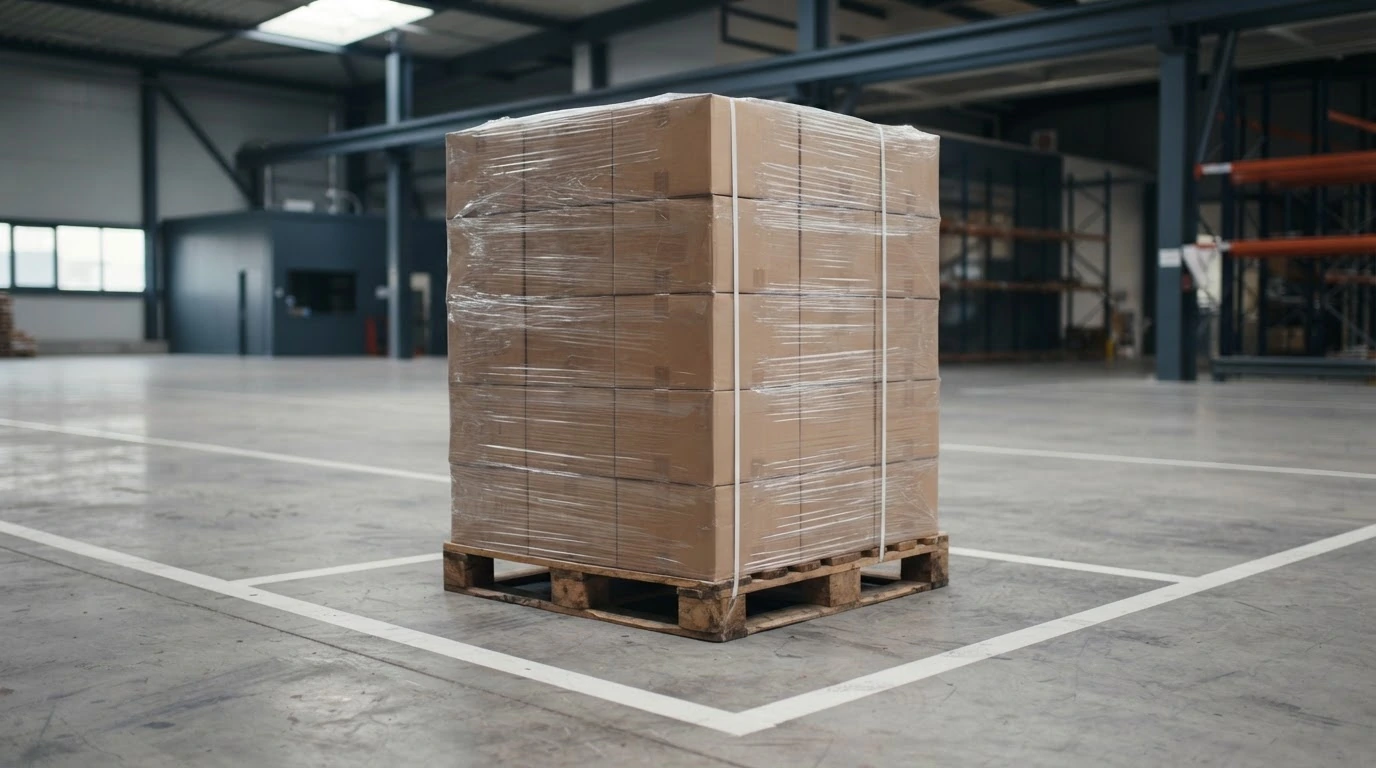
The four freight-classification factors are density, handling, stowability, and liability. The National Motor Freight Traffic Association evaluates these transportation characteristics when developing and maintaining the National Motor Freight Classification.
They do not operate as four points in a calculator. Their effect is expressed through the applicable NMFC commodity provision, including any item, subitem, class scale, packaging rule, note, or exception.
| Factor | The practical question |
|---|---|
| Density | How much packaged weight occupies the available cubic space? |
| Handling | How easy or difficult is the commodity to move through the LTL network? |
| Stowability | How effectively can it be placed with other freight in transportation equipment? |
| Liability | What relevant damage, perishability, hazardous, or related transportation risks does it present? |
Density
Density is packaged weight divided by packaged cubic volume. For a rectangular handling unit measured in inches:
- Multiply the greatest packaged length by width by height.
- Divide the cubic-inch result by 1,728 to obtain cubic feet.
- Divide packaged weight in pounds by cubic feet.
Use the complete handling unit as tendered. Include the pallet, crate, carton, padding, wrap, and projections in the measurements or weight where applicable.
NMFTA’s current Freight Classification Development Center policies say density is of prime importance when a commodity or commodity group does not exhibit unusual or significant handling, stowability, or liability characteristics. Those commodities may be assigned classes through the standard full-density scale.
That does not make density a universal shortcut. Identify the commodity and current NMFC provision before applying a class scale.
Handling
Handling considers the ease or difficulty of moving a commodity and the effect that difficulty has on transportability.
NMFTA’s guidance notes that most packaged general freight can be handled by dock personnel, often with mechanical equipment. Other articles may present additional difficulty because of size, weight, configuration, hazardous nature, fragility, or similar characteristics and may require special care or attention.
The shipper’s job is to describe and package the freight accurately. Do not invent an extra class because a pallet looks awkward, and do not hide a handling characteristic to obtain a lower quote. Use the NMFC item that applies to the actual commodity and packaging.
Useful handling documentation can include:
- Packaging type
- Handling-unit count
- Greatest dimensions and packaged weight
- Fragility or orientation requirements
- Hazardous-material status when applicable
- Any unusual configuration or special-care requirement
Stowability
Stowability concerns how the commodity can be loaded and placed with other freight.
NMFTA identifies possible considerations such as:
- Loading restrictions required by regulations or carrier policies
- Excessive weight or length
- Protrusions or lack of lateral support
- Inability to tier the commodity
- Lack of a regular load-bearing surface for freight placed above it
“Stackable” is therefore not a homemade class switch. It is one practical detail within a broader stowability evaluation. A shipper should state the physical condition honestly and follow the governing NMFC provision.
Packaging can affect the facts used in that evaluation. Overhang, exposed parts, an irregular top surface, or an unstable handling unit may change how the freight can be placed, even if the commodity itself is unchanged.
Liability
In NMFTA’s classification framework, liability includes susceptibility to damage, the propensity to damage other freight, perishability, and hazardous nature.
This classification characteristic should not be confused with a complete explanation of legal carrier liability, claims coverage, declared value, or insurance. Those subjects are governed by separate laws, tariffs, contracts, and shipment terms.
Do not convert the sale price of a product into a self-selected freight class. Use the applicable NMFC provision and provide any required commodity, packaging, hazardous-material, or special-handling information.
How the four factors interact
The factors are considered together when NMFC provisions are developed. The Freight Classification Development Center’s current policies explain that commodities exhibiting significant handling, stowability, or liability characteristics are evaluated using the density guidelines together with the applicable policies. The assigned class or classes may differ from a pure density result depending on those characteristics.
This is the reason a generic density chart cannot classify every product. Two commodities with similar packaged density can fall under different provisions when their other transportation characteristics differ.
It is also why a shipper should not assign numerical weights to the four factors. There is no public formula such as “density plus one class for fragility.” The current NMFC entry is the classification source.
Item number before class
An NMFC item number identifies the commodity provision. Freight class is the rating category that results from applying the provision to the freight.
An item can contain:
- One class
- Several subprovisions or classes
- A density-based scale
- Packaging requirements
- Notes and definitions
- References to other items or rules
Search current NMFC content in ClassIT+ using a precise commodity description. Read the full item rather than choosing a class from density alone. If more than one entry remains plausible, NMFTA offers Classification Interpretations Assistance.
What changed with the density modernization
NMFTA expanded the standard density scale and moved many eligible commodities toward full-density classification in 2025. The four-characteristic framework remained in place. Items with significant handling, stowability, or liability concerns do not automatically become full-density items.
Avoid turning the change into a universal pricing prediction. A classification change does not guarantee that every dense shipment becomes cheaper or every light shipment becomes more expensive. The effect on a quote depends on the resulting class and the applicable carrier pricing.
Use current NMFC content rather than an old chart or a memorized class.
Common mistakes
Avoid:
- Treating density as the only factor
- Adding or subtracting classes based on personal judgment
- Assuming non-stackable always means a specific class increase
- Treating product value as a direct class formula
- Ignoring packaging and the final handling-unit condition
- Using a vague commodity description
- Reusing an old item and class without checking current content
- Entering a lower class because it creates a preferred rate
The goal is to document the freight as tendered and apply the correct current provision.
What to prepare before requesting a quote
Gather:
- Precise commodity description
- Current NMFC item and subprovision when applicable
- Confirmed freight class
- Final packaged dimensions and weight for each handling unit
- Packaging type, handling-unit count, and piece count
- Stackability and unusual handling or stowability characteristics
- Fragility, perishability, or hazardous-material information when applicable
- Origin and destination postal codes
- Requested pickup date
- Required pickup and delivery services
Shipocity is backed by a team with more than 40 years of combined logistics experience. Through established industry relationships, the platform helps businesses compare competitive freight rates for their specific shipment.
When the classification and shipment details are ready, get a freight quote and sign up through Shipocity.
Sources
- National Motor Freight Traffic Association — National Motor Freight Classification
- NMFTA Help Center — Factors that determine NMFC codes
- NMFTA Help Center — Handling, stowability, and liability criteria
- NMFTA — Freight Classification Development Center policies, March 2026
- NMFTA Help Center — Exploring ClassIT+ Search