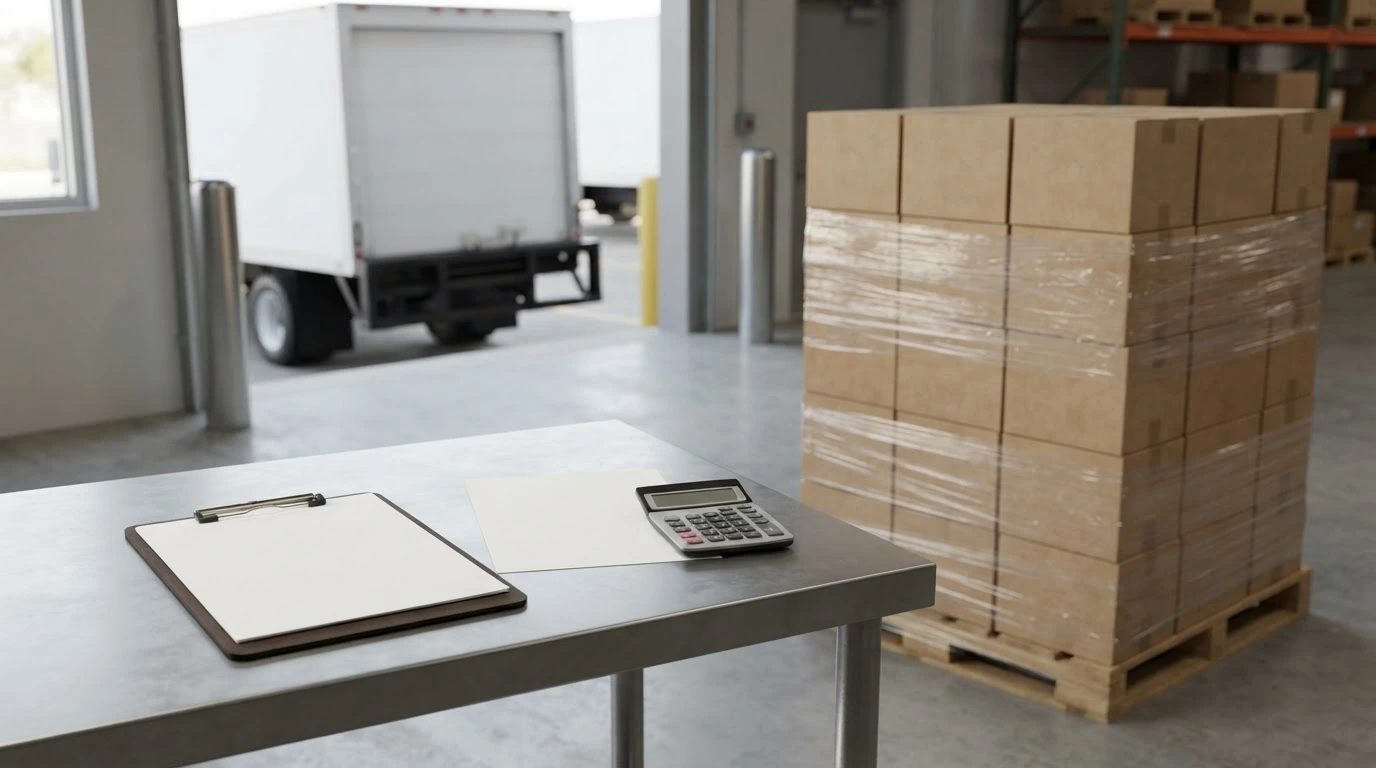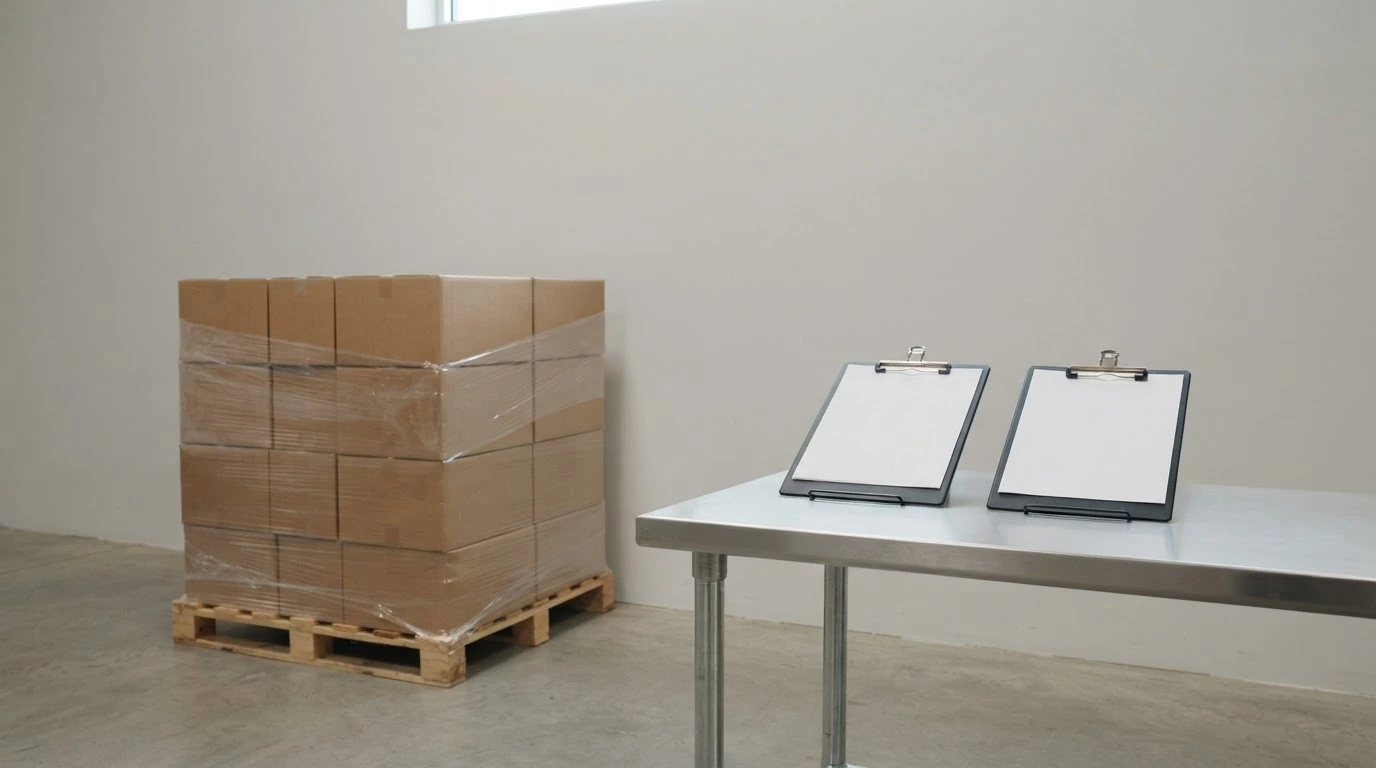
Pallet vs Skid: What Is the Difference?
Pallet vs skid compared for LTL freight: structural differences, handling, stacking, damage risk, and what actually affects your freight rate and packaging choices.
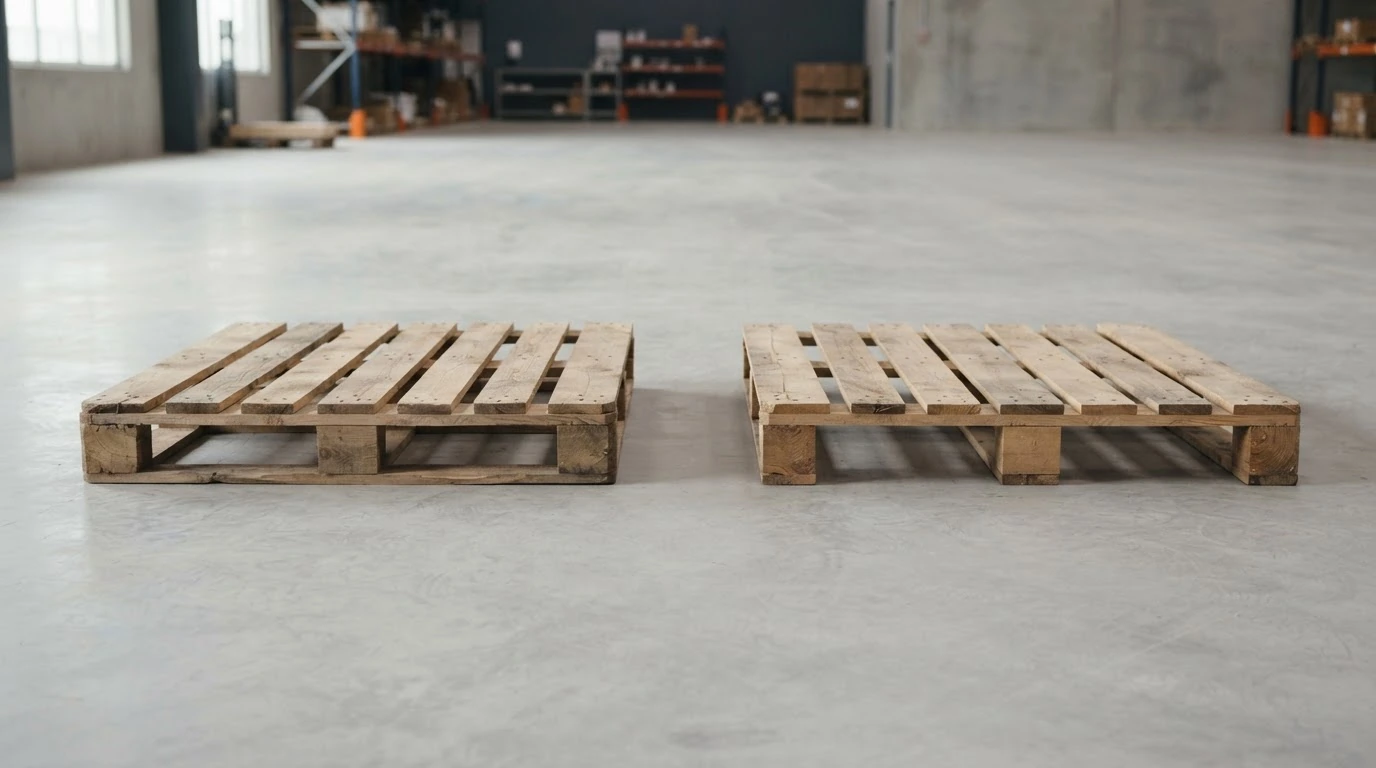
A pallet has bottom deck boards; a skid does not. Both have a top surface that supports the load, but a skid rests on runners, legs, or feet without a bottom deck.
That is the clean structural distinction. In everyday freight shipping, however, people and carriers often use the words interchangeably. The label alone does not tell you how a platform can be lifted, how much it can carry, whether it is stackable, or whether a carrier will accept it. Those answers come from the platform’s actual design and the carrier’s current rules.
Pallet vs. skid at a glance
| Feature | Pallet | Skid |
|---|---|---|
| Top deck | Yes | Yes |
| Bottom deck boards | Yes | No |
| Base | Deck boards connected by stringers or blocks | Top deck supported by runners, legs, or feet |
| Fork entry | Depends on design | Depends on design |
| Common freight terminology | Often called a pallet or skid | Often called a skid or pallet |
| Best way to evaluate it | Inspect its construction, rating, condition, and carrier compatibility | Inspect its construction, rating, condition, and carrier compatibility |
FedEx’s current pallet guide uses the same bottom-deck distinction and notes that the two terms are often used interchangeably. Its packaging guidelines also recommend pallets over skids for durability, integrity, and handling efficiency within FedEx shipping networks. That is useful carrier guidance, not a universal rule for every commodity, service, or custom shipping base.
A bottom deck changes support, not every handling feature
The bottom deck can add stiffness, spread forces, and create a different contact surface when a loaded platform is stored or stacked. It can also protect the underside of the unit and help keep the structure together through repeated handling.
But a pallet is not automatically a four-way-entry platform. Some stringer pallets permit entry from only two directions or provide partial entry through notches. Block pallets are commonly designed for four-way entry. A skid can also be built with fork openings.
For that reason, do not infer forklift or pallet-jack access from the word alone. Look at:
- Which sides provide full fork entry
- Fork-opening height and width
- Whether a pallet jack can enter and roll beneath the load
- The platform’s rated capacity under the actual support condition
- Whether the load blocks or obstructs entry
- Whether the base remains stable when lifted
FedEx’s general freight packing guidance requires the handling base used for the covered services to be accessible by forklift and pallet jack, with pallet-jack entry on two sides. Another carrier or service may publish different requirements, so confirm the rule that applies to the quote.
Why pallets are common in LTL networks
LTL freight may be transferred between trailers and handled at terminals before delivery. A well-designed pallet gives handlers a repeatable base for moving a unitized load with standard equipment.
The bottom deck can be useful when the shipment will be handled repeatedly, but it does not make an unsuitable load safe. The pallet still has to be strong enough for the product, compatible with the handling equipment, and in sound condition. The freight must be secured to the base so the product and platform behave as one handling unit.
NMFTA’s palletization guidance emphasizes stable stacking, keeping containers within the pallet edges, closing gaps that allow movement, and securing the load to the pallet. Those practices matter whether a carrier or shipper informally calls the base a pallet or a skid.
When a skid can make sense
A skid can be appropriate when it is engineered for the load and accepted by the selected carrier and service. Examples include a machine mounted to purpose-built runners, a crated item with an integrated forkliftable base, or a handling unit intended for limited movement rather than repeated reuse.
The absence of a bottom deck may reduce material or simplify a custom base, but it can also change stiffness, support, and the way the unit contacts floors, racks, conveyors, or another load. Those effects depend on the actual design. Do not assume every skid is cheaper, weaker, lighter, two-way entry, or unsuitable for stacking.
If the shipment needs a pallet jack, liftgate, rack, conveyor, or automated handling system, confirm compatibility before building the skid. A platform that works with a shipper’s forklift may not work with the equipment at a terminal or receiving facility.
Does a skid cost less to ship than a pallet?
There is no automatic skid discount or pallet surcharge simply because of the name. The platform can affect price indirectly when it changes shipment details such as:
- Finished length, width, or height
- Gross weight
- Stackability
- Freight class or applicable NMFC provisions
- Handling requirements
- Required pickup or delivery services
A lighter custom skid could reduce gross weight, while a wider runner or protruding base could increase the finished dimensions. A nonstackable configuration can also use trailer space differently from a stable, stackable unit. The quote should describe the finished shipment, not an idealized product before it is mounted to the base.
Freight class is not determined by the platform name either. NMFTA identifies density, handling, stowability, and liability as the four classification criteria. Commodity-specific NMFC provisions and packaging requirements may also apply.
Avoid these pallet and skid mistakes
Assuming every pallet has four-way entry
Check the actual openings and the equipment that will be used. A 48-by-40-inch footprint does not prove four-way access.
Treating a skid as something that must be dragged
A properly designed skid can be forkliftable. Dragging is not a defining feature and may damage the base, floor, or freight. Follow the design and handling instructions for the actual unit.
Using a platform with no verified capacity
Tare weight, size, and appearance do not establish load capacity. Use a rating or engineered specification that matches the load distribution and the way the platform will be supported and moved.
Letting the product overhang
Overhang exposes the product to impact and changes the finished dimensions. Keep the load within the supported footprint unless the packaging and carrier requirements specifically allow another configuration.
Relying on wrap alone
Stretch film can help unitize compatible loads, but the complete packaging method must fit the commodity. Heavy, rigid, sharp, round, or irregular products may need banding, blocking, bracing, a crate, or another engineered restraint.
Quoting product dimensions and weight only
Measure and weigh the completed handling unit. Include the pallet or skid, product, crate or cartons, dunnage, wrap, straps, blocking, and bracing. NMFTA’s current Item 250100 guidance confirms that carriers may verify shipment weight and dimensions.
How to choose between a pallet and a skid
Start with the shipment and handling path rather than the name:
- Identify the product and packaging needs. Consider weight distribution, fragility, shape, liability, and any commodity-specific packaging rules.
- Map the handling path. Note forklifts, pallet jacks, docks, liftgates, racks, conveyors, and receiver equipment.
- Choose a compatible base. Verify entry direction, clearances, capacity, stiffness, durability, and support condition.
- Confirm carrier acceptance. Check the exact carrier, service, pricing program, and any approval requirements.
- Build and secure the final unit. Keep the load stable and within the supported footprint.
- Measure and weigh it. Use the farthest finished dimensions and gross handling-unit weight for the quote.
For ordinary palletized LTL freight that will be transferred and handled with standard terminal equipment, a sound carrier-compatible pallet is often the simplest starting point. For machinery or a custom crated item, an engineered skid may be the better base. The right choice is the one that safely supports the load and works throughout the route.
Information to gather for a quote
Prepare:
- Packaging type and construction
- Pallet or skid count
- Finished dimensions of each handling unit
- Gross weight of each handling unit
- Commodity description
- NMFC item and freight class when known
- Stackability and special handling needs
- Origin and destination ZIP codes
- Dock, forklift, pallet-jack, and liftgate availability
- Residential, limited-access, inside, appointment, or other requested services
Shipocity is backed by a team with more than 40 years of combined logistics experience. Through established industry relationships, the platform helps businesses compare competitive freight rates for their specific shipment.
Once the completed platform details are ready, get a freight quote and create your Shipocity account.