Pallet Shipping Checklist: Before the Carrier Arrives
Practical pre-pickup checklist for LTL pallet shipments covering pallet condition, packaging, dimensions, weight, labeling, BOL preparation, and accessorial decisions before quoting.
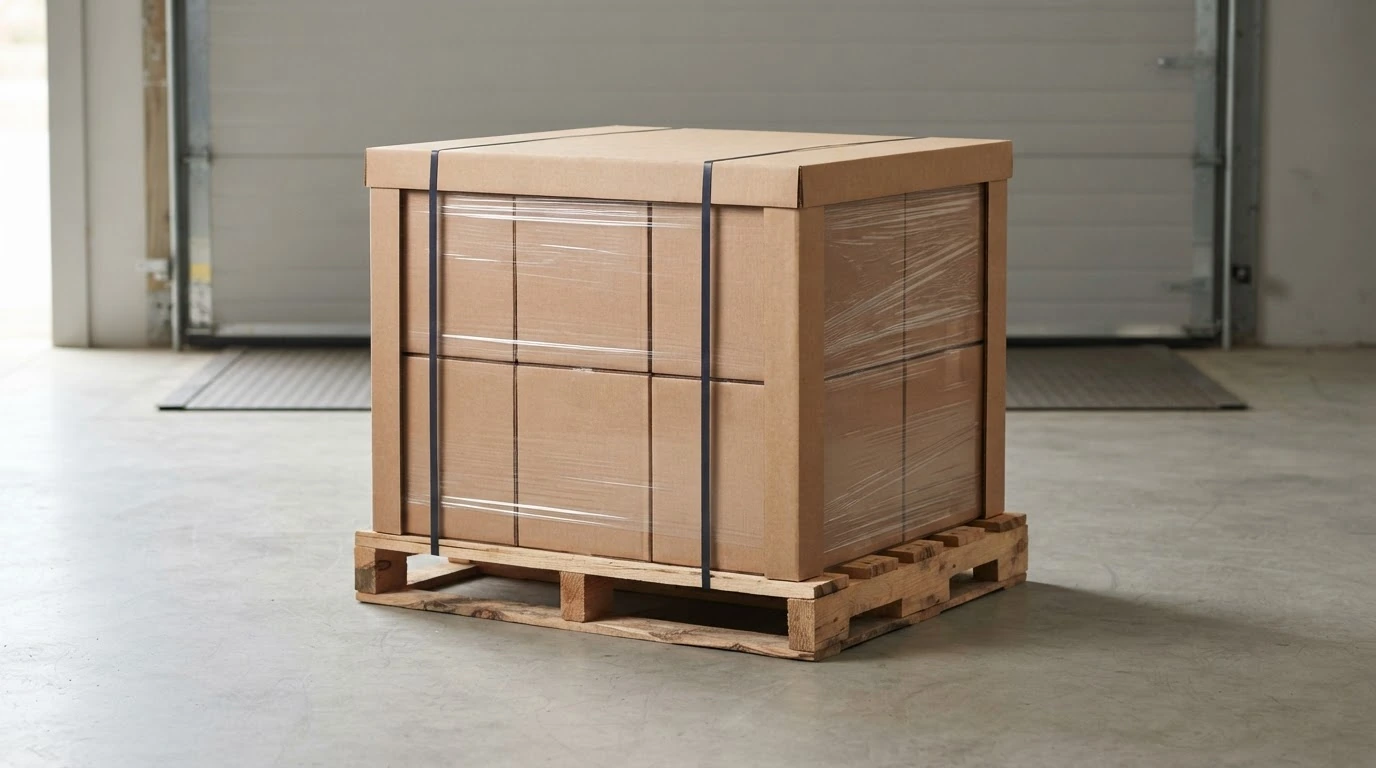
Before an LTL carrier arrives, the freight should be fully packaged, secured to a sound handling base, measured, weighed, labeled, documented, and staged for safe pickup. The quote and shipping documents should describe that finished shipment, not the unpackaged product or an estimate made before the pallet was built.
Use this checklist after packing and again before releasing the freight to the driver. Carrier rules and commodity-specific NMFC requirements still control, so confirm any service-specific limits before pickup.
1. Confirm the product is ready for transportation
- The product has suitable internal cushioning, blocking, bracing, or fitted supports.
- The outer carton, crate, drum, or enclosure is appropriate for the product and its weight.
- Closures, fasteners, seals, and fittings are installed correctly.
- Fragile surfaces, corners, controls, and projections are protected.
- Liquids cannot leak under the package’s intended orientation and conditions.
- Hazardous-materials status has been determined by trained personnel when applicable.
Palletization makes freight easier to move, but it does not replace the package around the product. Stretch film around an exposed or weak item is not the same as an outer container designed for the LTL environment.
The NMFC includes general packaging specifications, commodity-specific minimum packaging requirements, and performance-based provisions. Verify the requirement for the actual commodity instead of assuming that every palletized shipment uses the same packaging standard.
2. Inspect the pallet or skid
- The base is strong and stiff enough for the completed load.
- No deck board, stringer, block, runner, or fastener is broken or loose.
- There are no protruding nails, screws, staples, or sharp edges.
- The deck provides adequate support beneath the entire package.
- The base is clean and dry enough not to damage the freight.
- Fork or pallet-jack openings are usable on the intended entry sides.
A 48-by-40-inch wood pallet is common, but it is not mandatory for every item. Choose the base for the load’s actual footprint, weight distribution, and handling method. Long, wide, heavy, cylindrical, or irregular products may need a custom skid, solid deck, crate, blocking system, or other design.
Carrier-specific clearance rules can differ. FedEx’s current freight packaging page, for example, specifies a minimum 3.5-inch pallet-jack clearance for the services described there. Do not present that number as a universal rule; verify the selected carrier’s requirements.
3. Build a stable load
- Every package sits fully inside the pallet footprint with no overhang.
- The weight is balanced and supported by suitable parts of the base.
- Heavier packages are low only where the packages beneath and beside them can carry the load.
- Gaps that could allow movement are blocked or otherwise controlled.
- Cylindrical, wheeled, irregular, or top-heavy items cannot roll, pivot, or slide.
- The finished unit does not lean, rock, or change shape when lightly checked.
For compatible cartons, a compact arrangement with supported corners can improve stability. Do not force dissimilar packages into a stack merely to create a flat top. A heavy carton should never be placed over a package that cannot support it.
If the product extends beyond a standard pallet, build a larger base or appropriate crate. Cutting the support short while allowing the freight to overhang exposes the product and changes the finished shipment geometry.
4. Secure the freight to the base
- Blocking and bracing prevent movement in every direction that matters.
- Bands attach the load or enclosure to structural pallet components.
- Banding stays out of fork-entry notches and cannot slide off the package.
- Edge or corner protectors distribute force where straps could crush or abrade the package.
- Stretch film is anchored to the pallet and contains the load without distorting it.
- Film, straps, and loose ends do not obstruct handling equipment.
NMFTA’s current palletizing guidance recommends wrapping film to the bottom of the pallet, covering the load fully, and using sufficient overlap. It also makes an important distinction: plastic film can unitize the load, but it does not replace the NMFC minimum packaging required for the commodity.
The right securement is load specific. Some cartons use film, corner boards, and bands. Machinery may need bolts, blocking, bracing, and an enclosure. Drums may need a solid or anti-skid deck, chocks, a top frame, perimeter restraint, and vertical bands. Follow the package design and carrier guidance for the item rather than adding materials mechanically.
5. Decide whether the pallet is stackable
- The completed package can safely support the load it may receive from above.
- The top surface is suitable for stacking and remains within the base footprint.
- The stackability answer in the quote and shipping documents is accurate.
- Any carrier-required nonstackable marking is visible and correctly applied.
A flat-looking top does not prove that a pallet is stackable. Consider the container strength, product, support path, weight distribution, and package design. Likewise, fragile freight is not automatically nonstackable if it is protected by an engineered container designed to carry a top load.
Do not add a cone, pyramid, or other device solely to discourage top loading without checking the carrier’s current rules. Such devices can increase finished height, occupy additional trailer space, or affect charges.
6. Measure and weigh the finished unit
- Length is the greatest finished dimension, including packaging and projections.
- Width is the greatest finished dimension, including packaging and projections.
- Height includes the pallet, top protection, and anything extending above the load.
- Gross weight includes the product, pallet, crate or cartons, blocking, film, and bands.
- Each handling unit is recorded separately when dimensions or weights differ.
- The scale and measurement method are reliable enough for the shipment.
Do not use catalog dimensions or product-only weight. Current NMFTA guidance calculates handling-unit density from the greatest straight-line dimensions as tendered. Carriers may verify weight and dimensions, so a quote based on the finished unit is less likely to diverge from the carrier’s verified shipment facts.
7. Verify classification and description
- The commodity description identifies what is actually being shipped.
- The applicable NMFC item and class are confirmed when required and known.
- The packaging type matches the commodity description and NMFC requirement.
- The bill of lading information agrees with the quote and physical freight.
- Hazardous-materials descriptions, marks, labels, and documents are complete when applicable.
Freight class is not always a density-only result. The applicable NMFC provision may consider density, handling, stowability, and liability. Avoid copying a class from an old shipment without checking whether the commodity, package, density, or current NMFC rule has changed.
Item 250100 permits carriers to verify shipment weight and dimensions, and current NMFTA guidance emphasizes matching the bill-of-lading description to the applicable tariff information. Accurate data matters before pickup, not only after an invoice is reviewed.
8. Label and document the shipment
- Each handling unit has the labels and identifiers required by the carrier.
- Labels are visible, legible, securely attached, and not hidden beneath opaque material.
- Old or conflicting labels and marks have been removed or invalidated.
- Orientation, fragile, fork-entry, nonstackable, or other instructions are used only when applicable.
- The PRO or shipment reference can be matched to the correct handling unit.
- Origin photographs show the complete packaged shipment from useful angles.
Labels communicate handling information; they do not substitute for physical protection. Photograph the pallet after packaging and labeling are complete. Capture the base, fork openings, package condition, securement, and each visible side. Preserve the images with the shipment record in case delivery or claim questions arise.
9. Confirm pickup and delivery conditions
- Both addresses and ZIP codes are correct.
- The pickup date, ready time, and closing time are accurate.
- A contact is available or the carrier’s unattended-pickup process has been followed.
- The pickup area is accessible to the expected vehicle.
- The shipper and consignee have a dock, forklift, or other equipment suitable for the load.
- Liftgate, residential, limited-access, appointment, or inside service is requested when it genuinely applies.
A liftgate is generally relevant when a location has no suitable dock or forklift, but the handling unit must also fit the liftgate’s platform and capacity. Long, wide, heavy, or poorly balanced freight may require a different unloading plan. Confirm the actual equipment constraint with the carrier.
Accessorial definitions vary. A school, construction site, storage facility, farm, residence, or other location may be treated differently under a carrier’s tariff. Describe the site accurately rather than choosing services from the address name alone.
10. Stage the pallet for pickup
- The freight is in the agreed pickup location and ready at the stated time.
- The carrier can reach and lift it without moving unrelated inventory.
- Required paperwork is complete and available.
- The pallet has received a final walkaround for damage, shift, leakage, or loose materials.
- The driver can verify the handling-unit count without breaking the package.
- A copy of the final shipment record is retained.
Do not leave the last inspection until the trailer is waiting. If the unit rocks, leans, leaks, has damaged packaging, or does not match the documents, stop and correct the problem before tendering it.
Quote the shipment you actually prepared
Shipocity is backed by a team with more than 40 years of combined logistics experience. Through established industry relationships, the platform helps businesses compare competitive freight rates for their specific shipment.
With the pallet packaged, documented, measured, and weighed, get a freight quote using the completed shipment details and required services.