Packaging Changes That Can Reduce Freight Cost
Learn which pallet packaging changes may reduce freight cost while preserving protection, truthful stackability, and accurate classification.
Packaging can reduce an LTL freight cost when it safely lowers the shipment’s measured cube, actual weight, handling difficulty, or need for special treatment. The useful changes are practical: choose an appropriately sized pallet, keep the load within its footprint, remove unnecessary empty space, build a stable stack, preserve stackability when the product permits it, and measure the completed handling unit accurately.
None of those changes guarantees a lower quote. The applicable NMFC item, freight class, carrier rules, lane, pricing agreement, required services, and the freight’s actual condition at pickup still control the result. Packaging should be redesigned only after the business confirms that the product remains protected and the completed unit meets the current requirements that apply to the commodity and carrier.
Measure the handling unit the carrier will receive
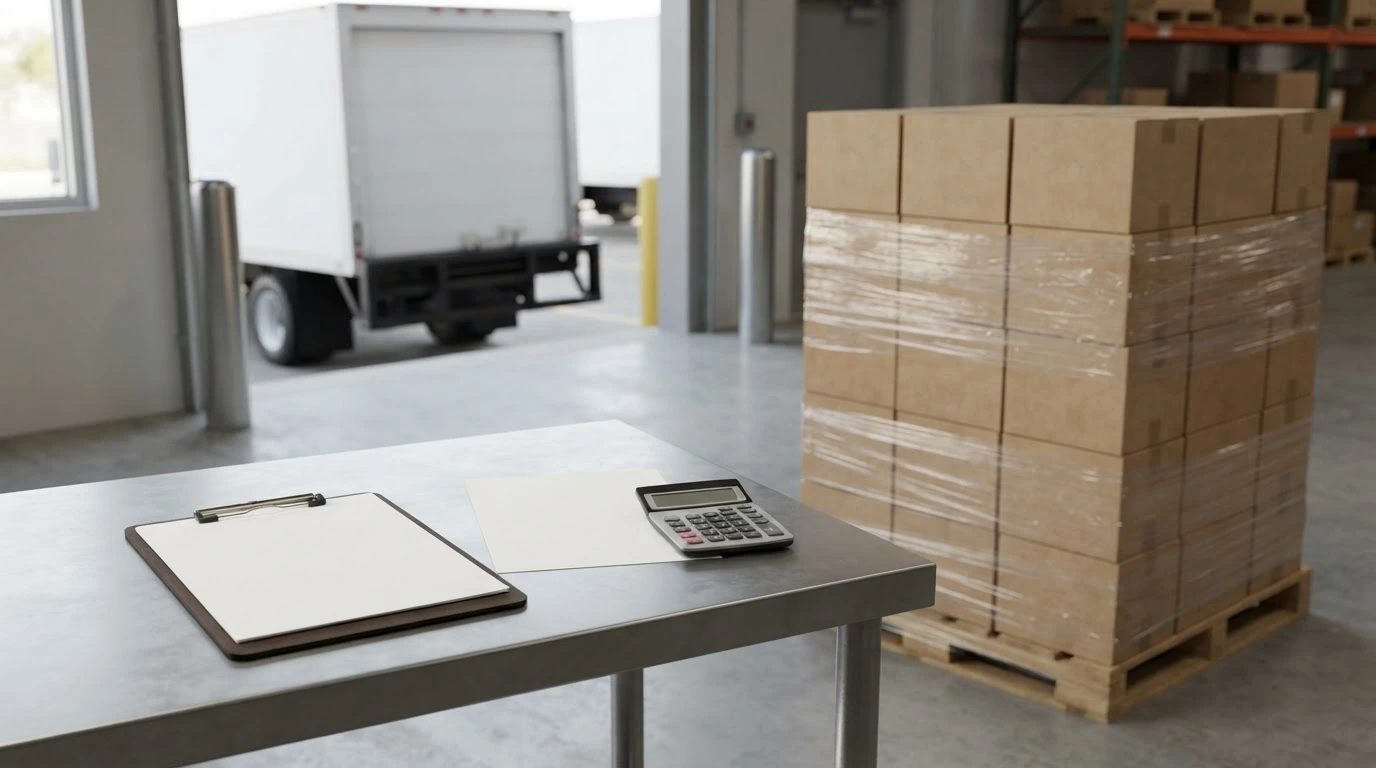
Start with the finished pallet, not the bare product or an empty carton. NMFTA’s current packaging and classification guidance says density measurements use the shipment’s extreme dimensions, including packaging forms such as the pallet, crate, or a device that makes the unit non-stackable. A projection, overhang, top cone, or wide base can therefore change the measured cube even when the product itself is unchanged.
Record for every completed handling unit:
- greatest packaged length, width, and height, including projections;
- gross weight, including the pallet and all packaging;
- pallet or skid construction and forklift-entry points;
- carton pattern and whether the load stays within the base;
- stackable or non-stackable status as actually tendered;
- commodity description, applicable NMFC item, and freight class;
- blocking, bracing, cushioning, edge protection, banding, and wrap; and
- any handling restriction created by the product or packaging.
Use a repeatable measurement point and calibrated equipment appropriate to the operation. If a packaging trial changes the dimensions or weight, update the quote record before comparing rates. A lower model result based on dimensions that will not match the tendered freight is not a real saving.
Right-size the pallet and outer packaging
The pallet should be large and strong enough to support the complete load without overhang, but it does not need unused deck area around a much smaller product. If the current base is materially larger than the protected load, test a smaller suitable base or redesign the carton arrangement.
The familiar 40-by-48-inch wood pallet is one carrier-published option, not a universal requirement or automatic lowest-cost choice. The right footprint depends on the product, weight distribution, package strength, forklift access, carrier requirements, and the NMFC packaging provisions that apply. Long, heavy, concentrated, or irregular freight may need a purpose-built skid or crate instead.
Right-size outer cartons as well. Reducing unused internal volume may reduce the completed cube, but the new carton must still provide adequate compression strength, cushioning clearance, and containment. Do not replace tested protective packaging with a thinner or smaller design solely to improve a rate estimate.
Keep the load inside the pallet footprint
Carton overhang exposes edges to impact and can make the unit harder to handle or stow beside other freight. Rework the carton pattern, inner pack, or pallet size so the protected load is contained within the base. FedEx Freight’s published packaging guidance recommends avoiding overhang and using a sturdy forklift-accessible base.
Also remove projections that serve no protective or operational purpose. Loose straps, bowed cartons, protruding parts, and unstable top layers can expand the extreme dimensions or create handling problems. A useful redesign makes the geometry cleaner without concealing a genuine restriction.
Build a stable, supportable stack
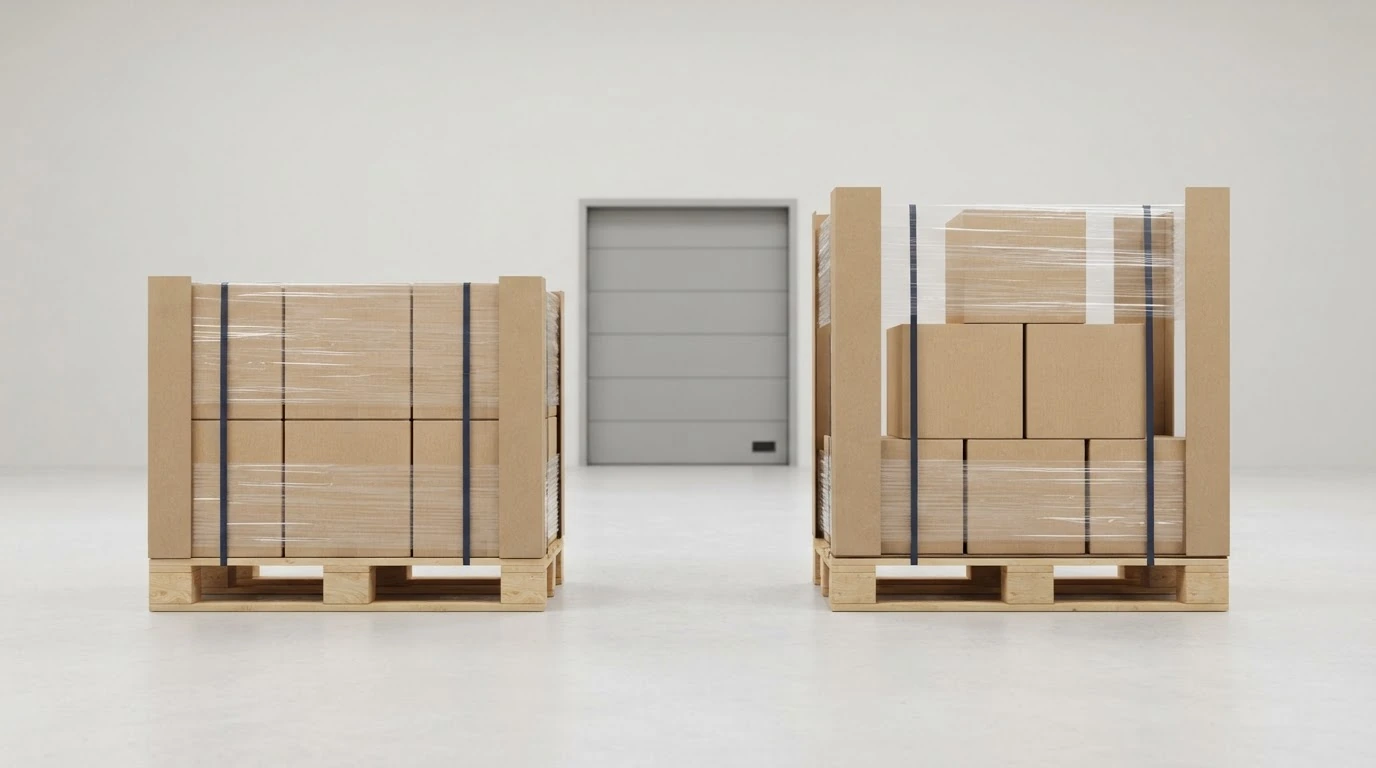
Use a carton pattern that carries vertical compression through supported edges, and choose column or interlocking stacking based on the cartons, contents, and tested load behavior. Keep heavy units low, distribute weight across the base, fill only the internal voids that must be controlled, and use tier sheets or load protectors when they are needed to prevent movement or bridge pallet gaps.
Edge boards, banding, stretch wrap, blocking, and bracing perform different jobs. FedEx’s current freight-packing guide describes edge boards as a way to unitize a load and support stack strength, while bands secure the load to the pallet and stretch wrap helps prevent shifting. Use the materials and containment force appropriate to the product rather than applying an arbitrary layer count.
The pallet itself must remain structurally sound. Broken boards, missing blocks, weak fasteners, inadequate deck support, or inaccessible fork openings can erase the benefit of a compact stack by making it unsafe or difficult to handle.
Preserve stackability only when it is truthful and safe
A flat, stable, load-bearing top may give a carrier more stowage flexibility. A non-stackable unit can also be subject to carrier-specific additional charges; FedEx’s current guide, for example, directs customers to its service guide for the applicable non-stackable surcharge.
That does not mean every load should be declared stackable. Fragile contents, irregular geometry, top-heavy equipment, hazardous materials, insufficient compression strength, or a product-specific prohibition may require top-load-only or non-stackable treatment. NMFTA identifies inability to load other freight on top, lack of regular load-bearing surfaces, excessive dimensions, and loading restrictions as stowability considerations.
Remove a top cone or similar restriction only if packaging engineers or other qualified reviewers determine the load can safely bear the expected environment. Never trade a truthful handling instruction for a lower-looking quote.
Reduce packaging weight carefully
Packaging weight is part of the gross shipment weight. A lighter pallet, more efficient crate, or redesigned inner pack can matter when it changes the applicable rating result. The safe opportunity is to remove redundant material or choose an equally protective tested design, not to weaken the handling unit.
Compare the old and proposed designs on more than material weight:
| Review field | Existing design | Proposed design |
|---|---|---|
| Finished dimensions | Measure the extreme packaged cube | Measure the extreme packaged cube |
| Gross weight | Include pallet and packaging | Include pallet and packaging |
| Product protection | Record current test or damage evidence | Verify equal or better protection |
| Handling | Confirm forklift access and stability | Confirm forklift access and stability |
| Stowability | Record projections and stackability | Record projections and stackability |
| Classification | Confirm current NMFC item and class | Reconfirm after the design change |
| Quote result | Use the current shipment record | Use the revised shipment record |
A packaging material can be lighter yet produce a larger or less stable handling unit. Evaluate the complete packaged result.
Recheck freight class after a packaging change
NMFTA currently describes freight class through four transportation characteristics: density, handling, stowability, and liability. Packaging can affect each one. A smaller cube can increase density; a secure pallet can improve handling; a flat supported top can change stowability; and adequate containment can reduce susceptibility to damage. But the effect is not automatic or uniform.
Some NMFC items use density-based provisions, while other items have commodity-specific descriptions, packaging requirements, or adjustments for handling, stowability, or liability. Use the current NMFC entry for the product as packaged. A density calculation alone does not authorize a class, and a packaging change does not erase the need for an accurate commodity description.
If the packaging changes the applicable item, class, or shipment description, update the bill of lading and quoting data. If it does not, do not claim a new class merely because the pallet looks more compact.
A worked comparison without invented savings
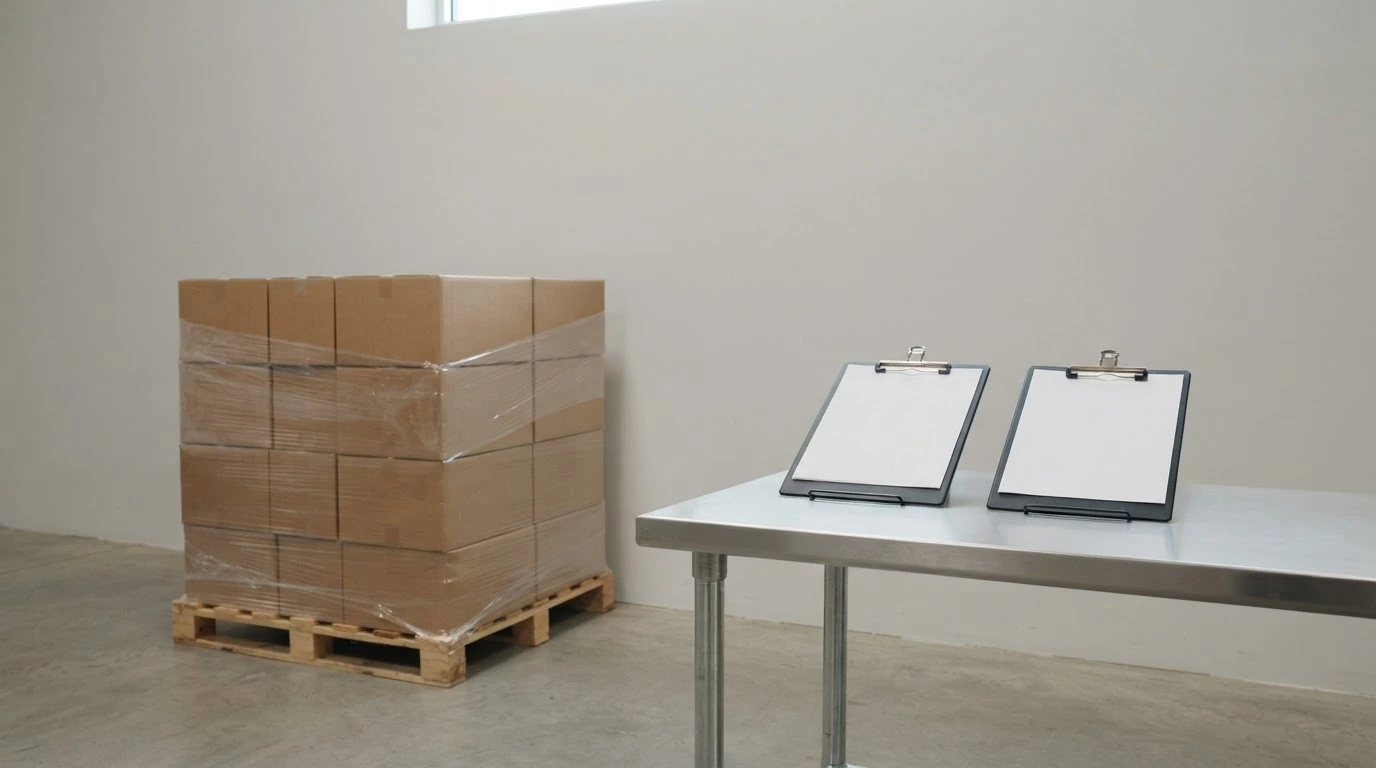
Suppose a business ships the same boxed product on a pallet each week. The existing design has a wide base, minor carton overhang, an uneven top layer, and extra internal void fill. A proposed design uses an appropriately sized sound pallet, revised inner cartons, a contained rectangular stack, necessary edge protection, and secure banding and wrap.
The business should build and test the proposed unit, then measure both completed designs. It should confirm product protection, pallet strength, forklift access, stability, actual stackability, current NMFC information, and all required carrier rules. Finally, it should request comparable quotes using the same lane, date, service requirements, and pricing context.
If the revised record produces a lower complete quote without adding damage or handling risk, the packaging change may reduce freight cost for that shipment. If the class, minimum charge, carrier rule, or service charge leaves the total unchanged, the redesign may offer other operational benefits but should not be presented as freight savings. No hypothetical percentage is transferable to another product, lane, or carrier agreement.
What can change the result
- Carrier rules: size, weight, non-stackable, capacity, and special-handling provisions are carrier-specific and can change.
- Commodity classification: the current NMFC item may include packaging or handling provisions that a generic density table does not show.
- Damage exposure: reduced material cost or cube is not a saving if the design increases damage, reshipment, or claims risk.
- Minimum charges and pricing agreements: a smaller or lighter unit may not cross the threshold that changes the billed rate.
- Shipment mix: a design that works for one SKU or order quantity may not work for another.
- Required services: liftgate, limited-access, residential, appointment, or other services can remain part of the total regardless of packaging.
XPO’s current freight-protection guidance makes the operational point clearly: packaging performance affects damage outcomes in the LTL environment. Cost review and protection review belong in the same decision.
Prepare the revised shipment for a live comparison
Before requesting rates, have the final origin and destination, pickup date, handling-unit count, extreme packaged dimensions, gross weights, commodity descriptions, NMFC items and classes when known, truthful stackability status, and required pickup or delivery services.
Shipocity is backed by a team with more than 40 years of combined logistics experience. Through established industry relationships, the platform helps businesses compare competitive freight rates for their specific shipment.
Once the tested packaging and final shipment record are ready, compare live carrier rates.