Packaging and Labeling for Cross-Border LTL
Prepare cross-border LTL packaging and labels by separating carrier identification, product marking, and lane-specific wood-packaging rules.
Cross-border LTL freight needs three different kinds of preparation to agree: the physical shipping unit must withstand normal LTL handling, the carrier label must identify the correct shipment, and any customs or product markings must satisfy the destination country’s rules. A strong pallet with a clear carrier label can still be stopped if a required country-of-origin or wood-packaging mark is missing. A compliant product mark cannot rescue a pallet that shifts, overhangs, or loses its shipment label.
The safest approach is to build and identify the freight first, then have the importer, customs broker, carrier, and any commodity specialist confirm the destination-specific markings before pickup. This guide focuses on commercial truck freight moving among the United States, Canada, and Mexico. It was checked against the official sources listed below on July 22, 2026 and is practical preparation guidance, not customs, safety, or legal advice.
Keep four different jobs separate
“Labeling” can refer to several things that do not replace one another.
| Layer | What it does | Who should confirm it |
|---|---|---|
| Shipping unit | Keeps cartons, drums, machinery, or other freight stable on a pallet, skid, or in a crate | Shipper and carrier |
| Carrier shipment label | Connects each handling unit to the bill of lading and carrier record | Shipper and carrier |
| Product or customs marking | Identifies origin or supplies commodity-specific information required by the importing country | Importer, broker, and relevant government agency |
| Wood-packaging mark | Shows that regulated solid-wood packaging received an approved phytosanitary treatment | Importer, packaging supplier, and plant-health authority |
A barcode applied by a carrier is not a country-of-origin mark. A country-of-origin label is not an ISPM 15 mark. The ISPM 15 mark on a pallet does not identify the shipment for an LTL terminal. Treat each layer as a separate checkpoint.
Build one stable, measurable handling unit
Cross-border preparation starts with the same physical question as any LTL move: can the freight stay together while it is transferred through a network?
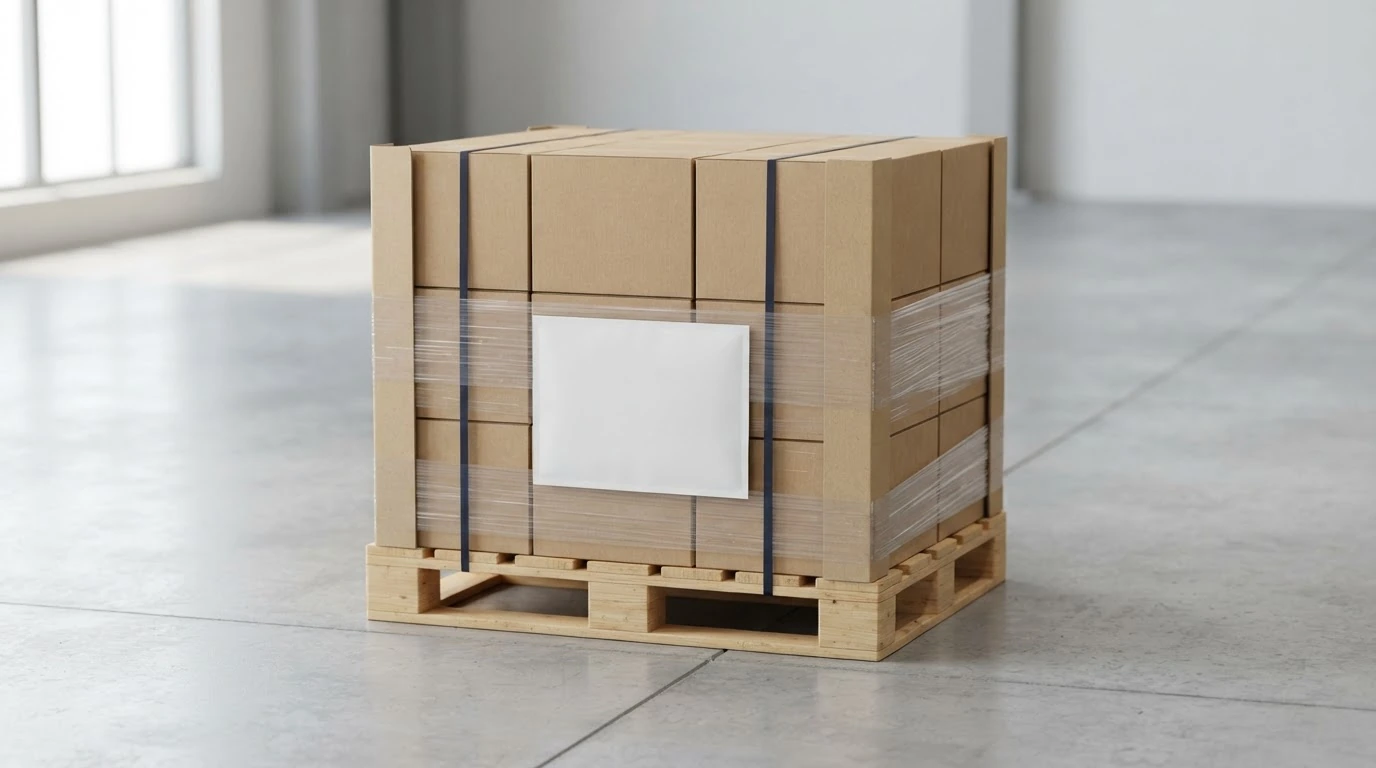
Use a sound pallet, skid, or crate that fits the commodity and carrier requirements. Keep the load within the footprint when possible, place heavier items low, close voids that let cartons shift, protect exposed edges, and secure the freight to the base. Stretch wrap can unitize cartons, but it should not be treated as the only restraint for a load that needs strapping, blocking, bracing, or a crate. Avoid covering fork openings or creating loose tails that can catch during handling.
Measure and weigh the finished unit, not the unwrapped product. Record the maximum length, width, and height after corner protection, wrap, straps, pallet, and any top cap are installed. If the freight cannot be stacked, must remain upright, has an uneven center of gravity, or needs special equipment, make that constraint explicit to the carrier before tender.
Packaging requirements are commodity- and carrier-specific. A pallet that is adequate for uniform cartons may be inappropriate for machinery, liquids, batteries, regulated dangerous goods, or a product with a fragile surface. Confirm the carrier’s current packaging, acceptance, and handling requirements for the actual load rather than copying a prior shipment.
Make the carrier label match the transportation record
Place a durable shipment label on every pallet, crate, or other handling unit. The operational label should let the carrier match that piece to the bill of lading and routing record without opening the freight. Common useful fields include:
- shipper and consignee names and complete addresses;
- destination postal or ZIP code and country;
- the bill of lading or shipment reference supplied for the move;
- piece numbering, such as “1 of 2” and “2 of 2”;
- a concise commodity identifier; and
- handling instructions the carrier has accepted for the shipment.
Use the exact names, addresses, references, and piece count supplied to the carrier and broker. Do not shorten a consignee name differently on the pallet, bill of lading, and customs documents. Do not reuse an old label or leave an obsolete barcode visible. If a pouch is used, seal it against moisture and place it where wrap, straps, or adjacent freight will not obscure it. For a multi-piece shipment, label every piece and photograph the finished units before pickup.
The carrier label should not contain guessed customs data. If the tariff classification, country of origin, dangerous-goods description, or another regulated statement is uncertain, pause and have the responsible party resolve it before printing the final labels.
U.S. product marking is not the pallet’s shipping label
For goods imported into the United States, CBP’s current guidance tells importers to consider country-of-origin marking and warns that other product requirements can come from agencies responsible for safety, health, energy, or other controls. The rule and any exception depend on the article and how it reaches the ultimate purchaser. That means a generic “Made in” sticker on the outside stretch wrap should not be assumed to satisfy the marking requirement for every product.
Before a U.S.-bound shipment is packed, the importer and broker should confirm which articles require marking, the correct origin, acceptable wording and placement, and whether an exception applies. They should also identify any permit or commodity-specific label required by another agency. Apply those markings before unitizing the freight when they need to remain on the product or its usual container.
Canadian marking applies to listed goods and has its own rules
Canada’s CBSA says certain imported goods must be marked with their country of origin and that the Canadian importer is responsible for compliance at importation. Memorandum D11-3-1 distinguishes country-of-origin marking from labeling administered by other departments, lists the covered product categories, and explains exemptions and acceptable methods.
The memorandum says required markings generally must be legible, sufficiently permanent, and easy to see during normal handling. It also explains that for some CUSMA goods the origin may appear on the usual container when that is how the ultimate purchaser buys the good. These are product-marking rules, not a blanket instruction to put an origin label on every LTL pallet.
For Canada-bound freight, have the importer confirm whether the actual good is listed, whether an exemption applies, and whether the product, point-of-sale package, or another container must carry the mark. Do this before wrapping the pallet. Authorization to mark after importation is conditional and should not be treated as the normal plan.
Solid-wood pallets and crates need lane-specific review
Raw or non-manufactured wood packaging can carry plant pests, so pallets, crates, dunnage, and blocking may be regulated separately from the commodity.
For freight entering or transiting the United States, USDA APHIS says regulated wood packaging material must be pest-free, debarked, treated by an approved method, and marked with the ISPM 15 logo. Its current page identifies pallets, skids, crates, boxes, reels, drums, load boards, and dunnage as examples. The importer should source compliant material from an accredited supplier and inspect the mark before loading because noncompliant wood packaging will not be allowed to enter.
Canada’s rule is lane-specific. The Canadian Food Inspection Agency defines wood packaging as non-manufactured wood used to brace, support, protect, or secure cargo. It says packaging made entirely from manufactured materials such as plywood, plastic, cardboard, fibreboard, or oriented strand board is exempt from Canada’s wood-packaging import requirements. Its page also directs users to different requirements for movements from the continental United States and for wood packaging arriving from other areas. Confirm the current rule for the origin and route instead of assuming one ISPM 15 statement covers every Canada-bound load.
Mexico’s official NOM-144 framework applies phytosanitary measures to wood packaging used in international trade. The official text requires the recognized mark to be legible, permanent, and visible on at least two opposite sides of regulated wood packaging; it does not permit labels or stickers as the official wood-treatment mark. The importer, broker, and packaging supplier should confirm the current Mexican requirement for the actual pallet, crate, dunnage, and route.
Never paint over, copy, or create an ISPM 15 mark yourself. If a pallet is repaired, altered, has an unreadable mark, or contains mixed wood components, ask the accredited packaging provider whether it remains compliant. A carrier barcode, warehouse stamp, or vendor logo is not a phytosanitary certification.
Run a label-to-document comparison before pickup
Use one final comparison after the freight is wrapped:
- Count the finished handling units and confirm that every unit has its own carrier label.
- Compare shipper, consignee, full addresses, countries, and postal codes with the bill of lading and broker instructions.
- Match the piece count, packaged dimensions, gross weight, and shipment reference to the carrier record.
- Confirm that obsolete labels and barcodes are removed or fully covered.
- Verify that required product and origin markings remain visible and are not contradicted by other geographic wording.
- Inspect regulated wood packaging for the correct, legible official mark on the required faces.
- Confirm commodity-specific packaging and markings with the responsible specialist, especially for dangerous goods, food, plants, animals, medical products, or other regulated cargo.
- Photograph each side of every finished unit and keep the images with the shipment record.
This comparison is also a good time to use the border-delay checklist for the customs data and document handoff. Clean packaging and labels reduce avoidable confusion, but they do not guarantee customs release, carrier acceptance, or a particular transit time.
What to prepare for a cross-border LTL quote
Gather the origin and destination addresses, countries, packaged dimensions and gross weight for every handling unit, pallet or crate count, commodity description, declared stackability, and required pickup or delivery services. Also identify the importer of record, customs broker, direction of trade, packaging material, and any carrier-approved special handling needs. Customs classification, product marking, and permit decisions should come from the responsible importer, broker, or qualified specialist.
Shipocity is backed by a team with more than 40 years of combined logistics experience. Through established industry relationships, the platform helps businesses compare competitive freight rates for their specific shipment.
When the finished package details and border responsibilities are confirmed, start a cross-border freight quote to compare available options for the lane, create an account, and continue toward booking.
Sources
- U.S. Customs and Border Protection - Requirements to Import Specific Goods
- USDA APHIS - Import ISPM 15-Compliant Wood Packaging Material into the United States
- Canada Border Services Agency - Marking of Imported Goods
- Canadian Food Inspection Agency - Wood Packaging Imports
- Mexico Diario Oficial de la Federacion - NOM-144 Wood Packaging Requirements