Maximum Pallet Height for LTL Freight
How tall can an LTL pallet be? NMFTA caps stacking at 84 inches. Most LTL carriers set lower height limits based on stackability, density, and lane.
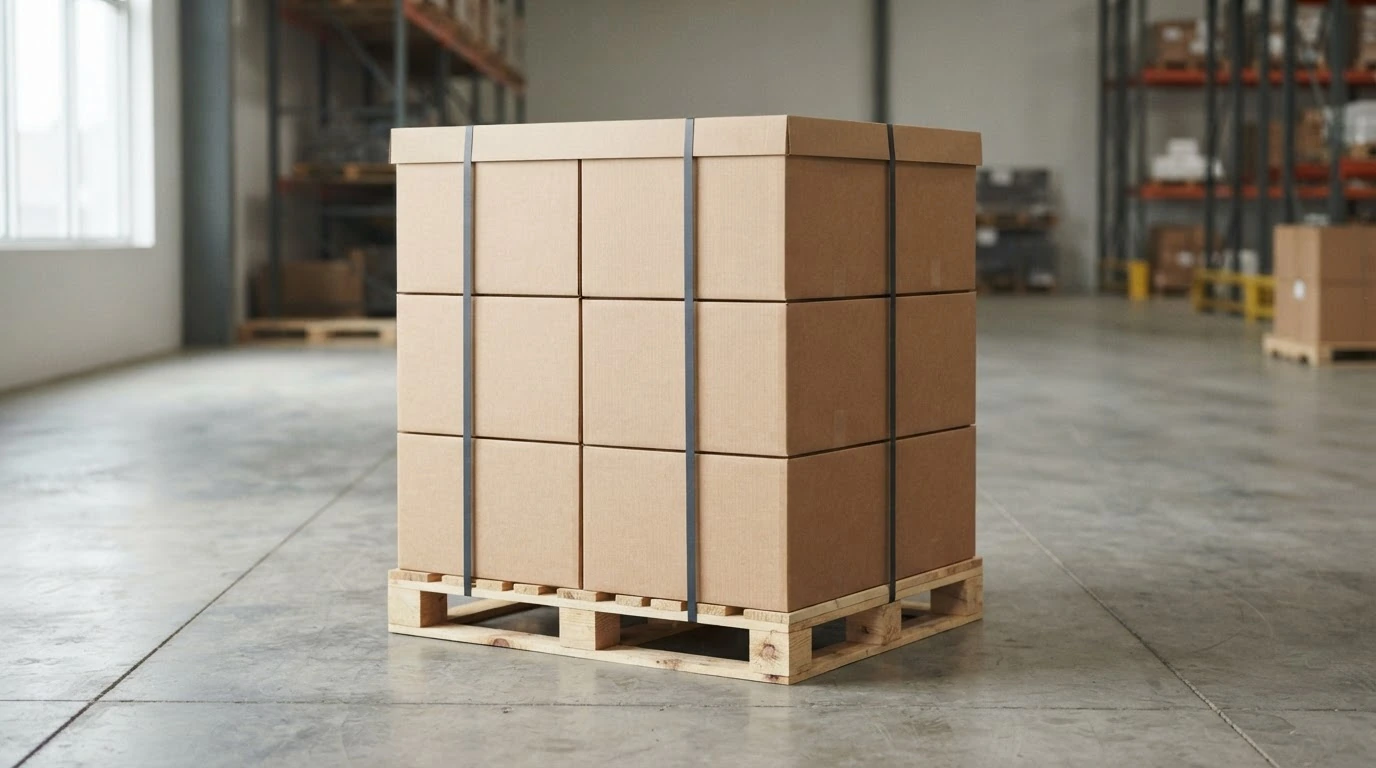
NMFTA’s general LTL loading guidance says pallets should not be stacked above 84 inches. That is a useful ceiling to check against, but it is not a universal federal limit or a promise that every carrier will accept an 84-inch handling unit.
The actual maximum can be lower or otherwise restricted by the carrier, service, equipment, commodity, packaging, pickup or delivery method, and recipient. Confirm every applicable limit before building the pallet. Do not use 72 inches, 84 inches, or another commonly quoted number without knowing whose rule it is.
What the 84-inch guideline means
NMFTA publishes an LTL packaging guide stating that pallets should not be stacked above 84 inches and immediately notes that individual freight carriers may have their own dimensional restrictions.
Treat 84 inches as general packaging guidance, not an automatic acceptance threshold. A carrier may use different limits for a particular service, pricing program, lane, terminal, or type of equipment. A receiving facility may also impose a lower maximum.
If a shipment exceeds a published limit, do not assume the only consequence will be a fee. The carrier might require prior approval, different service, different equipment, or a revised package. Acceptance and pricing depend on the carrier’s current rules and the specific shipment.
Measure pallet height from the floor
Loaded pallet height is the distance from the floor to the highest point of the finished handling unit. The pallet itself is part of that measurement.
Include:
- Pallet or skid
- Product and cartons
- Crate or enclosure
- Top cap
- Padding and corner protection
- Wrap, bands, or straps that project above the load
- Any other projection
Measure after packaging is complete. Do not add a catalog product height to an assumed pallet thickness, and do not stop at the top of the cartons if another component sits higher.
NMFTA’s density guidance uses the shipment’s extreme dimensions as tendered, including packing forms such as pallets and crates. The carrier may also verify dimensions. Record the greatest finished height rather than rounding the load back to a preferred number.
The limits that can control your shipment
Several independent requirements can apply to one pallet. The shipment must fit all of them.
Carrier and service rules
Start with the carrier’s current service guide, tariff, quote terms, or published packaging instructions. Make sure the rule applies to the exact LTL service being quoted. A limit for air freight, parcel service, final-mile delivery, or a special pallet-rate program is not automatically a general LTL limit.
Ask whether a tall handling unit requires approval and whether the available equipment on the lane can accommodate it. Keep any approval with the shipment record.
Pickup and delivery equipment
A pallet that fits inside a trailer may still be incompatible with the equipment needed at pickup or delivery. Liftgate platforms, doorways, docks, forklifts, pallet jacks, and facility clearances have their own usable dimensions and capacities.
FedEx’s LTL packaging guidance, for example, notes that liftgate service introduces specific size and weight constraints. That is a carrier-specific example, not an industry-wide number. Confirm the equipment that will actually be used.
Recipient requirements
Retailers, manufacturers, warehouses, and fulfillment programs may publish inbound pallet limits. These can cover height, weight, footprint, pallet material, entry type, unitization, labeling, and delivery appointments.
A carrier’s acceptance does not override the receiver’s inbound policy. Confirm the destination requirements before the load is wrapped and staged.
Commodity and packaging requirements
The current NMFC item may specify an authorized package, rule, note, or other condition. A height that fits the equipment can still be unsuitable if the packaging does not protect the commodity or match the applicable provision.
Follow the manufacturer’s instructions and use qualified packaging support for unusually fragile, heavy, tall, or top-heavy products.
Height, density, and freight class
Density is weight divided by occupied cubic feet. If length, width, and weight remain the same while height increases, density decreases. That does not mean height alone determines freight class.
NMFTA assigns class by considering density, handling, stowability, and liability. Some items use density-based subprovisions, while others reflect additional transportation characteristics or package conditions.
Use the current NMFC item and its instructions. A taller package can change the density input and the space occupied, but it does not move every commodity to a higher class automatically.
Do not compress or remove necessary packaging merely to keep the height below a preferred target. The package must protect the freight and satisfy the applicable requirements.
Stackable does not mean “short enough”
Stackability describes whether the completed handling unit is designed and approved to support freight above it without crushing, shifting, or becoming unstable. It is not determined by height alone.
Mark a pallet as stackable only when the package and load design support that statement. A flat top does not prove the contents or carton structure can carry another handling unit. Likewise, a non-stackable designation does not create a universal height limit; it tells the carrier that the space above the load cannot be used in the same way.
If stackability is uncertain, obtain a packaging review or confirm the requirement with the carrier before quoting.
Build tall pallets for stability
A pallet can meet the dimensional rule and still be unsafe or unsuitable. As height increases, load stability and securement deserve closer review.
Use these principles:
- Select an undamaged pallet or skid rated for the load and handling conditions.
- Support the full product footprint and avoid overhang.
- Place heavier items low and keep weight distribution balanced.
- Align cartons where the package design calls for it.
- Fill or restrain voids that allow movement.
- Protect edges and surfaces from bands, straps, and handling contact.
- Unitize the load to the base so the product and pallet move as one handling unit.
- Keep the center of gravity within the supported footprint.
Do not treat stretch film as structural support for a weak stack. Its role and application depend on the load. Bands, bracing, blocking, top caps, corner protection, or a crate may be needed for some products.
When the load is unusually tall or top-heavy, use a qualified package designer or engineer to validate the package and securement rather than relying on appearance.
Before building above a normal pallet height
Complete this check before committing to a tall load:
- Identify the carrier and exact service.
- Find the current dimensional rules and approval requirements.
- Confirm the equipment expected at pickup and delivery.
- Obtain the recipient’s inbound requirements.
- Review the current NMFC item and packaging conditions.
- Confirm the pallet capacity and package design.
- Determine stackability from the completed package.
- Build, unitize, measure, and weigh the finished handling unit.
- Recheck the quote details against the physical pallet.
If the finished height exceeds a confirmed limit, redesign the load or arrange an appropriate service before pickup. Do not tender it under a lower declared height.
What to enter in the freight quote
Prepare these details for each pallet:
- Greatest packaged length, width, and height
- Total packaged weight
- Pallet and piece counts
- Specific commodity description
- NMFC item, subprovision, and freight class when known
- Package type
- Stackable or non-stackable status based on the finished package
- Origin and destination ZIP codes
- Pickup date
- Hazardous-material status, if applicable
- Pickup and delivery location conditions
- Required services and any dimensional approval
If the package changes after the quote, measure it again and request an updated rate.
Get a shipment-specific pallet quote
Shipocity is backed by a team with more than 40 years of combined logistics experience. Through established industry relationships, the platform helps businesses compare competitive freight rates for their specific shipment.
Get a freight quote and sign up with Shipocity after confirming the pallet’s finished height and applicable limits.