How to Stretch-Wrap a Pallet for LTL Shipping
Step-by-step guide to stretch-wrapping a pallet for LTL shipping, including common mistakes, reinforcement guidance, and what to measure before requesting a freight quote.
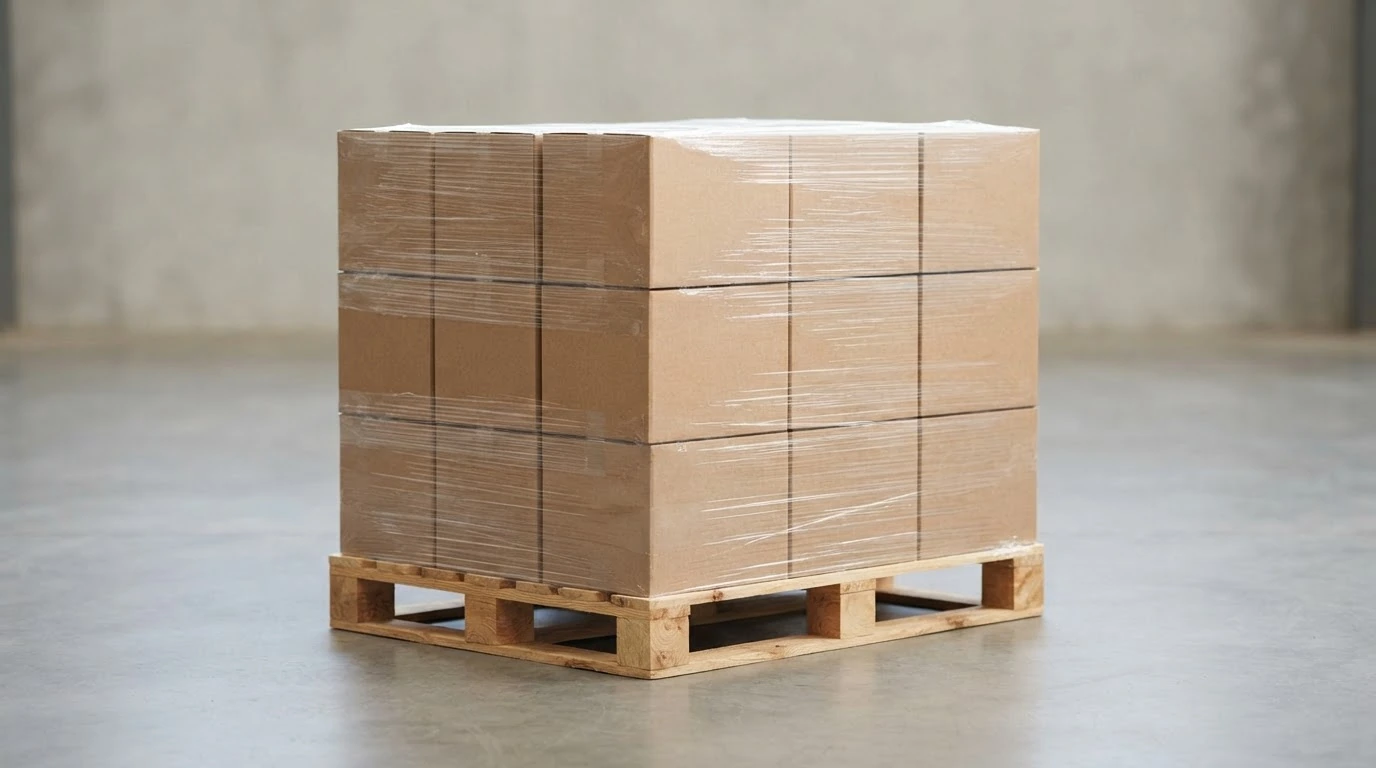
Stretch-wrap a pallet only after the products are properly packaged and the load is stable. Anchor the film low enough to connect the load to the pallet, circle the base, work upward with consistent overlap, cover the full load, and reinforce the top and bottom as the packaging design requires. The finished film should hold the load together without crushing cartons, leaving gaps, or blocking the pallet’s fork openings.
There is no reliable universal answer for the number of wraps or how hard to pull. The correct containment depends on the film, application method, load weight, height, shape, rigidity, center of gravity, and packaging underneath it.
Stretch wrap is only one part of the package
Stretch film unitizes cartons or other packages so they move with the pallet as one handling unit. It is not a substitute for boxes, crates, cushioning, blocking, bracing, or the minimum packaging required for the commodity.
NMFTA’s palletization guidance makes that distinction directly: plastic film can add stability, but film alone does not provide adequate product protection. Old Dominion also cautions against relying only on film in place of proper outer packaging.
Start by confirming the packaging and pallet are suitable for the actual freight. If the product can roll, shift inside its carton, puncture film, or be damaged by compression, solve that problem before wrapping.
Prepare the pallet and load
Inspect the pallet for broken deck boards, split components, protruding fasteners, or other damage that could weaken the base or cut the film. Use a pallet that can support the finished weight and can be handled by the equipment involved.
Then inspect the load:
- Keep cartons fully supported and within the pallet footprint.
- Do not use stretch film to pull an overhanging or leaning stack back into shape.
- Keep the top reasonably level if the shipment will be represented as stackable.
- Protect sharp edges or protrusions before they contact the film.
- Close, cushion, and reinforce each package as required for its contents.
- Make sure labels are applied where they can remain visible and readable.
FedEx and NMFTA both advise against pallet overhang. If the freight does not fit, use a suitable pallet or rebuild the load. Wrapping an unstable arrangement simply hides the problem behind clear plastic.
How to hand-wrap the pallet
1. Select film for the load
Choose stretch film and a dispenser that match the load and application method. Film thickness, stretch characteristics, puncture resistance, and the force it retains after application all affect performance. Follow the film manufacturer’s specification and any carrier or packaging-engineer instructions that apply.
Do not replace that selection process with a generic instruction to “pull tighter.” More hand tension is not automatically better. It can tear film, deform cartons, or create uneven containment.
2. Anchor the film at the base
Start at the bottom of the load and establish a secure connection between the film, the packages, and the pallet. The exact anchor method depends on the pallet, film, and approved wrapping procedure. Keep the film clear of fork-entry openings, exposed tails, and anything that could interfere with handling.
The goal is to unitize the load to the base, not merely wrap the cartons into a separate bundle sitting on top of it.
3. Build the base connection
Circle the lower portion of the load and the pallet enough times to establish stable containment. Keep the roll controlled and the film flat. Watch the bottom cartons as you work. If their corners or side panels begin to bow, stop and reassess the film, tension, and packaging strength.
Old Dominion’s current guidance likewise starts the film at floor level around the pallet and calls for several layers rather than a single pass.
4. Work upward with consistent overlap
Move around the pallet while raising the film gradually. Each pass should overlap the previous one enough to avoid open bands across the load. Maintain a steady film angle and consistent application so one side is not held more tightly than another.
NMFTA advises sufficient overlap through the middle to cover the load fully. If a specific NMFC packaging rule, carrier guide, film specification, or validated internal procedure gives a defined pattern, follow that requirement. Do not treat a percentage copied from an unrelated load as a universal standard.
5. Secure the upper portion
Continue until the top of the load is contained. NMFTA’s general palletization guidance suggests three wraps at both the top and bottom, but that is a general pattern, not a load-engineering calculation for every commodity.
A tall, irregular, flexible, dense, or high-center-of-gravity load may need a different film, machine-applied containment, edge protection, banding, bracing, or a redesigned package. Extra revolutions at the top do not correct a fundamentally unstable stack.
6. Complete the wrap and inspect it
If the approved pattern calls for a return pass, work back toward the base with the same controlled overlap. Finish the film against an existing film layer so the end stays secured without obstructing pallet access.
Walk around the finished handling unit and check for:
- Uncovered sections or inconsistent overlap
- Film tears, punctures, or loose areas
- Carton distortion or crushed corners
- Freight extending beyond the pallet
- A load that rocks, leans, or shifts
- Film, bands, or loose material across fork openings
- Hidden or unreadable shipping labels
If the load moves independently of the pallet, the wrapping job is not complete. If adding film does not solve the movement without damaging the packages, revise the packaging or securement method.
Containment force matters more than a wrap count
Containment force is the holding force the applied film exerts on the load. FedEx’s pallet guidance tells shippers to achieve the minimum containment force needed to secure the load. That requirement cannot be reduced to “five wraps” or another fixed number because different films and application methods can produce different results.
The correct design should account for:
- Total weight and weight distribution
- Load height and center of gravity
- Carton strength and rigidity
- Sharp corners or protrusions
- Slippery contact surfaces or gaps between packages
- Hand wrapping versus machine wrapping
- Film properties and the manufacturer’s application range
- Expected handling, storage, and environmental conditions
Repeat shippers should use a documented wrapping specification and a repeatable way to verify it. For unusual, expensive, fragile, or difficult loads, ask the carrier, film supplier, or a packaging professional for load-specific guidance.
When stretch film is not enough
Some loads need more than film. Edge boards can protect carton corners and help unitize a stack. Load-protector pads can improve support at the top or bottom. Banding can secure an appropriate bundled load to the pallet, while blocking and bracing can restrain heavy or irregular items.
These are not interchangeable add-ons. FedEx advises keeping banding close to the load, applying it to the pallet bottom, and avoiding pallet access notches. Incorrect band placement or excessive force can damage cartons or create a handling hazard. Choose reinforcement for the product and packaging rather than adding straps by default.
Stretch film also does not make a pallet load-bearing. A smooth film surface or flat top does not prove the freight can safely support another shipment. Report stackability based on the structure and packaging of the completed handling unit.
Common stretch-wrapping mistakes
- Wrapping only the cartons without connecting them to the pallet
- Trying to use film to correct overhang, gaps, a lean, or a damaged pallet
- Leaving uncovered bands or applying inconsistent overlap
- Using a fixed wrap count without considering the film and load
- Pulling hard enough to crush or distort cartons
- Covering labels or blocking fork-entry openings
- Leaving tears, loose ends, or sharp edges unaddressed
- Assuming stretch film replaces required product packaging
- Treating a wrapped pallet as automatically stackable
The useful test is not whether the pallet looks heavily wrapped. It is whether the packaging and unitization work together without damaging the goods or interfering with normal handling.
Measure the finished handling unit for the quote
Record shipment details after packaging and wrapping are complete. Measure the greatest finished length, width, and height, including the pallet, film, protectors, bands, and any projections. Record the gross weight, including all packaging and the pallet.
You will also need the pallet count, commodity description, origin and destination ZIP codes, and any required pickup or delivery services. Provide the NMFC item and freight class when applicable, and state accurately whether the load is stackable.
Current NMFTA guidance for Item 250100 says carriers may verify shipment weight and dimensions. Accurate finished measurements help the quote reflect what the carrier will actually receive.
Shipocity is backed by a team with more than 40 years of combined logistics experience. Through established industry relationships, the platform helps businesses compare competitive freight rates for their specific shipment.