How to Stack Boxes on a Pallet
A practical guide to stacking boxes on a pallet so freight survives LTL transit, including stacking patterns, securing the load, common mistakes, and quote details.
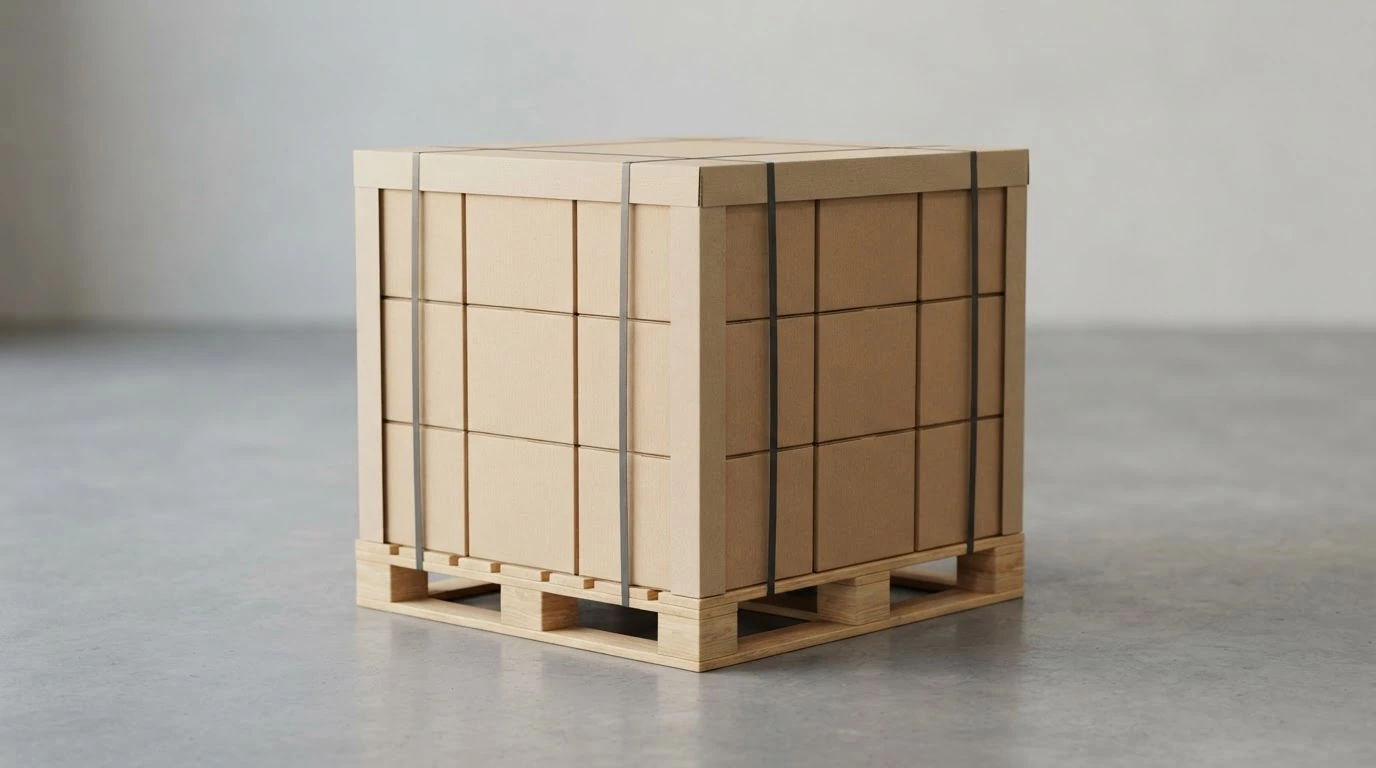
Build a stable pallet by using sound cartons and a suitable pallet, arranging boxes with full support and no overhang, keeping each layer flat, and securing the finished load to the pallet. For uniform corrugated cartons, a straight column stack usually provides the strongest top-to-bottom compression. Interlocking can add lateral stability when the carton contents are rigid, but it can reduce vertical carton strength in other situations.
The correct pattern and securement still depend on the commodity, carton design, pallet, weight distribution, and any applicable NMFC or carrier packaging requirements.
Start with the packaging requirements
Do not choose a stacking pattern in isolation. Identify what is being shipped and check the current requirements for its package and handling unit.
Confirm:
- Carton strength and closure method
- Whether the contents are rigid, fragile, liquid, sharp, hazardous, or prone to shifting
- The pallet type and rated capacity
- The permitted package under the applicable NMFC provision
- Carrier-specific packaging and acceptance rules
- Whether the completed load can safely support freight above it
NMFTA emphasizes that stretch film helps unitize a load but does not replace the minimum packaging requirements that apply to the commodity. The boxes must protect their contents before the stack is treated as one shipping unit.
Inspect the pallet and cartons
Use a pallet that is sound, dry, compatible with the handling equipment, and rated for the finished load. Reject a base with broken deck boards, split stringers, loose blocks, protruding fasteners, or other damage that affects support or handling.
Inspect the cartons too. A crushed corner, open seam, wet panel, or weakened bottom box can compromise the layers above it. Replace damaged packaging rather than trying to hide it inside the stack.
The pallet should fit the load. A pallet that is too small creates overhang. A much larger pallet can leave cartons unsupported over deck gaps or make securement awkward. Use a suitable footprint and arrange the load so each carton has dependable support.
Choose the stacking pattern
Column stacking
In a column stack, every carton sits directly above the carton below it, with corners and edges aligned vertically. FedEx’s current pallet guidance says column stacking increases top-to-bottom compression strength in almost all cases.
Use column stacking when cartons are uniform, their contents and construction support the pattern, and the completed load can be unitized against lateral movement. Place layer pads between tiers when required for stability or load distribution.
Interlocking stacking
An interlocking or brick pattern offsets adjoining layers. FedEx says interlocking can increase stability when carton contents are rigid and advises keeping boxes corner-to-corner and edge-to-edge.
Do not treat interlocking as automatically stronger. Offsetting carton corners can place weight on weaker panel areas rather than the vertical corners designed to carry compression. Check the carton and product before trading vertical strength for lateral stability.
Mixed carton sizes
Mixed sizes require a deliberate layout. Do not bridge a large carton across unsupported gaps or create a soft layer beneath rigid boxes. If a stable, fully supported stack cannot be built on one pallet, separate the cartons by compatible size and strength or use another packaging design.
Avoid a stepped pyramid. A smaller top tier does not create a flat, load-bearing surface and can be difficult to unitize. If the finished load is nonstackable, declare that honestly rather than trying to make it appear stackable.
Build the load one layer at a time
1. Arrange the first layer
Place cartons flat on the pallet with complete deck support. Keep the outside edges aligned with the supported footprint and leave no product overhanging the pallet.
FedEx warns that overhang can substantially reduce carton compression strength and expose packages to tears, punctures, and impact. NMFTA likewise recommends using an appropriately sized pallet so the freight remains within the deck.
2. Put suitable cartons on the bottom
Heavier, crush-resistant cartons commonly belong in the lower layers, with lighter or more fragile cartons above. But weight alone is not enough. A heavy carton with a weak top panel may be a poor base, while a lighter carton engineered for stacking may carry more compression.
Use the carton manufacturer’s stacking information, the product’s fragility, and the load plan together. Keep the center of gravity low without placing damaging weight on weak packaging.
3. Align corners and edges
Carton corners typically carry more compression than the middle of a panel. In a column stack, align them vertically. In an approved interlocking pattern, keep edges and corners in close contact rather than leaving boxes partly supported.
4. Close gaps
Large gaps allow cartons to move and can undermine the layer above. Reconfigure the pattern, use compatible void management or layer pads, or split the load instead of building across open space.
Do not use loose filler as a substitute for a stable pallet pattern. Any dunnage must be suitable for the product and remain in place through handling.
5. Keep every layer flat
Check the surface before adding another tier. A tilted or uneven middle layer magnifies instability as height increases. Stop and rebuild the layer if cartons rock, lean, bulge, or sit on damaged edges.
6. Stay within the planned height and weight
Do not use a generic internet height or weight limit. The controlling limit may come from the pallet rating, cartons, carrier, service, trailer, liftgate, handling equipment, receiving facility, or commodity requirements. Confirm the applicable limits for the finished shipment.
Secure the boxes to the pallet
The boxes and pallet should move as one handling unit. Securement may include a combination of:
- Layer pads or load-protector pads
- Edge or corner boards
- Stretch film applied with verified containment force
- Bands or straps suited to the load
- Blocking or bracing for products that can roll or shift
- A top cap when appropriate
Anchor the unitization to the pallet, not only around the cartons. FedEx advises applying banding to the pallet bottom while keeping it out of pallet access notches. It also recommends keeping bands close to the load and using edge protection where needed.
There is no universal number of film revolutions or straps for every pallet. The correct containment force and securement design depend on the load, film or band properties, application method, height, weight, and transit environment. Follow the packaging specification and validate repeated production loads when warranted.
Do not assume film alone provides complete product protection. Old Dominion’s current packaging guidance warns against relying solely on shrink wrap and emphasizes exterior packaging, proper wrap application, and keeping cartons within the pallet dimensions.
Check the finished handling unit
Before moving the pallet, verify:
- No carton or packaging extends beyond the supported footprint
- The load is centered and does not lean
- Lower cartons are not crushed, wet, or bulging
- Every layer is flat and supported
- Bands, film, and edge protection are secure without damaging cartons
- Fork and pallet-jack openings remain clear
- Labels and required markings are visible and attached to appropriate surfaces
- The actual stackability status is recorded
- Finished dimensions and gross weight are measured after securement
If the pallet will be lifted for the check, use trained personnel and equipment rated for the load. Do not stand beside an unstable unit while testing whether it will move.
Common stacking mistakes
- Building on a damaged or undersized pallet
- Allowing cartons to overhang
- Creating a pyramid or uneven top
- Leaving gaps beneath an upper layer
- Mixing weak and strong cartons without a load plan
- Putting heavy cartons over fragile or partially supported boxes
- Wrapping only the cartons without connecting the load to the pallet
- Pulling bands directly into unprotected carton corners
- Blocking fork openings with straps or packaging
- Calling a load stackable without knowing what its top can safely support
- Measuring and weighing before the final securement is installed
Quote preparation checklist
Once the load is complete, gather:
- Finished length, width, and height of each pallet
- Gross weight of each pallet
- Pallet and piece counts
- Specific commodity description
- NMFC item and freight class when known
- Stackable or nonstackable status
- Origin and destination ZIP codes
- Pickup date
- Dock, forklift, pallet-jack, and liftgate availability
- Residential, limited-access, inside, appointment, hazardous-material, or other requested services when applicable
Shipocity is backed by a team with more than 40 years of combined logistics experience. Through established industry relationships, the platform helps businesses compare competitive freight rates for their specific shipment.
With the stable, secured pallet measured and weighed, get a freight quote and create your Shipocity account.
Sources
- How to Ship Using Pallets - FedEx
- Freight Packing and Packaging Guidelines - FedEx
- How to Palletize a Shipment: Packing and Loading Tips - NMFTA
- Why Smart Shippers Are Rethinking Packaging After the NMFC Changes - NMFTA
- How to Avoid Common Mistakes When Packaging LTL Freight - Old Dominion Freight Line