How to Ship Solar Panels and Solar Equipment by Freight
Prepare solar modules and equipment for freight using manufacturer packaging, separate battery compliance, finished measurements, and verified site details.
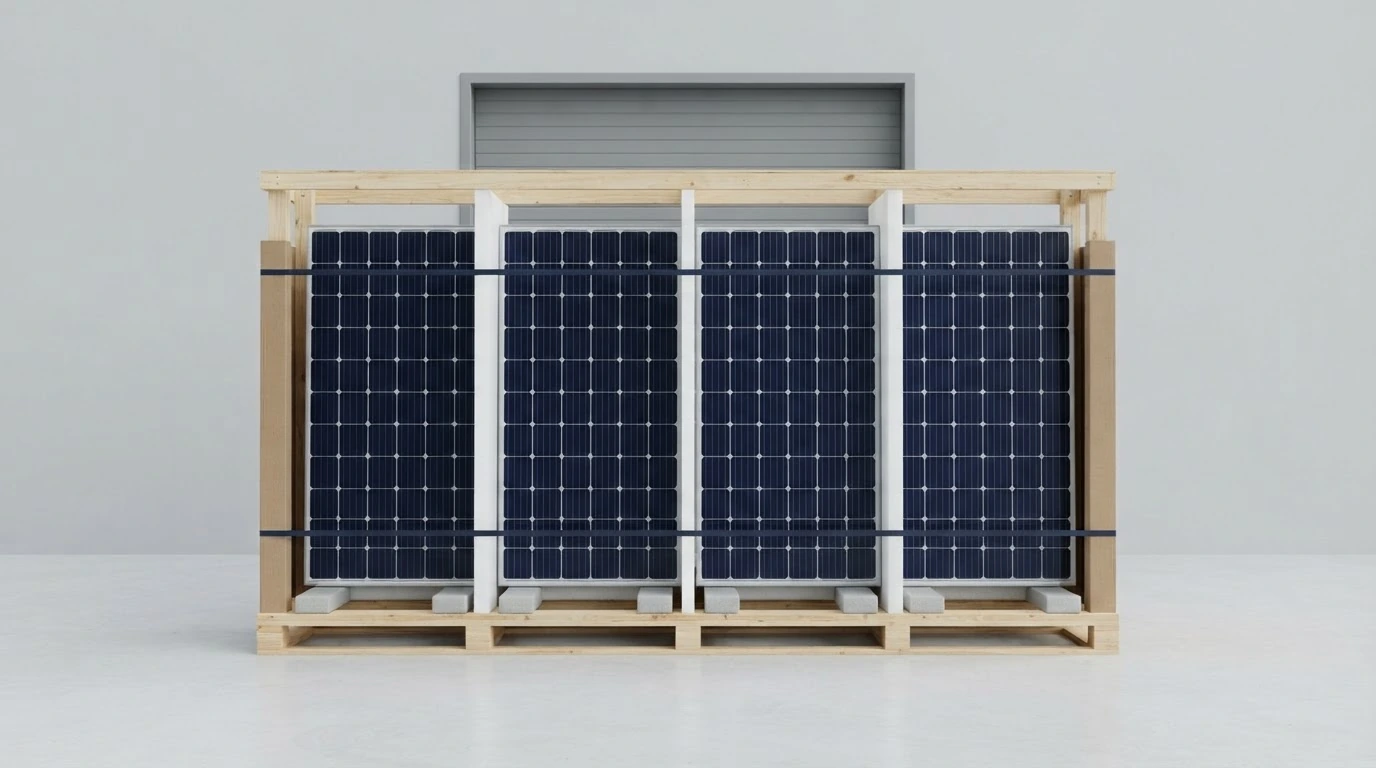
To ship solar panels and related equipment by freight, identify each product and condition, preserve or rebuild manufacturer-approved packaging, separate fragile modules from dense inverters and long racking, make the lithium-battery determination before tender, measure and weigh every finished handling unit, confirm the current classification, and verify the pickup and delivery plan.
LTL can fit solar equipment that can move safely through the selected carrier’s shared handling environment without a dedicated trailer. It is not automatically right for every module pallet, inverter, battery, transformer, combiner box, mounting bundle, or mixed project shipment. Package geometry, fragility, weight concentration, regulated materials, stackability, site access, and carrier acceptance determine the practical option.
Step 1: Inventory the actual solar shipment
Avoid one generic description such as “solar equipment.” Record each handling unit separately:
- photovoltaic module manufacturer, model, count, and new, returned, damaged, or used condition;
- original sealed pallet, partial pallet, repacked modules, crate, carton, or loose piece;
- inverter, transformer, combiner, optimizer, disconnect, controller, meter, or other electrical equipment;
- racking rails, posts, torque tubes, hardware, and other long or small components;
- battery chemistry, configuration, watt-hour rating, condition, and whether it is standalone, packed with equipment, or contained in equipment;
- finished length, width, height, weight, and center of gravity for each unit;
- approved lifting, fork-entry, support, and restraint points; and
- destination site, receiver, unloading equipment, and appointment requirements.
Condition matters. A new battery, damaged battery, returned inverter, opened module pallet, and scrap module can require different packaging, acceptance, documentation, and risk controls.
If a load is unusually long, tall, top-heavy, non-stackable, crane-dependent, high-value, or difficult to protect in an enclosed shared network, compare LTL with a realistic alternative. Do not rely on a universal panel count, pallet weight, or trailer-fill threshold.
Step 2: Keep module packaging model-specific
Solar modules are large finished electrical products with glass, frames, backsheets or rear glass, junction boxes, connectors, and leads. Package them according to the current manufacturer instructions for the exact product and packing orientation.
Canadian Solar’s current module installation manual directs handlers to follow the pallet instructions, use model-specific forklift dimensions for identified module families, use anti-tipping support for certain vertically packed modules, and handle modules with both hands and gloves (Canadian Solar: PV Module Installation Manual). Those directions are examples for the covered products, not universal rules for every module.
Canadian Solar’s current unpacking instructions provide separate sequences for specific packaging configurations, require control of remaining vertical modules during unpacking, and address placement of modules after a package has been opened (Canadian Solar: PV Module Unpacking Instructions).
For a sealed manufacturer pallet:
- verify the package matches the model and count;
- inspect the base, carton, frame, straps, covers, anti-tip members, moisture condition, and indicators;
- use only approved fork direction, blade length, spacing, and lifting method;
- preserve the designed weight distribution and restraint; and
- do not add bands where they can load module glass, frames, or connectors.
For an opened or partial pallet, do not simply retighten the original wrap around a smaller stack. The void, center of gravity, face pressure, and anti-tip behavior have changed. Obtain current written repacking or return instructions from the manufacturer or a qualified packaging reviewer.
Step 3: Package each equipment type for its risks
FedEx’s current freight guide distinguishes pallets, crates, blocking, bracing, banding, stretch wrap, long-freight protection, and large-flat-item support (FedEx: Freight Packing and Packaging Guidelines). Treat it as carrier-specific guidance and confirm the requirements for the actual service.
PV modules
Use the manufacturer packaging when it remains sound and complete. For an approved replacement package, support module frames evenly, separate glass and finished faces with compatible materials, prevent sliding and edge contact, protect junction boxes and connectors, and restrain the stack through the structural package rather than through the glass.
Keep the handling unit dry and stable. Do not promise that a “fragile,” “upright,” or “do not stack” label will control orientation or top loading; the physical package and quoted service must address those needs.
Inverters, transformers, and dense electrical cabinets
Use a base rated for concentrated weight and secure the equipment through manufacturer-approved feet, frame points, or a purpose-built cradle. Protect doors, vents, displays, terminals, connectors, fans, and protrusions. Cap or enclose openings and immobilize loose accessories.
A transformer or large inverter may have an off-center center of gravity or special lifting provisions. Follow its own manual and do not assume a pallet intended for modules is suitable.
Racking rails and long components
Use a purpose-built skid or crate that supports the full length and prevents rolling, bowing, side-to-side movement, and end-to-end travel. Protect sharp ends and finished surfaces, contain small hardware separately, and provide safe mechanical access.
FedEx’s guide cautions against attaching unprotected long or non-profile freight to a pallet with banding alone. Include every stringer, end block, projection, and protective member in the finished dimensions.
Mixed project shipments
Do not place dense hardware or electrical equipment on a module package unless the package was designed for that load. Separate fragile modules, heavy cabinets, long rails, and small hardware into compatible handling units. Record which equipment and quantities are in each unit.
Avoid attaching cartons to the outside of a module pallet where they can change dimensions, block fork entry, create overhang, or disappear during handling.
Step 4: Treat batteries as a separate compliance decision
Lithium batteries used with solar and energy-storage systems are hazardous materials in transportation, and the applicable requirements depend on chemistry, size, condition, configuration, and mode. PHMSA’s current Lithium Battery Guide provides scenario-based guidance for standalone batteries, batteries packed with equipment, and batteries contained in equipment, including packaging and hazard-communication requirements (PHMSA: Lithium Battery Guide for Shippers).
Before tendering any battery:
- Confirm chemistry, watt-hour rating or lithium content, model, condition, and test-summary availability.
- Determine the correct UN description and whether the battery is standalone, packed with equipment, or contained in equipment.
- Protect terminals against short circuit and secure the battery against movement.
- Use the required packaging, marks, labels, shipping papers, emergency information, and training.
- Confirm carrier and service acceptance for the exact scenario.
Damaged, defective, recalled, prototype, waste, or recycling batteries can require different treatment. Do not tender them under instructions for a new production battery. Use a qualified hazardous-material professional when the scenario is not clear.
Do not hide batteries inside a generic “solar equipment” description or assume that combining them with modules removes their requirements.
Step 5: Measure and classify finished handling units
NMFTA explains that the current National Motor Freight Classification evaluates commodities through density, handling, stowability, and liability (NMFTA: National Motor Freight Classification). Density matters for many items, but it does not create one universal class for modules, inverters, batteries, or racking.
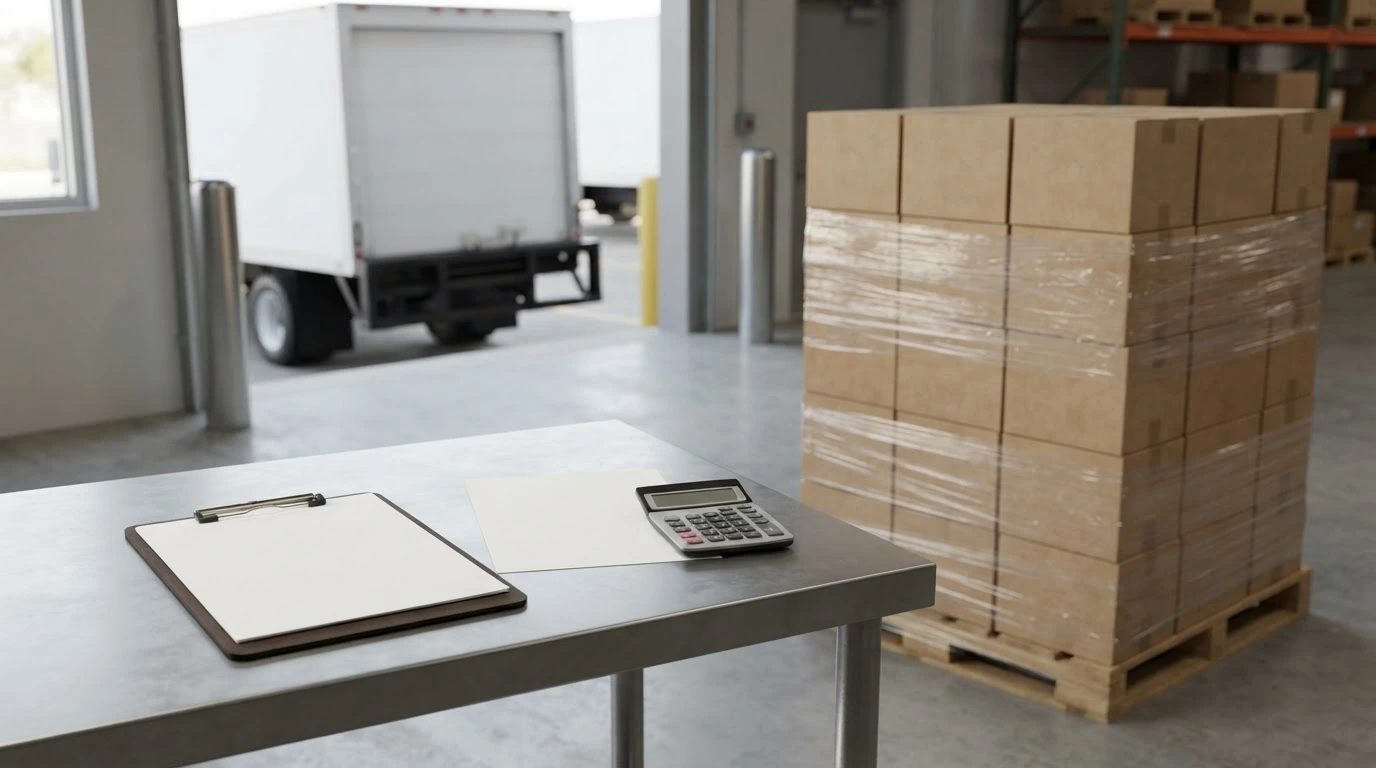
Measure the extreme packaged length, width, and height, including the pallet, crate, anti-tip frame, overhang, corner protection, projections, and any non-stack device. Weigh the complete handling unit, not one product multiplied by a catalog count.
For each unit:
- Identify the actual commodity or commodities as prepared.
- Find the current applicable NMFC item and packaging provisions.
- Calculate density when the item requires it from verified finished measurements and weight.
- Check handling, stowability, liability, hazardous-material, and carrier-tariff provisions.
- Retain the item, class, inputs, and source of the determination.
Do not copy the class from a different module size, package orientation, equipment type, or partial pallet. Recheck the data when the count, packaging, dimensions, weight, or stackability changes.
Step 6: Verify origin, destination, and unloading
The origin might be a distribution center with a dock while the destination is a residence, farm, school, storage yard, rooftop project, utility site, construction entrance, or unfinished solar field. Describe what the carrier must physically do.
Confirm:
- whether a suitable dock, forklift, telehandler, or crane is available;
- whether a liftgate is requested and can accommodate the complete unit;
- platform size, package footprint, center of gravity, and path after ground placement;
- whether the carrier classifies the site as residential or limited access;
- appointment, notification, security, business-hour, and check-in requirements;
- road surface, grade, turning space, overhead clearance, gates, and safe stopping area;
- who is responsible for unloading and whether trained personnel will be present; and
- whether prior approval or specialized equipment is required.
A liftgate’s stated weight capacity does not prove that a long or tall module pallet can be handled safely. Confirm package geometry, balance, platform support, and site conditions with the selected provider.
Accessorial names, definitions, availability, limits, and charges are carrier-specific. Quote the real work rather than assuming every residence or project site receives the same service.
Step 7: Keep the tender consistent with the quote
Carry the same facts into the accepted quote, bill of lading, labels, hazardous-material documents, and pickup:
- precise commodity descriptions and conditions;
- handling-unit, package, module, and equipment counts;
- extreme packaged dimensions and gross weight per unit;
- NMFC items and freight classes when applicable;
- battery descriptions and regulatory information when required;
- truthful stackability, orientation, and handling restrictions;
- origin, destination, dates, contacts, and site details;
- requested pickup and delivery services; and
- accepted pricing or service reference.
Before pickup, inspect the pallet, carton, crate, anti-tip structure, restraints, covers, cabinet, connectors, terminals, rail ends, labels, and documents. Look for cracked or wet packaging, loose modules, missing fasteners, exposed glass, damaged battery, blocked fork entry, unstable weight, overhang, and conflicting labels. Photograph every complete prepared handling unit.
If a quote covered a sealed full module pallet without batteries, do not tender an opened partial pallet with a battery carton attached under the same data. Request updated instructions and pricing when the freight changes.
Step 8: Prepare the receiver and preserve evidence
Give the receiver the expected handling units, model and count references, unloading plan, and inspection process. At delivery, compare visible count and condition before signing. Inspect pallets, crates, cartons, restraints, tilt or impact indicators, exposed module edges, glass, frames, junction boxes, cabinet panels, terminals, and rail bundles as accessible without unsafe unpacking.
Record specific visible exceptions on the delivery receipt when appropriate, photograph the condition, preserve the package and equipment, and follow the governing notice and claim procedures. Do not issue a blanket instruction to accept or refuse every damaged shipment; safety, contracts, carrier rules, project needs, and the type of damage can affect the appropriate response.
No photograph, notation, package design, indicator, declared value, or inspection guarantees a warranty or claim outcome. The tariff, contract, manufacturer terms, packaging adequacy, evidence, timing, liability rules, and facts of the event can matter.
For repeat shipments, track exceptions such as wet carton, broken pallet, loose stack, glass damage, bent frame, cabinet dent, exposed terminal, restraint failure, reweigh, dimension correction, classification change, liftgate mismatch, or site refusal. Review patterns by model, supplier, package design, warehouse, lane, carrier, and receiver.
Two solar-freight workflows without invented thresholds
Sealed module pallet to a commercial installer
The shipper verifies the manufacturer package, approved fork entry, model and count, anti-tip structure, finished measurements, and current classification. The installer confirms a staffed commercial dock and qualified unloading personnel. The quote and bill of lading describe only the module pallet and its actual service needs.
Modules, inverter, racking, and battery for one project
The shipper creates separate compatible handling units: manufacturer-approved module packaging, a reinforced inverter crate, a full-length racking skid, and a compliant battery package. It records each unit separately, completes the battery determination, and quotes the destination using the actual unloading plan.
Neither workflow supplies an automatic class, rate, transit time, claim result, or recommended carrier.
Solar-equipment freight quote checklist
- Exact module and equipment manufacturers, models, quantities, and conditions
- Battery chemistry, configuration, watt-hour rating, condition, and compliance determination
- Origin and destination postal codes and facility types
- Completed handling-unit and package counts
- Extreme packaged dimensions and gross weight per unit
- Current NMFC item and freight class when applicable
- Manufacturer-approved module package and equipment-specific base, crate, restraint, end, surface, and moisture protection
- Truthful stackability, orientation, and handling restrictions
- Pickup date, receiver hours, and unloading plan
- Liftgate, inside, limited-access, residential, appointment, notification, or other requested services
- Consistent quote, bill of lading, labels, hazardous-material documents, and tendered freight
- Origin and delivery condition evidence
Shipocity is backed by a team with more than 40 years of combined logistics experience. Through established industry relationships, the platform helps businesses compare competitive freight rates for their specific shipment.
With the completed packages, measurements, equipment details, and site requirements ready, Price this type of shipment.