How to Ship Machinery by LTL Freight
Prepare machinery for LTL freight with product-specific shutdown, packaging, restraint, classification, service, tender, and delivery-evidence checks.
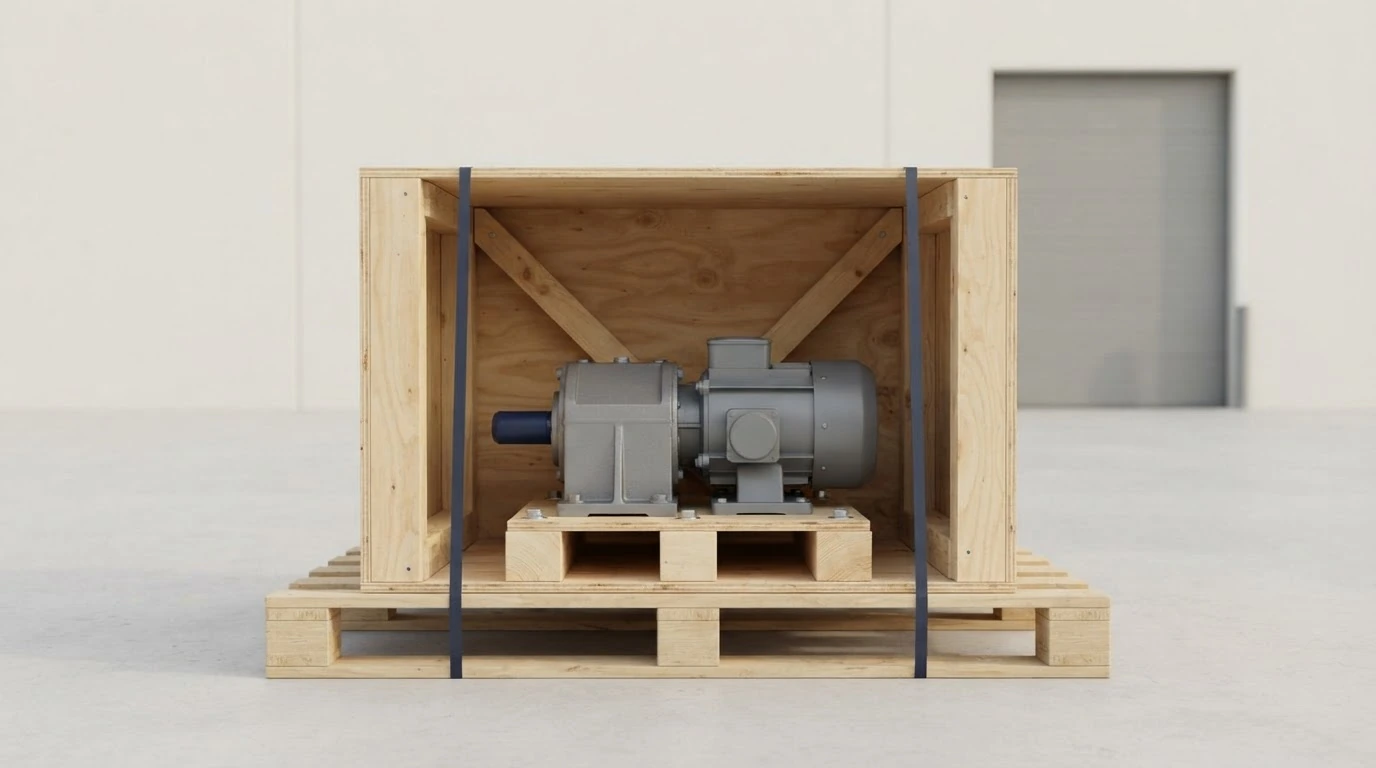
To ship machinery by LTL freight, first confirm that the finished handling unit is suitable for the carrier’s shared network. Prepare the machine according to its manufacturer instructions, identify any regulated contents, secure it to a strong forklift-accessible base, protect vulnerable components, measure and weigh the complete package, determine the current NMFC item and class, and disclose the real pickup and delivery requirements before requesting rates.
There is no universal machinery weight, pallet count, or dimension that automatically makes LTL the right mode. Carrier acceptance, equipment limits, service definitions, and pricing rules vary. The decision should be based on the actual machine as packaged, the lane, the facilities at both ends, timing, value, and the handling the shipment requires.
Step 1: Confirm that the finished machine fits LTL
Begin with the unit that will be tendered, not the machine’s catalog specifications. Record:
- the origin and destination postal codes and facility types;
- the machine’s identity, function, and specific commodity description;
- the number and type of handling units;
- the greatest packaged length, width, and height of every unit;
- the gross packaged weight of every unit and the total shipment;
- the applicable NMFC item and freight class when known;
- stackability, orientation, center-of-gravity, and handling restrictions;
- batteries, fluids, refrigerants, pressurized contents, or other regulated components;
- requested pickup date and receiving requirements; and
- liftgate, appointment, notification, limited-access, inside, or other service needs.
Ask the carrier being considered about current acceptance and prior-approval requirements for the finished unit. Large, unusually heavy, long, tall, non-stackable, high-liability, time-critical, or specialized-equipment freight may need another service even when it does not fill a trailer. Compare available options using the same shipment facts and service scope rather than assuming LTL will always be less expensive.
Step 2: Put the machinery in a transport-ready condition
Have qualified personnel follow the equipment manufacturer’s shutdown, de-energizing, service, lifting, and transport instructions. Record the machine’s condition and the preparation performed. Do not improvise with controls, electrical systems, hydraulic circuits, refrigerants, or stored energy.
Inventory everything attached to or contained in the machine:
- oil, fuel, coolant, hydraulic fluid, or cleaning solution;
- wet, spillable, or residue-bearing parts;
- lithium or other batteries;
- refrigerants or compressed gas;
- pressure vessels, accumulators, or cylinders;
- loose tooling, dies, guards, chucks, trays, or accessories; and
- computers, drives, sensors, displays, or precision components.
Determine whether any material or component is regulated before packaging or tender. PHMSA directs hazmat shippers to the Hazardous Materials Regulations for classification, approved packaging, marking, labeling, shipping papers, and training. Draining a reservoir or disconnecting a battery does not by itself establish that every machine is nonhazardous. The correct preparation depends on the material, quantity, package, mode, and applicable rules.
Remove or separately secure loose accessories according to the manufacturer’s instructions. Close or cap ports as appropriate, contain approved residual material, immobilize moving assemblies, and protect any area exposed by removing a component. Keep a packing inventory so the receiver can account for the machine and its detached parts.
Step 3: Design a base that carries the real load
Machinery can concentrate substantial weight through a few feet, rails, or mounting points. A base that looks like a pallet may still be inadequate if its deck, stringers, blocks, fasteners, or attachments do not distribute that load.
Use a pallet, skid, or crate base suitable for the machine’s gross weight, footprint, center of gravity, and approved attachment points. Provide stable forklift or pallet-jack access where the design and carrier process require it. Keep the machine and all protective structure within the base footprint unless a purpose-built package requires another geometry that the carrier accepts.
Do not rely on casters, leveling feet, stretch film, or friction alone to restrain the machine. Block movement in the necessary directions and use attachment or restraint methods compatible with the equipment and base. A qualified packaging designer or engineer should review high-value, heavy, top-heavy, prototype, or unusually shaped machinery.
Motors, pumps, gearboxes, and compact assemblies
Mount the assembly through suitable base points, stabilize any offset weight, and prevent sliding or rotation. Protect shafts, couplings, flanges, threads, ports, gauges, and exposed wiring with fitted guards, caps, or a rigid enclosure. Do not let banding bear directly on a shaft, housing feature, wire, or finished surface.
Floor-standing and top-heavy machines
Use a wide, rigid base and the manufacturer’s approved anchor locations. Restrain doors, tables, heads, arms, and other moving structures according to the transport procedure. A crate or framed enclosure can protect the machine and create a more stable exterior, but the enclosure must be tied into the load-bearing base rather than acting as decoration.
Control cabinets and precision machines
Protect doors, screens, connectors, controls, glass, rails, and precision surfaces from impact and abrasion. Immobilize internal or moving parts as the manufacturer directs. Select cushioning for the equipment’s mass and fragility, and use moisture or static control when required by the product and route. External “fragile” or orientation markings do not replace internal protection.
Wheeled, legged, or irregular machines
Do not assume wheels or narrow legs can serve as shipping supports. Transfer the load to a purpose-built base, prevent rolling and tipping, protect protrusions and sharp edges, and include every projection in the dimensions. Avoid forcing an irregular machine onto a nominal pallet size when that creates overhang, weak support, or unsafe fork access.
Step 4: Add protection for shared-network handling
Current carrier freight guides distinguish the functions of pallets, crates, blocking, bracing, edge protection, banding, and stretch wrap. Use each material to control a specific risk.
For the completed unit:
- keep restraint paths mechanically sound and clear of vulnerable components;
- use edge protection where tensioned materials could cut or crush packaging;
- prevent metal-to-metal abrasion and contact between loose parts;
- protect finished, threaded, machined, or exposed surfaces;
- cover the product against dust or moisture when required without trapping damaging condensation;
- make the exterior stable and compatible with normal mechanical handling; and
- state non-stackable or orientation restrictions truthfully during quoting and on required shipment identification.
Clear stretch film can contain lightweight protective materials, but it is not a substitute for blocking or attachment of a heavy machine. Likewise, a crate does not correct an unstable base or an unrestrained center of gravity.
Inspect the package before tender. Look for loose fasteners or restraints, damaged lumber or panels, inadequate fork openings, overhang, leaks, unsupported projections, conflicting labels, and movement within the enclosure.
Step 5: Measure, weigh, describe, and classify the completed unit
Measure the extreme outer dimensions after the skid, crate, blocking, padding, corner protection, and covers are installed. Include every projection and record the result for each handling unit. Weigh the finished unit on suitable equipment rather than adding the machine’s nominal weight to an estimated package weight.
Describe the commodity precisely. “Machinery” or “equipment” alone may not identify the applicable classification. State what the machine is and how it is packaged, then review the current NMFC item, notes, packaging provisions, and class.
NMFTA describes freight classification through density, handling, stowability, and liability characteristics. Density may be part of the analysis, but it does not create one default class for motors, pumps, machine tools, production equipment, or mixed components. A current commodity-specific classification is required.
Carry the same handling-unit count, packaged dimensions, weight, commodity description, NMFC item, class, and stackability from the quote into the required shipping document and tender. If packaging or contents change, update the record before pickup.
Step 6: Confirm the facilities and requested services
Ask both locations about the exact machine and package, not simply whether they “have a dock.” Confirm:
- dock height and access, or a forklift with suitable capacity and forks;
- whether a liftgate is needed and whether it can handle the finished unit;
- site classification under the carrier’s residential or limited-access rules;
- requested placement and whether the carrier offers that service;
- appointment or notification requirements;
- receiving hours, closures, contacts, security, and gate procedures;
- vehicle or hazardous-material restrictions; and
- space to approach, unload, and move the unit safely.
Liftgate, inside, limited-access, residential, appointment, notification, and prior-approval definitions differ by carrier. A liftgate should not be selected merely because the machine is heavy, and a dock should not be treated as proof that any package can be unloaded there. Confirm equipment capability and service scope before booking.
Step 7: Build a consistent tender record
Use the shipping document and labels required for the movement. Make the parties, addresses, contacts, unit and piece counts, packaging type, dimensions, weights, commodity descriptions, NMFC information, classes, regulated-material information, and requested services agree with the quote and freight.
Do not assume that entering a declared value creates full replacement-cost coverage. Carrier liability, limits, released values, exclusions, optional coverage, packaging requirements, notice, and claim rules depend on the governing terms. Review the current tariff, contract, and any separate coverage before tendering high-value machinery.
Before pickup:
- photograph the machine before enclosure when useful;
- photograph the completed package from several sides, including the base and restraint;
- retain measurements, weight records, packing inventory, serial or asset identifiers, and service instructions;
- verify that labels and documents match the unit; and
- confirm pickup access, contact, and equipment.
Condition records support an investigation but do not guarantee a claim result.
Step 8: Prepare the receiver and document delivery
Give the receiver the expected handling-unit and piece counts, package description, delivery scope, appointment process, and inspection instructions. Distinguish an estimated transit time from a guaranteed service.
At delivery, the receiver should compare counts and inspect visible package condition before signing when practical. Record visible shortage or damage specifically on the delivery receipt when appropriate, take photographs, preserve the machine and packaging, and follow the carrier’s current notice and claim procedures. Concealed-damage procedures and deadlines can differ, so use the governing rules rather than a generic timetable.
Two machinery examples without invented rates
Crated pump assembly going dock to dock
A pump assembly has an offset motor, exposed flanges, and a finished coupling. The shipper uses approved mounting points on a rigid forklift-accessible base, blocks rotation, caps the ports, guards the coupling, and connects a framed enclosure to the base. The completed unit is weighed and measured. Both facilities confirm compatible unloading equipment, and the current commodity classification and carrier acceptance are reviewed before quoting.
Top-heavy machine going to a service shop
A compact floor-standing machine has a high center of gravity, a moving table, sensitive controls, and a residual-fluid system. Qualified personnel prepare it under the manufacturer procedure and complete the required material determination. The machine is secured to a wide base, its moving parts and controls are protected, and the service shop confirms its unloading capability and appointment process. The quote describes the finished unit and real services without assigning a guessed class, rate, or transit time.
Machinery LTL quote checklist
- Final origin and destination postal codes and facility types
- Exact machine and contents of every handling unit
- Manufacturer-approved transport condition and attachment points
- Current regulated-material determination when applicable
- Sound pallet, skid, or crate with suitable mechanical access
- Product-specific blocking, restraint, guarding, cushioning, and moisture protection
- Extreme packaged dimensions and gross weight per unit
- Current NMFC item and freight class when applicable
- Truthful stackability, orientation, and handling restrictions
- Liftgate, appointment, notification, limited-access, inside, or other required services
- Consistent quote, shipping document, labels, and tender data
- Pickup and delivery condition records
Shipocity is backed by a team with more than 40 years of combined logistics experience. Through established industry relationships, the platform helps businesses compare competitive freight rates for their specific shipment.
Sources
- Packaging and class: how packaging decisions change density and your invoice - National Motor Freight Traffic Association
- National Motor Freight Classification - National Motor Freight Traffic Association
- Freight packing guide - FedEx
- LTL freight protection guides - XPO
- Hazardous materials transportation publications - Pipeline and Hazardous Materials Safety Administration