How to Ship Long or Oversized Items by LTL
Long or oversized LTL freight sits at the intersection of NMFTA packaging rules, federal road limits, and each carrier's own approval thresholds. Here's how to prepare before requesting a quote.
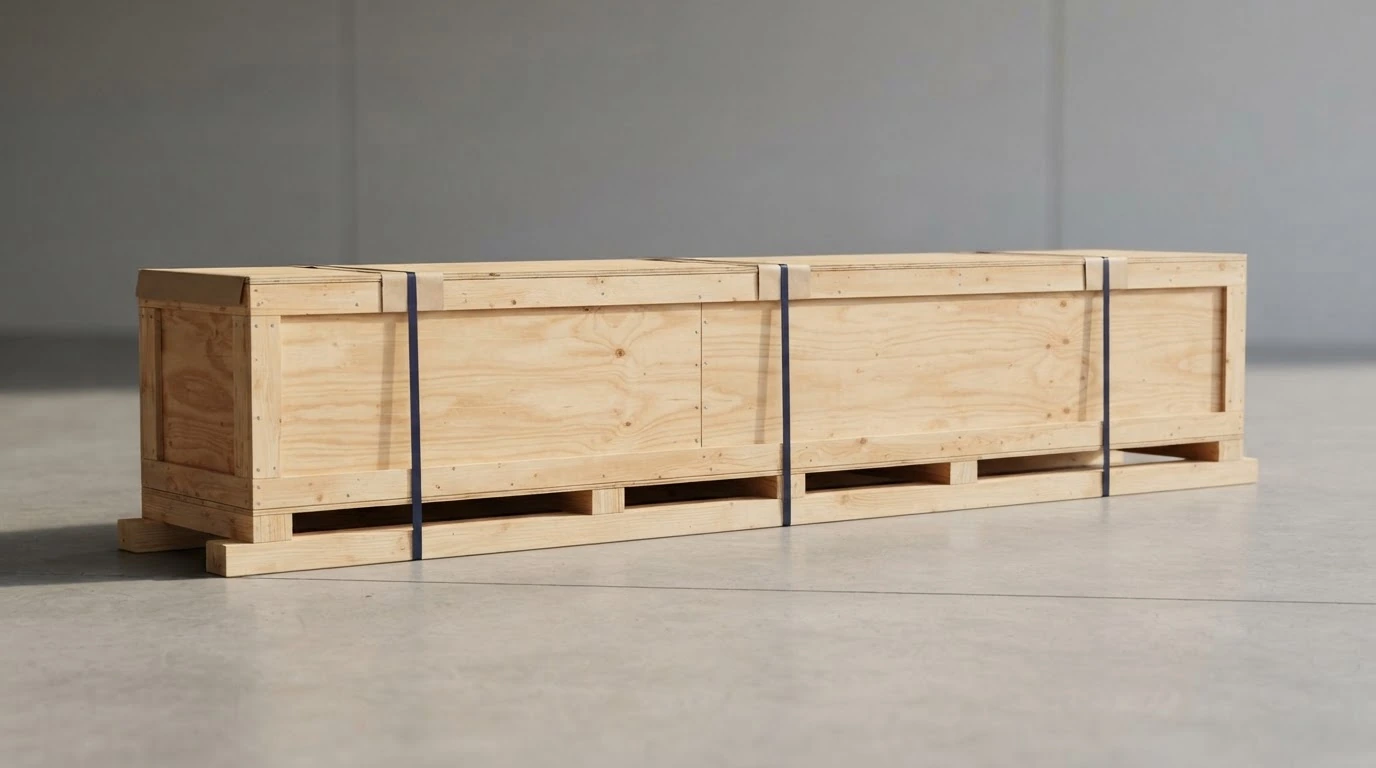
Long or oversized freight can move by LTL when the carrier accepts its finished size, weight, handling needs, and lane. There is no single industry-wide dimension at which every shipment becomes “oversized.” One carrier may apply an overlength charge, another may require prior approval, and a shipment that occupies substantial trailer space may need volume LTL or a different service.
The practical sequence is to package the item on a handling base built for its actual footprint, measure the complete unit, confirm carrier limits, and quote it with exact dimensions and handling requirements. Do that before pickup, not after the freight is already sitting on a dock.
Define the finished handling unit first
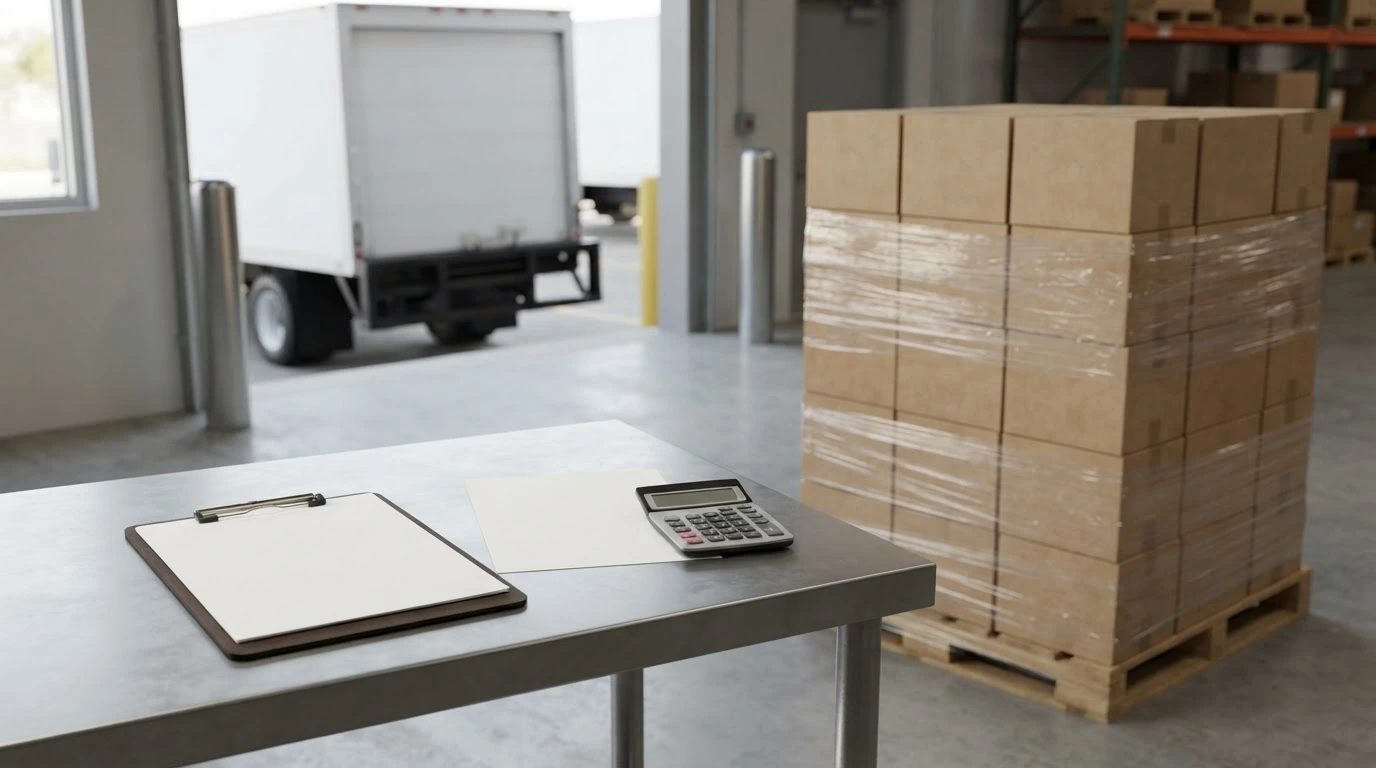
Start with the item after all protective packaging, crating, blocking, bracing, and pallet or skid components have been added. The finished handling unit is what the carrier must move and stow.
Record its greatest length, width, and height, including every projection. Current NMFTA guidance calculates a handling unit’s cubic volume from its greatest straight-line dimensions as tendered to the carrier. A pipe end, crate cleat, machine component, or protective frame that projects beyond the main body still affects the occupied space.
Also record the gross weight of each handling unit and the total shipment weight. Note the center of gravity if it is not obvious, the usable fork-entry sides, whether the unit can safely support freight above it, and any orientation restrictions.
Do not begin with a standard pallet size and round the item down to fit it. If the product needs a longer or wider base, design the base around the product and include that full footprint in the quote.
“Oversized LTL” is a carrier decision
The word oversized can refer to several different conditions:
- A piece exceeds a carrier’s standard length, width, height, or weight limit.
- A shipment triggers an overlength, excessive-length, nonstackable, or other tariff rule.
- A handling unit needs special approval or equipment.
- The shipment occupies enough trailer space that volume LTL or another service is more appropriate.
- Pickup or delivery equipment cannot safely handle the piece.
These conditions are related, but they are not interchangeable. An overlength fee does not automatically mean the shipment is volume LTL. A carrier’s acceptance limit is not the same thing as a public-road oversize permit threshold. A piece may fit inside a trailer yet still be impractical for the terminal’s handling equipment or the destination’s liftgate.
Carrier limits can also change. FedEx’s current LTL packaging page, for example, publishes its own total-shipment and individual-piece limits and requires special approval beyond certain values. Treat those as FedEx requirements, not universal LTL rules. Verify the selected carrier’s current tariff, service guide, and approval process for the actual shipment.
Build a base that fully supports the item
A long item needs support across the points that carry its weight. Use a custom pallet, skid, crate, or other forklift-accessible base designed for the product’s length, weight distribution, and center of gravity.
The base should remain rigid when lifted and should not sag between runners or blocks. Its deck, stringers, fasteners, and bracing must be appropriate for the load. Keep the product and its packaging within the base footprint. Extending beyond the support exposes the item to contact and leaves part of it unsupported.
Fork access needs deliberate planning. A long unit may require fork extensions, a particular entry side, or multiple lift points. Provide clearance for the equipment the carrier will use, and do not place bands, loose film, fasteners, or blocking in fork openings. Mark the approved entry sides when the carrier’s instructions call for it.
If the center of gravity is offset or high, design the base and bracing around that condition. A broad base may be necessary even when the product itself is narrow. Do not rely on the operator to discover an unstable balance point during the first lift.
Package according to the item’s shape
Long freight is not one packaging category. The suitable design depends on whether the item is rigid, flexible, flat, fragile, cylindrical, irregular, or able to carry a top load.
Long rigid items
FedEx advises using a crate or a mechanically handled long-freight design for items such as pipe. It specifically warns against banding unprotected long freight to a pallet because that arrangement lacks outer protection and end blocking.
A crate or enclosed framework can protect the ends and sides while providing continuous support. Add end blocking and lateral bracing so the item cannot move within the enclosure. Chamfered or protected runner ends can reduce snagging during handling.
Large flat items
Doors, panels, glass, countertops, artwork, and similar pieces usually need a sturdy container and upright support. An elongated pallet with an integrated A-frame, bookend bracing, or crate bracing can keep a flat item oriented and supported. The base width and bracing must be designed for the center of gravity rather than chosen by appearance.
Machinery and irregular equipment
Heavy or oddly shaped equipment may need to be bolted to a skid, blocked against movement, braced at structural points, and enclosed. Protect projecting controls, fittings, shafts, and finished surfaces. Do not run a strap across a component that cannot carry the tension.
Bundled profiles and flexible pieces
Pipe, tubing, molding, and other profiles need a compact bundle with end restraint. Use separators or supports when the material could rub, nest, telescope, or bend. The bundle should remain coherent when lifted at the intended points and when forces act along either horizontal direction.
Use restraint and protection for different jobs
Blocking and bracing prevent movement. Bands connect the product or enclosure to its base. Edge protectors distribute band force and protect package edges. Stretch film can unitize compatible components and keep light protective materials in place. None of these automatically replaces the others.
Apply bands to structural parts of the base and keep them close to the load. Avoid fork-entry notches and protect the item where band tension could cause crushing or abrasion. Use enough securement to control movement without distorting the product or its container.
Stretch film should not be the only outer protection for an exposed long item. It does not provide the rigid end protection, puncture resistance, or structural support of a suitable crate or enclosure. If the product can roll, flex, or slide, address that behavior with positive blocking and bracing.
The NMFC includes general packaging specifications, commodity-specific minimum requirements, and performance-based packaging provisions. Confirm the provisions that apply to the actual commodity. Unusual, high-value, heavy, or damage-sensitive products may warrant review by a packaging professional or testing through a qualified laboratory.
Confirm stackability honestly
Long freight often becomes nonstackable because its upper surface is uneven, narrow, fragile, or unable to carry another load. That can affect trailer-space use and pricing. Do not declare an item stackable because the top looks flat or because doing so produces a lower quote.
If a crate is engineered to support top loading, document its capacity and keep the upper surface clear. If it cannot safely support freight, mark and quote it according to the carrier’s current nonstackable rules. Devices added solely to prevent top loading can also increase the finished dimensions or trigger carrier charges, so confirm requirements before using them.
Check pickup and delivery constraints
A shipment that fits the linehaul trailer may still fail at the dock. Confirm whether both locations have a dock, forklift, crane, or other equipment suitable for the finished unit.
Liftgates have platform and capacity limits. A long, wide, or poorly balanced unit may not be compatible even when its gross weight appears acceptable. Ask the carrier about the specific liftgate and handling requirements rather than adding liftgate service automatically.
Also identify limited-access, residential, inside, appointment, or other services that genuinely apply. Confirm that the destination has enough clear space for the carrier to approach, unload, turn, and place the freight under the selected service.
Inspect and measure before requesting the quote
Complete a final walkaround before entering shipment details:
- The product is fully supported, contained, and protected at its ends and projections.
- The base is rigid, sound, and accessible from the intended fork sides.
- Blocking, bracing, bands, and protectors are secure and correctly positioned.
- Nothing can roll, telescope, flex, slide, or rotate within the package.
- Labels and required handling marks are visible on appropriate sides.
- The stackability declaration matches the completed package.
- The greatest finished dimensions and gross weight have been measured, not estimated.
For the quote, provide the origin and destination ZIP codes, pickup date, handling-unit count, exact finished dimensions and weight of each unit, accurate commodity description, applicable NMFC item and class when known, stackability, and required services. Carriers may verify weight and dimensions, and the bill of lading should match the freight tendered.
Compare options for the finished shipment
Shipocity is backed by a team with more than 40 years of combined logistics experience. Through established industry relationships, the platform helps businesses compare competitive freight rates for their specific shipment.
Once the long or oversized item is packaged, measured, and ready for carrier review, get a freight quote using its complete shipment details.