
How to Ship Electronics by LTL Freight
Prepare electronics for LTL freight with product-specific configuration, battery checks, protective packaging, current classification, security, and receiving planning.
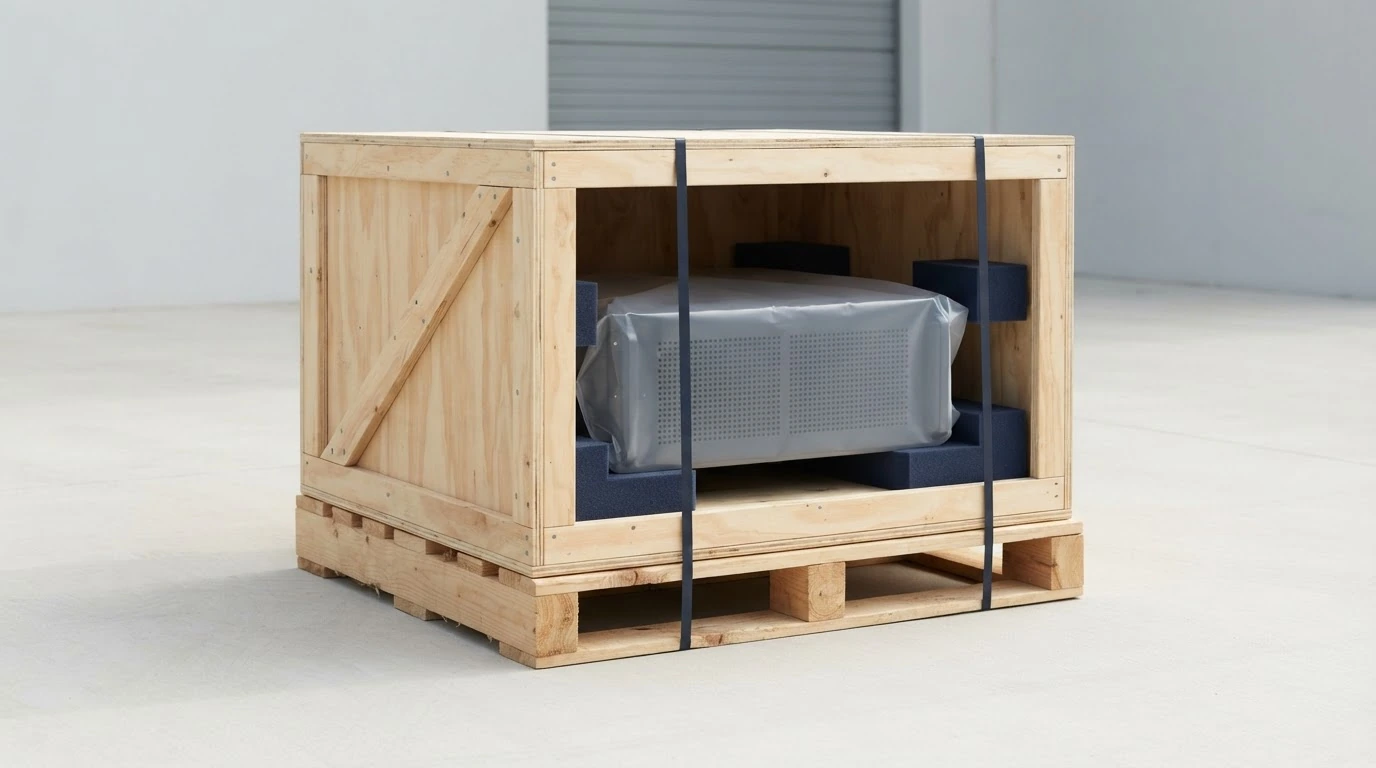
To ship electronics by LTL freight, first confirm that the finished handling unit and service requirements fit a shared freight network. Put each product into its approved transport configuration, identify batteries and other regulated components, protect against the product’s documented shock, vibration, static, abrasion, and moisture risks, build a stable pallet or crate, measure and weigh the completed unit, determine the current NMFC item and class, and disclose the real pickup and delivery needs before requesting rates.
“Electronics” is not one commodity or packaging problem. Palletized retail cartons, server racks, industrial controls, large displays, audio systems, network appliances, and returned equipment can require different restraint, cushioning, environmental control, classification, security, and receiving plans. There is no universal parcel-to-LTL weight or pallet threshold that decides the mode.
Step 1: Define the product and service requirements
Build the shipment record before choosing packaging or service:
- product type, model, configuration, and new, used, returned, or demonstration status;
- handling-unit, carton, and piece counts;
- manufacturer shutdown, transport-lock, orientation, and environmental requirements;
- removable cards, drives, displays, batteries, cables, rails, stands, or accessories;
- temperature, humidity, shock, vibration, tilt, static, or moisture limits;
- lithium or other batteries and any additional regulated components;
- finished dimensions, gross weight, center of gravity, and truthful stackability;
- product value, replacement difficulty, and security requirements;
- origin and destination facility capabilities; and
- timing, tracking, monitoring, appointment, placement, setup, or installation needs.
Standard LTL may be a candidate when the freight can be safely unitized and the available carrier can meet the documented requirements. Consider another service when the electronics need exclusive-use equipment, validated environmental control, unusually tight timing, continuous monitoring, specialized rigging, or handling outside the carrier’s offering.
FedEx’s current technology and electronics page describes provider-specific transportation and monitoring options. Use service pages to identify questions, then confirm the actual carrier, lane, package, and governing terms rather than assuming every feature applies.
Step 2: Put each device into its approved transport configuration
Follow current manufacturer or owner-controlled instructions for shutdown, de-energizing, transport locks, removable components, approved lifting points, and orientation. Do not improvise with stored energy, internal assemblies, liquid-cooling systems, high-voltage components, or product batteries.
Inventory every component traveling with the equipment. Package cables, rails, brackets, remotes, antennas, tools, media, and other accessories in fitted compartments or separately identified inner containers so they cannot strike the main unit. Record which parts are installed, removed, or shipped separately.
For returned or decommissioned electronics, establish the owner-approved data, account, credential, configuration, and asset-control status before tender. Shipping records should retain useful product and serial identifiers, but external labels do not need to advertise brand, model, retail value, or sensitive operational information unless a governing process requires it.
Inspect used reusable cases, pallets, and crates before relying on them. A prior successful trip does not prove that worn foam, loose hardware, a cracked panel, or damaged fork base remains suitable.
Step 3: Determine battery and regulated-material status
Electronics can contain lithium-ion, lithium-metal, lead-acid, or other batteries. The governing requirements depend on chemistry, configuration, energy rating or other relevant specification, quantity, condition, packaging, mode, and whether a battery is installed in equipment, packed with equipment, or shipped separately.
PHMSA’s current lithium-battery resources emphasize that lithium batteries are regulated hazardous materials and provide U.S. transportation guidance. Use a qualified person to make the current determination and prepare the shipment. Disclose battery type, configuration, specification, quantity, and condition to the carrier during acceptance and quoting.
Damaged, defective, recalled, swollen, leaking, or heat-affected batteries require separate evaluation. Do not place them into an ordinary electronics pallet or infer that a rule for a new installed battery applies.
Also identify capacitors, fuels, coolants, compressed contents, chemicals, magnets, or other components that may affect acceptance or regulation. A generic “electronics” description does not resolve hazardous-material status.
Step 4: Design protection for the actual electronics
Electronics packaging should control the product’s documented failure modes rather than follow a universal list of materials. The original manufacturer package can be a strong starting point when it was designed for the same configuration and remains complete, dry, and undamaged. Retail packaging alone may not be designed for palletized LTL handling or repeated use.
Servers, network appliances, and rack equipment
Protect front and rear connectors, rails, handles, bezels, drive bays, power supplies, and protruding modules. Use fitted cushioning or a rigid case that supports the chassis through structural areas. Immobilize removable components as the manufacturer directs and prevent loose rails or cables from striking the equipment.
A full rack or cabinet can have a high center of gravity. Use a base and attachment method approved for transport, protect doors and panels, stabilize the load, and confirm whether installed equipment may remain in place. Ordinary equipment casters and door latches are not freight restraint.
Displays, digital signage, and large panels
Use the manufacturer-approved orientation and support system. Protect the display face from concentrated pressure, edge impact, and flexing, and keep stands or mounting hardware from contacting the panel. A rigid outer container may be appropriate when the product cannot tolerate compression or a projecting shape.
Do not assume that every display should lie flat, stand upright, or use the same foam. Product construction and manufacturer instructions control.
Industrial controls and electronic assemblies
Protect circuit boards, connectors, sensors, precision surfaces, and exposed terminals. Use static-control materials when the product requires them and maintain the complete protective system through packing and unpacking. An antistatic bag, conductive foam, or desiccant should be selected for a defined requirement, not added as decoration.
Immobilize heavy transformers, power supplies, or heat sinks so they cannot load boards or housings during shock. Prevent separate assemblies from contacting one another.
Palletized retail or replacement inventory
Inspect cartons for adequate strength and intact internal protection. Arrange them in a stable pattern without unintended overhang, protect corners and top surfaces, and restrain the group without crushing the products. Keep SKU and carton counts traceable.
Mixed electronics do not automatically share one classification merely because they are wrapped on one pallet. Describe the actual commodities and packages.
Audio, video, lighting, and demonstration systems
Use fitted road cases or compartments for consoles, amplifiers, speakers, cameras, and accessories when the design calls for them. Inspect wheels, handles, latches, foam, panels, and bases before reuse. Secure wheeled cases to the handling base or use a carrier-accepted case design; wheel brakes alone do not restrain freight.
Step 5: Build a stable handling unit
Use a pallet, skid, crate, or reusable case base suitable for the complete gross weight, footprint, center of gravity, and expected mechanical handling. Provide sound deck boards, blocks or stringers, fasteners, and fork access appropriate to the design.
For the finished unit:
- keep all equipment and protection within the base footprint;
- block or restrain movement without loading vulnerable surfaces;
- separate components that could strike or abrade one another;
- protect corners, screens, connectors, and exposed controls;
- use edge protection where banding could cut or crush packaging;
- keep restraint paths clear of sensitive components;
- use stretch film for containment or moisture protection, not as the sole restraint for heavy electronics;
- state orientation and non-stackable restrictions truthfully; and
- remove old or conflicting labels before adding current shipment identification.
FedEx’s current freight-packing guide distinguishes pallets, crates, blocking, bracing, load protectors, edge boards, banding, and stretch wrap because they perform different functions. Packaging should be inspectable and stable, not merely opaque.
Before pickup, check for loose restraints, damaged panels or lumber, inadequate fork openings, overhang, crushed cartons, moisture, exposed connectors, unstable tops, and conflicting identification.
Step 6: Control moisture, static, shock, and monitoring requirements
Determine whether the product needs an environmental or handling-control plan. Ordinary LTL service should not be assumed to provide temperature or humidity control, continuous monitoring, a particular vibration environment, or protected storage during a delay.
If the electronics have documented limits, choose packaging and service that can meet them. A barrier bag, desiccant, static-control system, shock indicator, tilt indicator, temperature logger, or other device can be useful only when it is part of an approved plan with correct selection, placement, activation, reading, and response steps.
Do not infer product fitness from one indicator. Define who reviews the record, what triggers quarantine or inspection, and who can release the equipment for use.
Step 7: Measure, describe, and classify the finished freight
Measure the extreme outer length, width, and height after every pallet, crate panel, case, corner guard, cushion, cover, caster, runner, and projection is included. Weigh each complete handling unit on suitable equipment. Do not quote from device-only specifications or an estimate of packaging weight.
Use a precise commodity description. “Electronics,” “computer equipment,” or “merchandise” may be too broad to identify the applicable NMFC treatment.
NMFTA describes freight classification through density, handling, stowability, and liability characteristics. Density can be relevant, but it does not assign one class to every server, display, control cabinet, audio system, or mixed pallet. Review the current NMFC item, notes, packaging provisions, and class for the actual product and package. Ask a qualified reviewer when the description or mixed contents create uncertainty.
Carry the same handling-unit and piece counts, packaged dimensions, weights, commodities, NMFC information, classes, regulated status, and stackability from the quote into the required shipping document and tender. Update every record if the contents or package change.
Step 8: Plan security without making the shipment vague
High-value electronics can justify additional custody, tracking, seal, restricted-access, or monitoring controls. Requirements depend on product value, route, customer policy, insurance, and carrier capability.
Use an accurate commodity description in the quote and shipping documents while avoiding unnecessary value or brand advertising on the outside of the package. Apply serial, asset, pallet, seal, or case identifiers under the approved process. Limit access to sensitive shipment details to the people and systems that need them.
Ask who records custody events, how exceptions are escalated, and what happens during terminal holds, redelivery, storage, or a missed appointment. Do not claim that opaque wrap, a seal, or tracking prevents theft.
Step 9: Confirm facility and service scope
Verify both ends of the shipment:
- usable dock or forklift capability for the finished unit;
- liftgate need and whether the unit fits the offered equipment;
- carrier classification of residential or limited-access locations;
- receiving hours, appointment, notification, contacts, and closures;
- security, gate, campus, building, or check-in procedure;
- requested curbside, threshold, inside, or room-placement endpoint;
- elevator, door, corridor, floor-load, and turning constraints when separately arranging movement beyond the dock; and
- separate unpacking, rack placement, assembly, cabling, setup, testing, or installation provider.
Liftgate, limited access, appointment, notification, inside delivery, room placement, installation, and debris removal are different services. Confirm the exact available scope and charges for the carrier and facility. A delivery appointment does not create a guaranteed transit time.
Step 10: Preserve value and condition evidence
Before pickup, retain:
- model, serial, asset, SKU, and carton identifiers;
- component and accessory inventory;
- transport-configuration and battery-status records;
- pre-pack and completed-package photographs;
- packaged dimensions and weight records;
- packaging or case inspection records;
- monitoring or seal identifiers when part of the plan;
- accepted quote, services, and governing references; and
- completed shipping document and pickup record.
Review current carrier tariff, contract, liability, released-value, optional-coverage, notice, and claim terms. Declared value is not automatically insurance or a promise of replacement-cost recovery. Separate cargo coverage can also have exclusions, deductibles, valuation rules, security conditions, and evidence requirements.
At delivery, compare unit and piece counts and inspect visible package condition before signing when practical. Record visible shortage or damage specifically on the delivery receipt when appropriate, take photographs, preserve the equipment and packaging, and follow current notice and claim procedures. Good records support an investigation but do not guarantee payment.
Two electronics examples without invented rates
Network appliances going to a data-center integrator
Several new network appliances remain in intact manufacturer inner packs and are unitized in a reinforced pallet container without overhang. The team records serial and carton counts, protects the top and corners, restrains the group without crushing it, determines the installed battery status, and reviews the current commodity classification. The integrator confirms dock, appointment, security, and receiving contacts before quoting.
Large display system going to a commercial installer
A large display and its mounting hardware travel in separate fitted compartments inside one rigid crate. The product is supported in its approved orientation, with the screen isolated from pressure and the hardware unable to contact it. The finished crate is measured and weighed, classified for the actual commodity and package, and quoted to the installer’s receiving dock. Final placement and installation remain separate from carrier delivery.
Electronics LTL quote checklist
- Final origin and destination postal codes and facility types
- Exact products, configurations, and handling-unit contents
- Manufacturer-approved shutdown, transport locks, supports, and orientation
- Current battery and regulated-material determination
- Environmental, monitoring, custody, timing, and security requirements
- Sound pallet, skid, crate, or reusable case with suitable fork access
- Product-specific shock, vibration, static, moisture, abrasion, and connector protection
- Extreme packaged dimensions and gross weight per unit
- Current NMFC item and freight class when applicable
- Truthful stackability and handling restrictions
- Verified liftgate, limited-access, appointment, notification, inside, or specialized-service needs
- Consistent quote, shipping document, labels, and tender data
- Serial, condition, package, pickup, and delivery records
Shipocity is backed by a team with more than 40 years of combined logistics experience. Through established industry relationships, the platform helps businesses compare competitive freight rates for their specific shipment.
Sources
- Technology and electronics shipping for businesses - FedEx
- Freight packing guide - FedEx
- Packaging and class: how packaging decisions change density and your invoice - National Motor Freight Traffic Association
- National Motor Freight Classification - National Motor Freight Traffic Association
- Lithium battery transport - Pipeline and Hazardous Materials Safety Administration