How to Ship Auto Parts by LTL Freight
Prepare auto parts for LTL with part-specific packaging, hazardous-material checks, finished measurements, current classification, and facility details.
To ship auto parts by LTL freight, start with the exact part and its condition. Determine whether it contains a regulated material, design a stable forkliftable handling unit, protect sharp and precision surfaces, measure and weigh the finished package, confirm the current classification, disclose required pickup and delivery services, and keep the quote and shipping documents consistent.
LTL may fit when the completed freight can move safely within the selected carrier’s shared handling environment and does not need a dedicated trailer. That is a shipment-specific decision, not a universal weight or pallet cutoff. A carrier may have different acceptance rules for an engine, transmission, body panel, battery, airbag module, tire shipment, or mixed parts order.
Step 1: Identify the exact part and its condition
Avoid a vague description such as “auto parts.” Record enough detail to distinguish the product and its preparation:
- part name, material, quantity, and new, used, rebuilt, or damaged condition;
- whether it contains or previously contained fuel, oil, coolant, refrigerant, compressed gas, an aerosol, a battery, a pyrotechnic device, or another potentially regulated material;
- exposed shafts, threads, ports, sensors, glass, painted surfaces, sharp edges, or fragile projections;
- individual part weight and the expected packaged weight;
- whether the part can safely support freight above it;
- suitable lifting and securement points; and
- manufacturer, supplier, or safety-data information needed for a hazardous-material determination.
The part’s condition matters. A used fuel-system component, damaged battery, deployed restraint device, or assembly with residue may need a different decision than a clean new replacement part. Do not assume that “used” automatically means prohibited or that “drained” automatically means nonhazardous.
Step 2: Make the hazardous-material determination before packing
PHMSA’s Check the Box program warns that familiar products can be hazardous materials in transportation and introduces shipper responsibilities for classification, packaging, marks, labels, documentation, and training (PHMSA: Check the Box Brochure).
Automotive shipments deserve an explicit check. FedEx’s current automotive guidance identifies examples that can be dangerous goods or hazardous materials, including airbags, aerosols, batteries, engines or engine blocks with hazardous fuel, used fuel tanks, and flammable paints (FedEx: How to Ship Automotive Parts).
Before tender:
- Obtain current product and safety information from the manufacturer or supplier.
- Determine the proper shipping description, hazard class, identification number, packing group when applicable, and any exception under the current Hazardous Materials Regulations.
- Use an authorized package and complete required marks, labels, shipping papers, emergency information, and training.
- Confirm that the selected carrier and service accept the material on the proposed lane.
Use a qualified hazmat professional when needed. General automotive packaging advice is not a regulatory classification, and a carrier’s acceptance rule does not replace federal requirements.
Step 3: Choose packaging for the part
FedEx’s freight-packing guide covers pallets, crates, blocking, bracing, banding, stretch wrap, and specialty freight, including engines and long items (FedEx: Freight Packing and Packaging Guidelines). XPO also publishes packaging resources for the LTL handling environment (XPO: LTL Freight Protection Guides). Treat both as carrier-specific guidance and verify the rules for the actual service.
A qualified packaging reviewer should assess valuable, fragile, regulated, unusual, or repeat production shipments. Test a new design before using it at scale.
Engines, transmissions, and dense assemblies
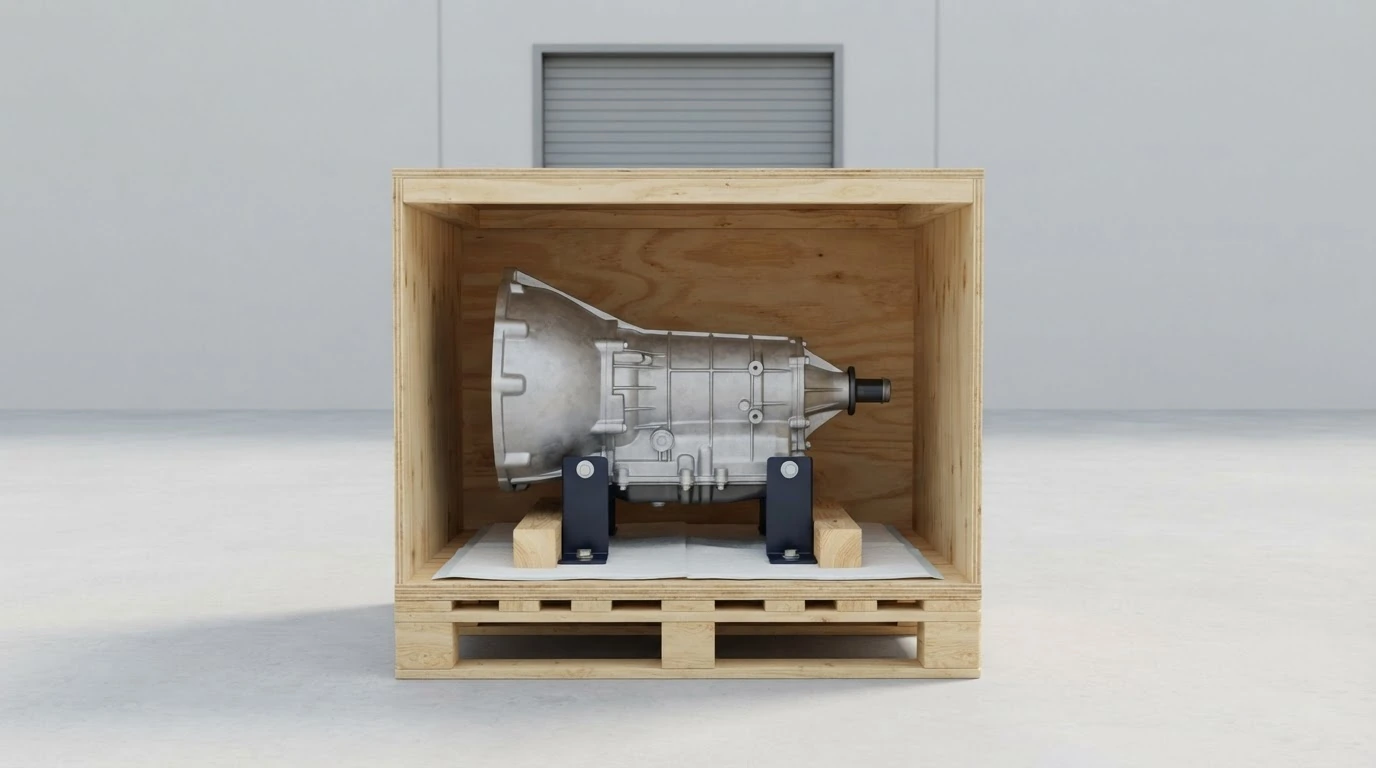
Use a sound forkliftable base designed for the concentrated load. Secure the assembly through appropriate mounting points or a purpose-built cradle so it cannot slide, rotate, or tip. Add blocking and bracing that transfers forces into the base, then use a rigid outer enclosure when exposed components or neighboring freight need protection.
Protect machined faces, shafts, threads, electrical connectors, pans, housings, and ports. Do not depend on stretch film to restrain a heavy assembly.
Fluid preparation is carrier- and material-specific. FedEx, for example, instructs shippers to drain fluids from a transmission and use a heavy-duty bag with absorbent material for residue; its broader guidance says a fluid-containing part must be drained or demonstrated leakproof in every orientation. Confirm the rule for the selected carrier and determine separately whether any residue or contents remain regulated.
Body panels, glass, trim, and painted parts
Protect sharp edges and corners so they cannot cut the package, injure handlers, or damage other freight. Immobilize the part inside a rigid carton, crate, rack, or frame with cushioning selected for its mass and fragility. Guard painted, plated, glass, and precision surfaces against abrasion and point loading.
Avoid simply banding a hood, door, bumper, or glass panel to a flat pallet without end, face, and edge protection. If the design must stay upright, engineer the rack or crate for that orientation rather than relying only on arrows or labels.
Tires, wheels, and brake components
Protect decorative wheel faces and exposed studs, and prevent round items from rolling or shifting. When multiple units are palletized, use a stable pattern and restraint compatible with the selected carrier’s instructions. A tire-and-wheel assembly, bare wheel, tire, and heavy brake rotor do not present the same surface and concentration risks, so do not reuse one package without review.
Long exhaust, suspension, and driveline parts
Use a purpose-built skid or crate that supports the entire geometry and prevents end-to-end and side-to-side movement. Cover sharp ends, protect splines and fittings, provide safe mechanical access, and include every projection in the finished dimensions. FedEx’s freight guide cautions against attaching unprotected long or non-profile freight to a pallet with banding alone.
Small parts and mixed orders
Place small components in suitable inner cartons or compartments, protect precision surfaces, and prevent parts from striking one another. Consolidate the cartons into a stable handling unit when LTL is the selected service. Record the contents and quantity by pallet or crate so a mixed order can be reconciled without treating the bill of lading as the only inventory record.
Keep dense cases from crushing light ones. Separate parts that could leak, abrade, magnetically affect, contaminate, or otherwise damage neighboring goods. Do not assume that every item on a mixed pallet shares one NMFC item or class.
Step 4: Measure and classify the completed handling unit
NMFTA describes the National Motor Freight Classification through four transportation characteristics: density, handling, stowability, and liability (NMFTA: National Motor Freight Classification). Density is important for many current items, but it does not replace the applicable commodity description, packaging provisions, or handling, stowability, and liability rules.
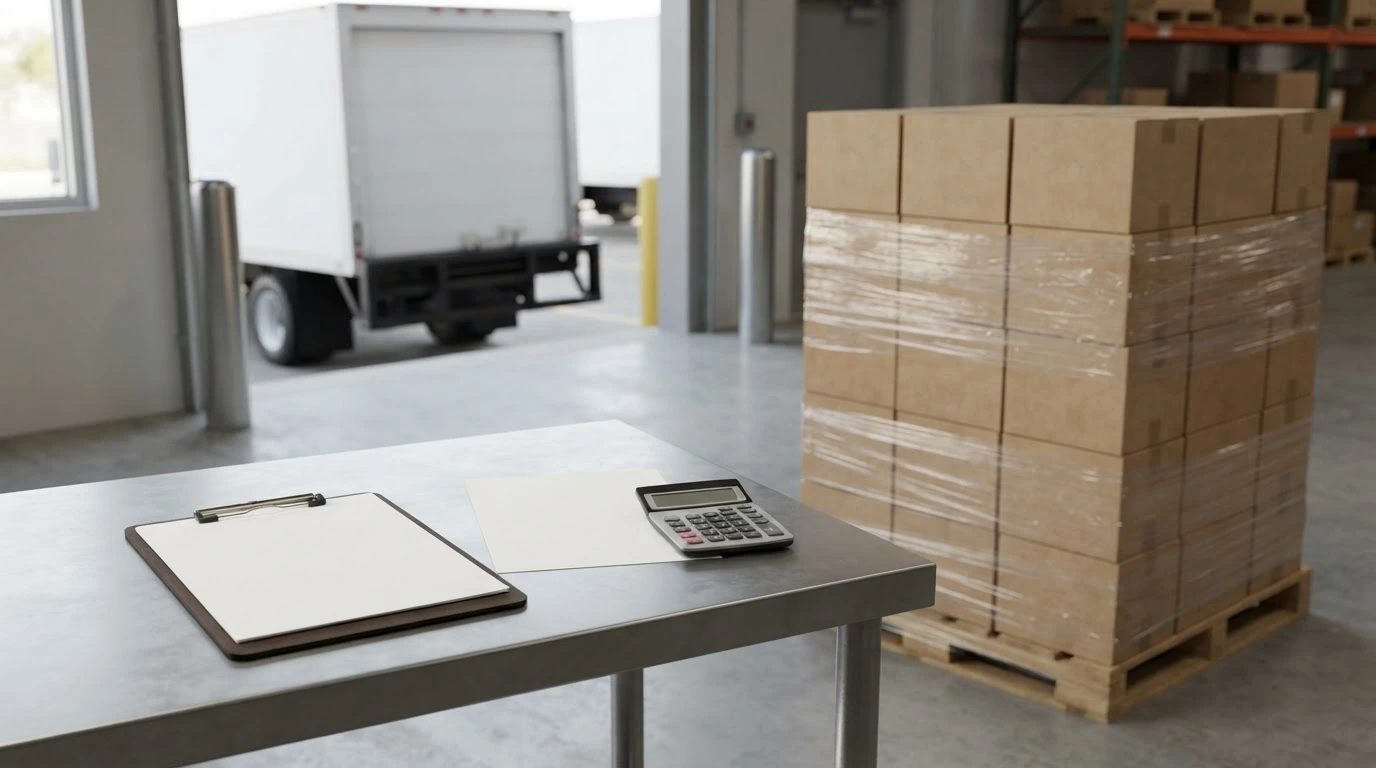
Measure the extreme packaged length, width, and height, including the pallet, crate, overhang, edge protection, protrusions, and any non-stack device. Weigh the fully prepared handling unit, not the bare part. Then:
- Identify the current NMFC item for the actual commodity as prepared.
- Apply the applicable packaging and density provisions.
- Check for carrier-specific tariff exceptions or acceptance requirements.
- Record the item, class, dimensions, weight, and measurement basis with the shipment file.
Do not use a generic auto-parts class range. An engine assembly, glass panel, tire, trim part, battery, and mixed carton can classify differently. If the part, package, pallet, or contents change after rating, repeat the measurement and classification review before tender.
Step 5: Confirm origin, destination, and services
An automotive plant or distribution center may have a staffed dock, while a repair shop, dealership, residence, restoration garage, farm, or job site may not. Ask what the carrier must physically do at both ends.
Confirm:
- whether a suitable dock or forklift is available;
- whether a liftgate is required and can accommodate the unit;
- whether the carrier must move the freight beyond its standard pickup or delivery point;
- whether the carrier considers the site residential or limited access;
- appointment or notification requirements;
- business hours, closures, and contact process;
- restrictions involving vehicle size, security, hazardous materials, or unloading; and
- whether the part requires prior approval or special equipment.
Accessorial names, definitions, availability, limits, and charges vary by carrier. Describe the real facility and requested work during quoting rather than choosing a term from memory. Do not assume that adding a service earlier guarantees a lower charge; the goal is an accurate, comparable offer.
Step 6: Keep the quote, bill of lading, and freight consistent
Provide the same facts throughout the transaction:
- shipper, consignee, and bill-to party;
- complete origin and destination addresses;
- handling-unit and package counts;
- accurate commodity descriptions;
- packaged dimensions and weights;
- NMFC items and freight classes when applicable;
- hazardous-material entries and documentation when required;
- stackability and handling restrictions;
- pickup date and requested delivery service; and
- required accessorials and accepted pricing reference.
Before pickup, inspect the base, enclosure, restraints, cushioning, caps, plugs, absorbent material, labels, and documents. Look for leaks, loose hardware, unstable weight, exposed edges, torn cartons, blocked fork openings, and conflicting old labels. Photograph the complete sealed unit from useful angles.
If a quote was based on a drained, crated, stackable assembly, do not tender an undrained, open, non-stackable unit under the same data. Request updated instructions and pricing when the freight changes.
Step 7: Prepare the receiver and preserve condition evidence
Give the receiver the expected handling-unit count, shipment reference, and inspection process. At delivery, compare the visible count and condition before signing. Record specific visible exceptions on the delivery receipt when appropriate, take photographs, preserve the packaging and part, and follow the governing notice and claim procedures.
A clean delivery notation, photograph, package design, or declared value does not by itself guarantee a claim outcome. Contract terms, tariff provisions, packaging adequacy, evidence, timing, liability rules, and the facts of the event can matter.
For repeat auto-parts shipments, record exception reasons such as leak, restraint failure, damaged surface, missing component, reweigh, dimension correction, classification change, missed appointment, or refused delivery. Review patterns by part number, supplier, pack design, warehouse, lane, carrier, and receiver before revising the standard.
Auto-parts LTL quote checklist
- Exact part name, material, quantity, and condition
- Hazardous-material determination and carrier acceptance when applicable
- Origin and destination postal codes and facility types
- Completed pallet, skid, or crate count
- Extreme packaged dimensions and gross weight per unit
- Current NMFC item and freight class when applicable
- Product-specific base, restraint, cushioning, edge, surface, and leak protection
- Truthful stackability, orientation, and handling restrictions
- Pickup date and receiver hours
- Liftgate, inside, limited-access, residential, appointment, notification, or other services
- Consistent quote, bill of lading, labels, and tendered freight
- Pickup and delivery condition evidence
Shipocity is backed by a team with more than 40 years of combined logistics experience. Through established industry relationships, the platform helps businesses compare competitive freight rates for their specific shipment.
With the completed packaging, measurements, part details, and required services ready, Price this type of shipment.