How to Prepare Machinery for Freight Classification
Preparing machinery for freight classification means identifying the commodity, confirming the NMFC code in ClassIT+, measuring the packaged shipment, and entering accurate details into your LTL quote.
Preparing machinery for freight classification means documenting the machine precisely, packaging it in the form that will be tendered, measuring and weighing the complete handling unit, and applying the current NMFC item and its conditions.
“Machinery” is too broad to establish an item or class. The machine’s purpose, construction, form, packaging, and transportation characteristics all matter.
Build an identification record first
Before searching ClassIT+ or requesting classification assistance, gather enough information to distinguish the machine from similar equipment and from parts.
NMFTA’s current interpretation-request requirements ask for details such as:
- The manufacturer’s description, type, model number, or invoice reference
- Photos, diagrams, literature, labels, and a product link when available
- The machine’s function or purpose
- Whether it is a complete unit or a component of a larger system
- New or used condition
- Materials used in its construction, including relevant coatings or inserts
- The shipping package
- The form of shipment, such as assembled, disassembled, knocked down, nested, or folded
Keep this record with the shipment file. Do not select an item merely because its title sounds more specific. If two items may apply, list both when seeking an NMFTA interpretation rather than resolving the ambiguity by guesswork.
Distinguish a complete machine from parts and accessories
A machine, a machine component, replacement parts, tools, and detached accessories may not share one NMFC item. Identify what is actually included in the handling unit.
Record:
- The main machine or assembly
- Detached components
- Replacement parts or consumables
- Tools or accessories packed with it
- Separate containers or handling units
If different articles are combined on one pallet or in one crate, review the current mixed-shipment provisions in addition to the individual classifications. Do not hide accessories inside a general “machinery” description.
Finalize packaging before measuring
Classification should describe the freight in its tendered shipping form. Build the pallet, skid, or crate before recording final dimensions and weight.
The applicable NMFC item may include packaging definitions, specifications, or requirements. NMFTA’s classification policies state that packaging provisions are intended to ensure freight is adequately protected and can be handled and stowed safely and practicably in the LTL environment.
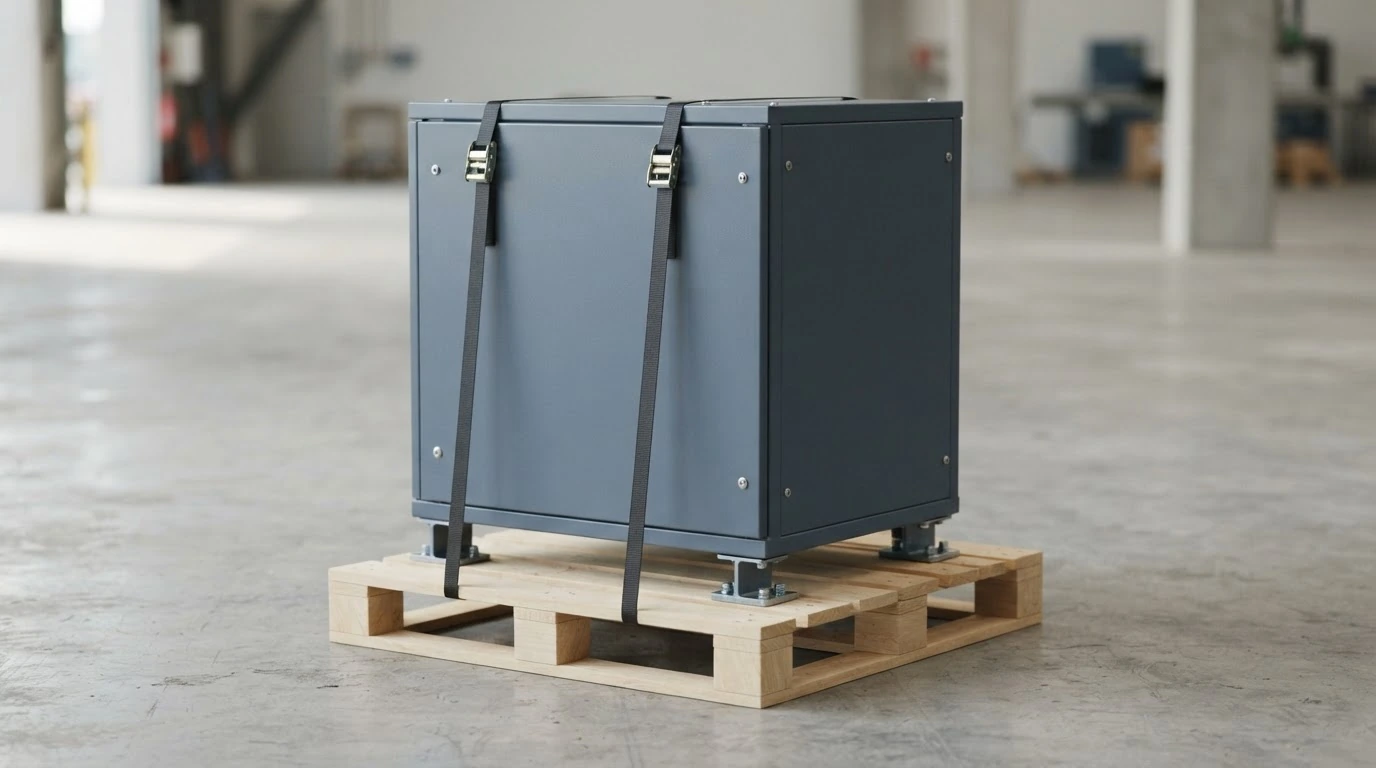
Use the machine manufacturer’s shipping instructions and an appropriate packaging professional for blocking, bracing, mounting, corrosion protection, or other equipment-specific needs. Confirm the selected carrier’s acceptance requirements before tendering unusually heavy, large, hazardous, or otherwise specialized machinery.
Do not assume that a crate automatically lowers the class or that a wrapped pallet automatically raises it. Packaging can change dimensions, weight, handling, and stowability, but the applicable NMFC provision determines how those facts affect classification.
Record the complete packaged dimensions
Measure the outermost points of the finished handling unit, including:
- Pallet, skid, or crate
- Blocking, bracing, and protective structure
- Wrap or covers
- Projections beyond the main machine body
- Attached components that travel with the unit
Record length, width, and height for each handling unit. If units differ, keep separate measurements instead of treating them as identical.
Do not use the machine’s catalog dimensions as the packaged dimensions. Catalog specifications may omit the base, crate, attachments, or protection added for transport.
Weigh the packaged handling unit
Use the total packaged weight, including the machine, base, pallet or skid, crate, bracing, hardware, and other material tendered with the unit.
A manufacturer specification for the bare machine may be useful for planning but is not a substitute for the packaged shipment weight. Retain the weight record and identify which handling unit it describes.
If separate articles are packed together, document their individual weights when the applicable mixed-shipment rule requires itemization.
Calculate density only when the provision uses it
For measurements in inches:
- Multiply outside length by width by height to find cubic inches.
- Divide by 1,728 to convert cubic inches to cubic feet.
- Account for all applicable handling units.
- Divide total packaged weight in pounds by total cubic feet.
NMFTA’s ClassIT+ density calculator uses this method. Its guidance also says the calculator is for estimation and reference and does not suggest an item’s class.
Density supports the classification lookup. It does not replace it. Some provisions use the standard full-density scale, while other items reflect handling, stowability, liability, packaging, value, dimensions, or another condition.
There is no reliable rule that a density result should be within one or two classes of an item result. If the records appear inconsistent, recheck the measurements, commodity description, and full NMFC provision or seek classification assistance.
Review all four transportation characteristics
NMFTA evaluates commodities using:
- Density: packaged weight relative to occupied space
- Handling: the ease or difficulty of moving the freight
- Stowability: how effectively it can be placed with other freight
- Liability: risks such as susceptibility to damage, damage to other freight, perishability, or hazardous nature
Machinery should not be assigned a higher or lower class through an informal adjustment for being heavy, awkward, fragile, or valuable. Those characteristics are considered through the applicable NMFC item and classification policies.
The shipper’s task is to describe the article and shipping form accurately, not to recreate the FCDC’s classification process from a generic chart.
Confirm the current item and effective date
In ClassIT+, review:
- Item and subitem
- Commodity description
- Shipping form
- Class or density subprovision
- Notes and references
- Packaging requirements
- Symbols or special conditions
- Effective date
Do not assume a code used six months ago is wrong, and do not assume it is still right. Check the current content for a new shipment and save the lookup date.
For an older quote or invoice, use historical NMFC content applicable to the shipment date rather than judging it only against today’s provision.
Prepare the bill of lading description
NMFTA’s current Item 250100 guidance says bill-of-lading commodity descriptions must match the tariff and include the article, package, special markings, exceptions, NMFC item number, subprovision, and class.
Before tender, confirm the bill of lading reflects:
- The actual machinery or component
- The package or shipping form
- Applicable NMFC item and subprovision
- Freight class
- Handling-unit count
- Packaged weight and dimensions where required
- Any required special markings or exceptions
Keep the quote, shipping papers, classification lookup, photos, dimensions, and weight record together.
Check carrier and service requirements separately
The NMFC is a voluntary classification standard and contains no transportation rates or charges. Carrier tariffs, customer pricing agreements, equipment limits, acceptance rules, and service definitions are separate.
Before requesting a rate, confirm whether the machinery requires:
- A particular pickup or delivery arrangement
- A service suitable for the packaged dimensions and weight
- Additional documentation
- Special handling under the selected carrier’s terms
- Hazardous-material review by a qualified party when applicable
Do not infer these requirements from freight class alone.
Common machinery-classification mistakes
- Describing the freight only as “machinery” or “machinery parts”
- Choosing between two plausible items without resolving the ambiguity
- Measuring the bare machine instead of the finished handling unit
- Using catalog weight as packaged weight
- Assuming packaging changes class in one predictable direction
- Treating a density calculator as an official item or class lookup
- Omitting detached components or accessories from the description
- Reusing an old item without checking the effective content
- Assuming declared value can never affect an item-specific class provision
- Leaving the NMFC item, subprovision, or shipping form off the bill of lading
Machinery quote checklist
Prepare:
- Origin and destination ZIP codes
- Handling-unit type and count
- Outside packaged dimensions for each unit
- Total packaged weight
- Precise machinery or component description
- Manufacturer, type, model, purpose, and construction details
- New or used condition and form of shipment
- NMFC item, subprovision, and freight class when verified
- Required pickup and delivery services
- Any carrier-required documentation or acceptance confirmation
These details make the rate comparison more meaningful and create a record that matches the machinery being tendered.
Compare rates for the prepared shipment
Shipocity is backed by a team with more than 40 years of combined logistics experience. Through established industry relationships, the platform helps businesses compare competitive freight rates for their specific shipment.
Once the machinery, package, dimensions, weight, class, lane, and required services are documented, enter those details to compare the freight options available for the shipment.