How to Prepare Electronics for Freight Classification
Prepare electronics for LTL freight classification using the four-factor framework, current NMFC rules, and the quote details that determine your rate.
Preparing electronics for freight classification requires more than recording a product category. Identify the exact equipment, document its function and construction, determine whether batteries or other regulated materials are present, package it as it will be tendered, and measure and weigh the finished handling unit. Use those facts to confirm the current NMFC item, subprovision, packaging requirements, and class.
Do not select a class from a generic electronics chart or a density estimate alone. “Electronics” can describe complete equipment, components, assemblies, accessories, and parts with different transportation characteristics and NMFC provisions.
Identify the equipment precisely
Create an identification record for every distinct article in the shipment. A useful record explains what the equipment is without relying on an internal stock number.
Gather:
- The manufacturer’s description and common product name
- Manufacturer, model, or invoice reference when available
- The equipment’s function or purpose
- Whether it is a complete unit, assembly, component, accessory, or replacement part
- Primary construction materials and relevant inserts, coatings, or housings
- Whether it is new, used, refurbished, damaged, defective, or being returned
- Photos, diagrams, product literature, and a direct product page when available
- Whether batteries, pressurized components, refrigerants, or other potentially regulated materials are present
NMFTA asks for this type of information when it evaluates a classification interpretation request. The details help distinguish articles that may share a broad commercial label but do not belong under the same classification provision.
If a handling unit contains different electronics or components, maintain an itemized description and piece count. Do not assign the entire handling unit to whichever article is most expensive, heaviest, or easiest to identify without confirming that the classification treatment applies.
Resolve battery and hazardous-material status first
Hazardous-material compliance and NMFC freight classification are separate determinations. A freight class does not establish whether an electronic device or battery is regulated, and a class lookup does not replace the applicable transportation rules.
Lithium batteries are a common reason this distinction matters. PHMSA states that lithium batteries are regulated as hazardous materials under the U.S. Department of Transportation’s Hazardous Materials Regulations. Its guidance separates requirements by battery type, size, condition, and configuration, including batteries shipped alone, packed with equipment, or contained in equipment.
Before packaging or quoting electronics with a battery:
- Identify the battery chemistry and configuration.
- Obtain the manufacturer’s documentation and test information required for the shipment.
- Determine whether the battery is damaged, defective, recalled, or being sent for recycling or disposal.
- Confirm the applicable packaging, marking, labeling, documentation, and mode restrictions with a trained hazardous-material professional.
- Confirm that the selected carrier and service accept the shipment.
Do not assume that removing, disconnecting, or covering a battery makes the shipment nonregulated. Do not hide a battery under a generic electronics description. Resolve the status and preparation method for the specific article before it is offered for transportation.
Other electronic equipment can also contain regulated materials or components. Review the manufacturer’s documentation and safety data sheet when applicable, and use qualified compliance help instead of applying a rule from a different product.
This guide does not replace hazardous-material training, current regulations, or carrier acceptance rules.
Check the applicable packaging requirement
Packaging protects the equipment and can be part of the classification conditions. NMFTA explains that minimum packaging requirements are specific to the commodity description and that packaging may affect freight class.
Review the current NMFC entry for:
- Permitted package types
- Referenced package specifications, rules, or notes
- Conditions for boxed, crated, palletized, or skid-mounted equipment
- Requirements for complete units, assemblies, components, or parts
- Protection required for exposed or damage-prone surfaces
- Any performance-testing or certification requirement actually referenced
Do not assume that stretch wrap, a pallet, or a custom-looking crate automatically satisfies the relevant provision. The finished package must match the current item and protect the equipment during normal LTL handling.
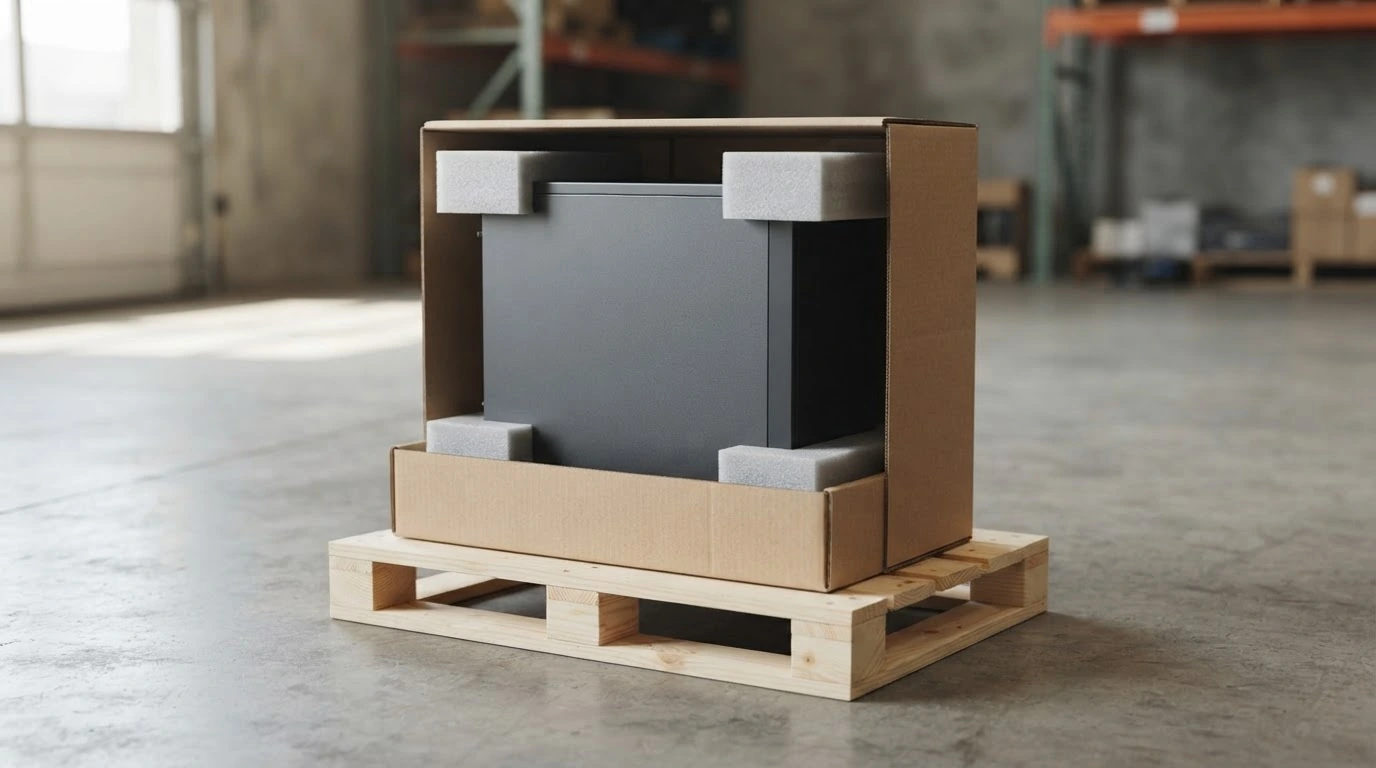
Follow manufacturer instructions for securing the product, protecting connectors and controls, and controlling electrostatic discharge, moisture, vibration, or shock when those risks apply. Contain cables, removable modules, mounting hardware, and accessories so they cannot move independently. Use a stable base that supports the full footprint, keep the load within the pallet or skid, and prevent bands or straps from crushing the enclosure.
If the equipment is unusually heavy, top-heavy, fragile, or sensitive, obtain a package design or securement review from a qualified professional rather than improvising around visible components.
Measure and weigh the finished handling unit
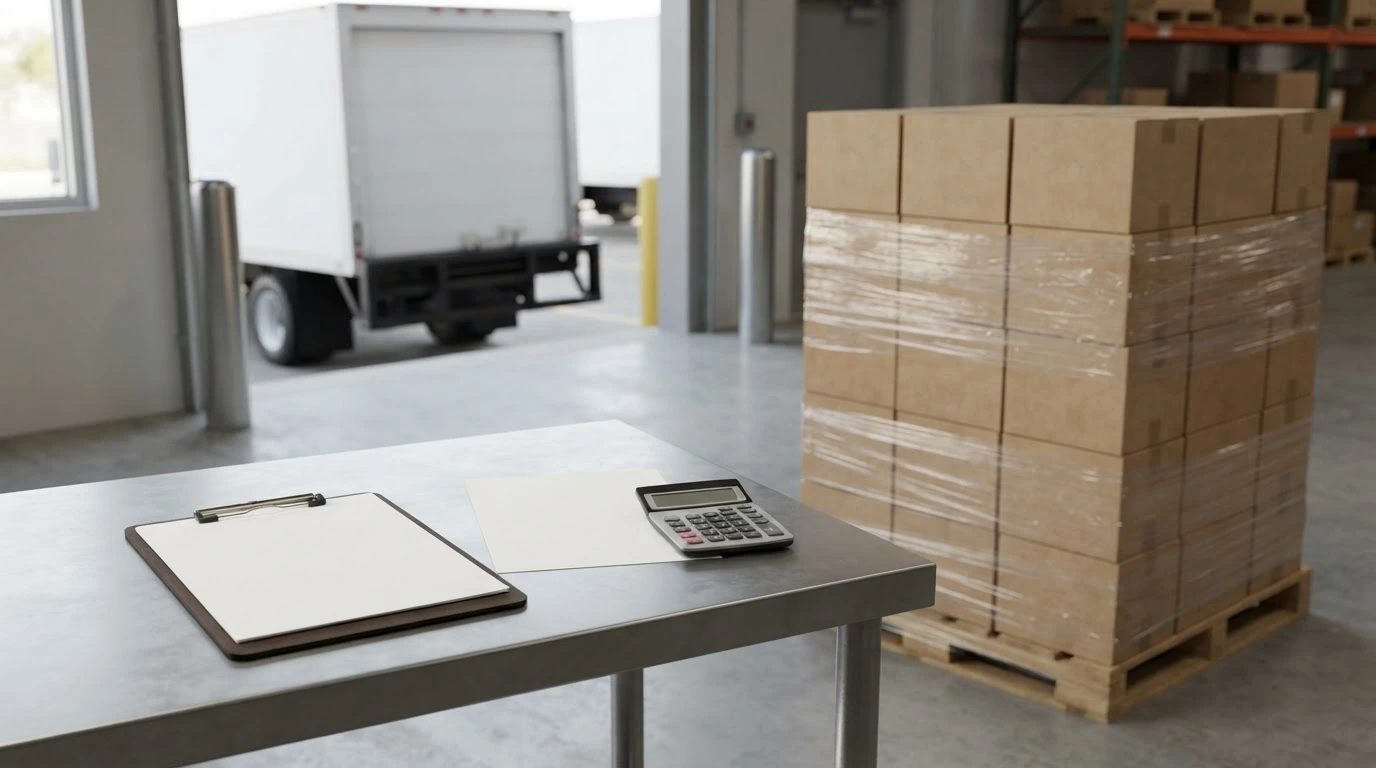
Complete the package before recording shipment measurements. Measure the greatest outside length, width, and height of each handling unit. Include the pallet, skid, crate, carton, foam, bracing, edge protection, and every projection that contributes to the occupied space.
Record the total weight of the equipment and all packaging. If the shipment has multiple handling units, document each unit separately. Do not average unlike units or use the dimensions from a product specification sheet in place of the finished package.
NMFTA evaluates freight class using density, handling, stowability, and liability. Density may determine the applicable subprovision for some articles, but it is not a universal class answer. Use the density and dimensions only as the current NMFC entry instructs.
Stackability should describe the packaged handling unit, not an assumption about electronics as a category. Mark a unit as stackable only when its package is designed and approved to support freight above it without damaging the contents or becoming unstable.
Confirm the current NMFC item
Search current NMFC content using the specific equipment name and the facts in the identification record. Read the full entry rather than relying on a search-result heading or an old shipping record.
Confirm:
- The article description matches the actual equipment or component
- The entry applies to the product’s function and construction
- The package and shipping form satisfy the stated conditions
- Notes, rules, exceptions, and cross-references have been reviewed
- The correct subprovision has been selected
- The NMFC item and class are effective for the planned ship date
Do not assume a class used for one type of monitor, server, control unit, printer, or circuit assembly applies to another. These words are broad product families, not universal class assignments.
If two NMFC entries appear plausible, save both references and gather the manufacturer and packaging evidence needed to distinguish them. Resolve the ambiguity through a qualified classification resource rather than selecting the lower class or whichever description sounds closer. NMFTA offers interpretation assistance for specific commodity questions.
Make the shipping documents match
The quote, classification record, bill of lading, and physical freight should agree. NMFTA’s Item 250100 guidance says commodity descriptions must match the tariff and include the article, package, special markings, exceptions, NMFC item number, subprovision, and class. It also clarifies that the carrier may verify shipment weight and dimensions.
Before tendering the electronics, confirm:
- Specific article and package descriptions
- Piece and handling-unit counts
- Total packaged weight
- Greatest packaged dimensions used for the quote
- NMFC item number and subprovision
- Freight class
- Applicable special markings or exceptions
- Hazardous-material documentation and communication, when required
If the equipment, battery configuration, package, dimensions, weight, or regulated status changes, stop and update the classification, quote, and shipping documents before pickup.
Electronics classification checklist
Use this final review before requesting a rate:
- Identify every distinct article, component, and accessory.
- Record function, construction, condition, and complete-versus-component status.
- Resolve battery and hazardous-material status separately from freight class.
- Confirm carrier acceptance for any regulated or restricted article.
- Review the current NMFC packaging requirement.
- Protect the equipment according to manufacturer instructions and applicable package rules.
- Secure removable parts and support the full handling-unit footprint.
- Finish packaging before measuring and weighing.
- Record each unit’s greatest dimensions and total packaged weight.
- Read the full current NMFC entry, including notes and cross-references.
- Resolve ambiguous item choices instead of guessing.
- Make the quote, bill of lading, and physical shipment agree.
Get a shipment-specific freight quote
When the classification and compliance work is complete, gather the origin and destination ZIP codes, pickup timing, handling-unit count, packaged dimensions, packaged weight, precise commodity description, freight class when known, declared hazardous-material status, and required accessorial services.
Shipocity is backed by a team with more than 40 years of combined logistics experience. Through established industry relationships, the platform helps businesses compare competitive freight rates for their specific shipment.
Get a freight quote and sign up with Shipocity when the electronics and their packaged details are ready.