How to Photograph Freight Damage for a Claim
Learn a defensible sequence for photographing visible or concealed freight damage, preserving packaging, and connecting image evidence to a carrier claim.

Photograph freight damage before the condition changes: capture the delivery context, the complete handling unit, every damaged area from more than one distance, the packaging and securement, the affected contents, shipment identifiers, and the completed delivery record. Preserve the original files and the freight and packaging, then follow the governing carrier’s current notice, inspection, and claim instructions. Photos are supporting evidence; they do not, by themselves, establish liability or constitute a properly filed cargo claim.
This guide addresses U.S. commercial motor-freight documentation. A bill of lading, tariff, contract, insurance policy, or another transportation mode may impose different requirements. It is educational information, not legal advice. For a disputed, high-value, cross-border, or time-sensitive claim, consult the carrier’s current terms and qualified counsel.
The photo sequence to use at delivery
Start only when the area is safe. Do not enter a trailer, climb on freight, stand in an active forklift lane, or delay an unsafe unloading operation for a picture. If the driver or facility controls access, ask before photographing inside equipment.
Use this sequence when visible damage or shortage is found:
- Capture the arrival context. Take an overview showing the shipment where the exception was discovered. Include enough of the dock, trailer opening, or receiving area to establish context without photographing unrelated freight or people unnecessarily.
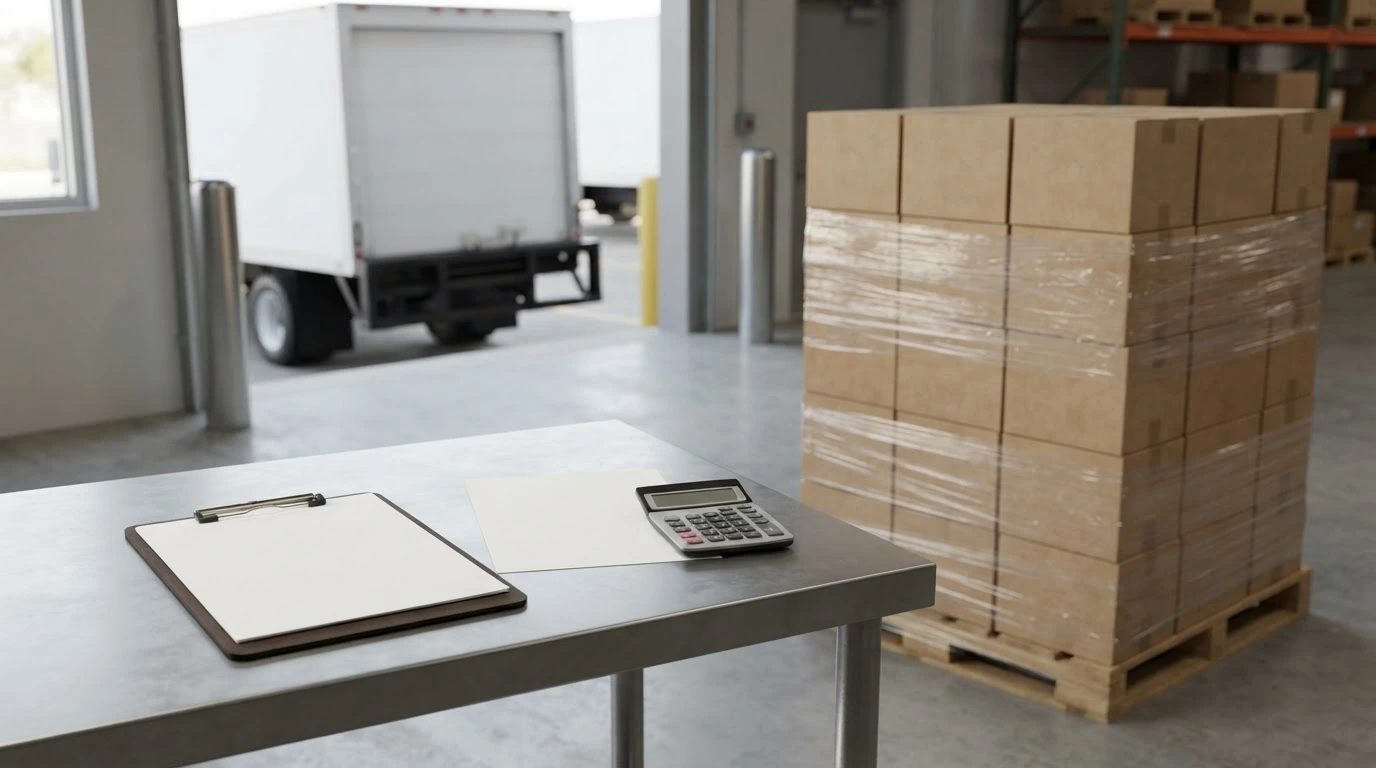
- Photograph the complete handling unit. Record the entire pallet, crate, drum, carton stack, or other unit before wrap, bands, blocking, bracing, or loose pieces are removed. Photograph every accessible side and the top when that can be done safely.
- Connect the damage to the whole shipment. Take a medium-distance image that shows where each damaged area sits on the handling unit. A close-up alone may show a puncture but not which carton or pallet it belongs to.
- Record the damage in detail. Take sharp close-ups of tears, crush points, dents, wet areas, broken components, displaced bands, or missing pieces. For size, first take an unobstructed image, then a second image with a ruler or other neutral scale reference beside the damage.
- Document packaging and securement. Photograph the pallet deck, crate, cartons, stretch wrap, bands, edge protection, cushioning, and any visible blocking or bracing. Record both damaged and apparently intact packaging; do not rearrange it to make the picture clearer.
- Document the affected contents. If unpacking is safe and permitted, photograph the damaged item where it was found and the packaging layers around it. Capture identifying model or serial information when relevant to the affected item, but protect that information when copies are shared outside the carrier, insurer, or other authorized claim parties.
- Capture shipment identifiers. Photograph the PRO or tracking label and other identifiers needed to connect the image set to the correct shipment. Do not rely on the label image as the only overview of the freight.
- Capture the delivery record. After the receiver has written a specific exception and completed the delivery process, retain a legible copy or photograph of the delivery receipt or electronic record. Describe what was actually observable, such as a crushed corner or torn wrap, rather than guessing at cause or writing only “damaged.”
UPS Supply Chain Solutions currently tells receivers to count the cargo, note outside signs of damage or shortage on the delivery record, retain packaging, and photograph the irregularities, goods, and packaging when possible. XPO’s current LTL claim instructions list photos of the shipment and packaging at delivery among the supporting documents to assemble. Those are carrier examples, not a universal photo-count rule.
Build a photo set that can be understood later
A useful set lets someone who was not at the dock move from context to detail without guessing. For each damaged area, keep the visual chain intact:
| View | What it should establish |
|---|---|
| Arrival overview | Where the shipment was when the condition was observed |
| Complete handling unit | The overall load, packaging, and visible securement |
| Medium view | The damaged area’s location on that unit |
| Close-up | The nature and extent of the visible damage |
| Scale view | Approximate size without obscuring the condition |
| Packaging and contents | How outer packaging, inner protection, and goods relate |
| Identifier and delivery record | Which shipment and receipt record the set belongs to |
There is no defensible universal minimum number of photos. Take enough clear, non-duplicative images to cover each material condition. Review them before the driver leaves or the freight is moved when circumstances allow; blur, glare, a blocked label, or a missing side is harder to correct later.
Use the camera’s original resolution. Avoid filters, beauty modes, artificial background blur, or edits that change color, shape, or apparent severity. If a crop, arrow, or annotation will help a reviewer, keep the untouched original and make a separate working copy. A short index can map filenames to the subject, for example 01-arrival-overview, 02-pallet-front, and 03-carton-corner-detail. File naming is an organization practice, not a substitute for the carrier’s required claim information.
Record the delivery date and time, PRO or other shipment number, who took the photographs, and a brief factual description in a separate incident note. Preserve the original files and their metadata. Do not place confidential shipment information in a public album, and send files through the carrier’s designated portal or another authorized channel when available.
Visible damage and concealed damage require different records
For visible damage, photograph the condition before the load is reconfigured, and make a specific exception on the delivery record. UPS Supply Chain Solutions’ current guidance says irregularities must be clearly noted on the delivery receipt or electronic device. The photographs and receipt should agree; neither should make an unsupported conclusion about when the damage occurred or who caused it.
For concealed damage, stop when the damage is discovered and record the unpacking state before separating the product from its packaging. Photograph:
- The outer container and all accessible sides.
- The opening and packaging layers as found.
- The damaged item in place before further handling.
- The inner cushioning, blocking, fasteners, and empty spaces.
- Each damaged area and any separated pieces.
- The shipment label and the packaging associated with that item.
Then contact the carrier promptly and follow its current instructions. Do not assume that a notice deadline published by one carrier applies to another. Estes, for example, currently instructs customers to report concealed damage within five days and retain cartons, packaging, and other evidence. That is an Estes rule cited here to show why the actual carrier’s terms must be checked, not a universal federal five-day rule.
Preserve the freight while the carrier decides whether to inspect
Photographs do not replace the physical evidence. Keep the damaged goods, pallet, container, cushioning, wrap, bands, and broken pieces in substantially the condition in which the damage was found, so far as safe and practical. Protect the cargo from additional loss without destroying the evidence; document any action required to prevent further damage.
Current carrier instructions differ in wording. UPS Supply Chain Solutions says packaging must be retained until the claim concludes. Estes likewise tells claimants to retain packaging for a damage claim. FedEx Trade Networks’ current cargo-claims procedure tells customers to retain products and packaging until otherwise advised and to photograph both packaging and contents. Follow the written instruction applicable to the shipment, and obtain written direction before disposal, repair, salvage, or destructive testing when those steps could alter evidence.
If damaged freight creates a safety, contamination, or spoilage risk, protect people and property first. Record the condition and the steps taken, preserve what can safely be preserved, and contact the carrier, insurer, and appropriate safety or regulatory personnel promptly.
Photos support a claim; they are not the claim
For claims within its scope, 49 CFR Part 370 governs claims processing by covered motor carriers and freight forwarders. Section 370.3 says a written claim must identify the shipment, assert carrier liability for the alleged loss or damage, and demand a specified or determinable amount within the applicable time limit. It also says damage notations and inspection reports, standing alone, do not meet those minimum filing requirements.
The same federal part says supporting records may include the bill of lading, evidence of freight charges when applicable, and invoice or other certified value evidence when necessary to the investigation. A carrier may also request photographs, inspection material, repair estimates, or other records under its own current process. Build one claim file that connects the photo set to the written claim and its supporting documents.
Before submission, confirm:
- The correct carrier or claim recipient and the current submission method.
- The notice, inspection-request, and claim-filing requirements in the governing terms.
- The shipment identifier on every document or within the carrier portal.
- A factual description consistent with the delivery record and photographs.
- Proof of ownership or the right to claim when requested.
- Proof of value and repair or mitigation records when applicable.
- A retained copy of everything submitted and proof of submission.
Common photography mistakes
- Only taking close-ups. Detail without an overview may not connect the damage to the handling unit or delivery context.
- Moving or cleaning the freight first. Rewrapping, restacking, or discarding loose material changes the condition the reviewer needs to understand.
- Photographing only the product. Packaging, securement, pallet condition, identifiers, and the delivery record can be part of the evidentiary chain.
- Using one vague receipt notation. A photograph of a receipt that says only “damage” is less informative than a specific factual exception.
- Keeping only edited copies. Crops and annotations can help explain a condition, but they should not replace the originals.
- Assuming photos file the claim. The federal minimum filing elements and carrier-specific requirements still apply.
- Discarding evidence after upload. An image does not prevent a carrier from requesting an inspection of the goods and packaging.
- Making the photo more important than safety. Never create a second incident while documenting the first one.
Prepare the next shipment with complete quote details
Good claim documentation records what happened; careful shipment preparation helps the next move begin with clearer facts. Gather the origin and destination ZIP codes, packaged dimensions, weight, accurate commodity description, freight class when known, and required accessorial services.
Shipocity is backed by a team with more than 40 years of combined logistics experience. Through established industry relationships, the platform helps businesses compare competitive freight rates for their specific shipment.
Quote your next shipment with the right details.