How to Palletize Fragile Freight
A practical guide to palletizing fragile freight for LTL shipping, with the packaging sequence, common mistakes, and the quote details to have ready.
Palletizing fragile freight starts before anything is placed on a pallet. The product first needs internal cushioning and an outer package designed for its weight, shape, and vulnerabilities. That finished package can then be arranged and secured as a stable handling unit.
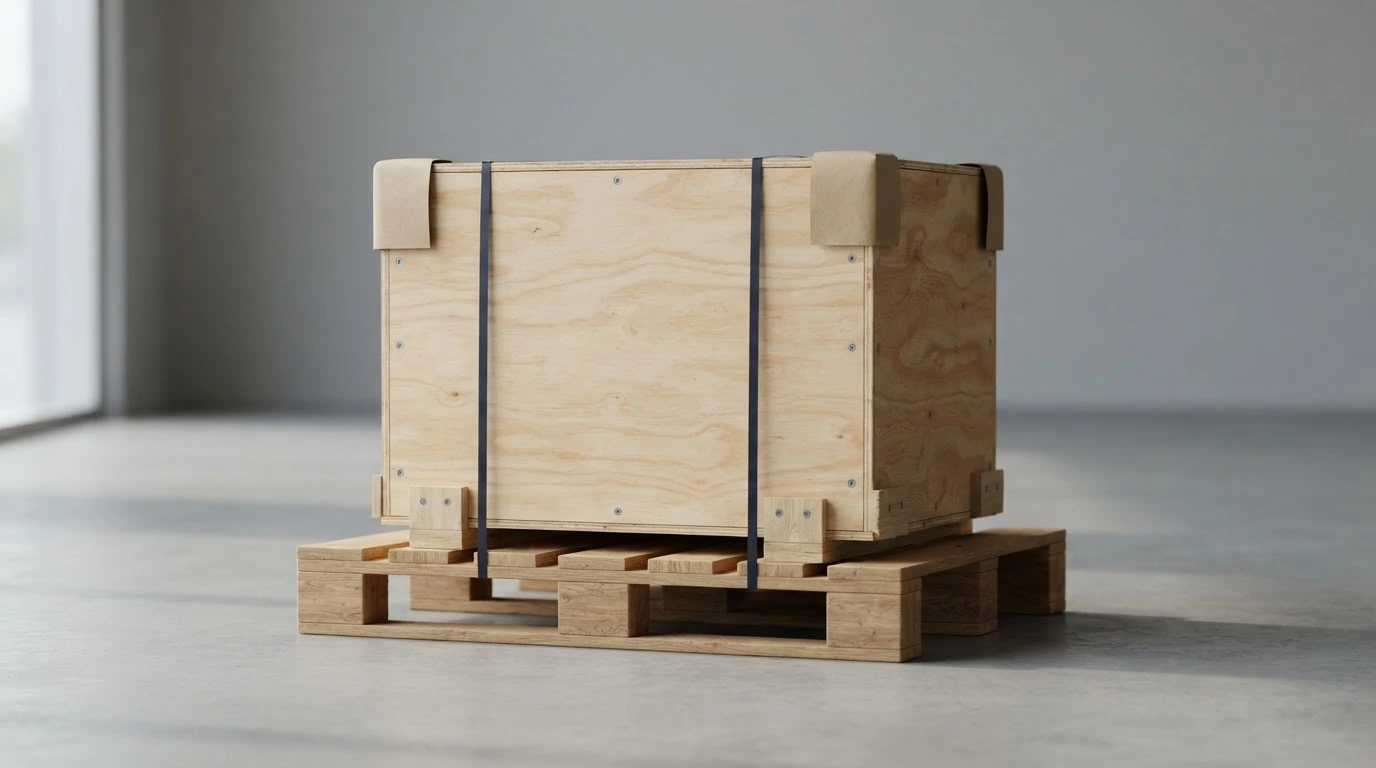
For many fragile products, a closed crate or another rigid enclosure is safer than leaving the item exposed beneath film. Whatever package you use, the goal is the same: limit movement inside it, support the load across the pallet, keep every part within the pallet footprint, and use appropriate containment so the freight and pallet move together.
A FRAGILE label can communicate a handling instruction, but it cannot compensate for weak packaging. Build the shipment to tolerate the normal shocks, vibration, compression, and handling conditions of the LTL network.
Package the product before building the pallet
The pallet is only one part of the packaging system. Start by identifying what could damage the product in transit. A glass component may be vulnerable to impact and concentrated pressure. Sensitive equipment may need protection from vibration, abrasion, or moisture. An irregular metal part may need blocking so it cannot roll or shift.
Choose an outer package strong enough for the product and the expected distribution environment. Depending on the item, that may be a corrugated container, reinforced container, crate, or fully enclosed wooden box. Exposed equipment and unusually shaped products often need more than stretch film around the product itself.
Inside the package, use cushioning, blocking, bracing, or fitted supports appropriate for the product. The item should not be able to strike the container walls or migrate as the handling unit changes direction. Avoid loosely adding filler without checking whether it can support the item’s weight or recover after repeated vibration.
This is also where product-specific judgment matters most. There is no universal amount of foam, bubble material, or empty space that works for every fragile shipment. High-value, heavy, unusually delicate, or unfamiliar products may warrant help from a packaging professional or testing by a qualified packaging laboratory.
Choose a suitable pallet
Use a pallet that is large enough to support the entire finished package and strong enough for the load. It should have sound deck boards and structural members, with no protruding fasteners or damage that could weaken the base or puncture the freight.
A 48-by-40-inch pallet is common in U.S. freight shipping, but it is not the correct answer for every shipment. Choose the footprint and construction for the actual package. An oversized crate should not be forced onto a smaller pallet simply because that pallet is readily available.
The pallet should also provide usable fork access. Keep the fork openings clear of film, loose strapping, blocking, and projecting fasteners. If equipment can enter from more than one direction, confirm that the pallet was actually designed for that access rather than assuming every opening is a safe fork entry point.
Build a stable handling unit
Place packages so their bases are fully supported and no carton, crate, or product extends beyond the pallet deck. Overhang exposes edges to contact and removes support from the part of the package beyond the pallet.
When several packages share one pallet, arrange them as a compact, stable unit. Heavier packages are often placed low, but only when the packages below and around them are designed to carry that load. Never place a heavy carton on a weak or fragile package merely to follow a general stacking rule.
NMFTA guidance recommends keeping fragile items toward the protected center of a multipackage load and protecting sharp or protruding edges. That can be useful when compatible cartons are combined on one pallet. It does not mean every fragile product should be buried inside a mixed load. The packages still need adequate support, compatible weights, and visible required marks.
Keep gaps to a minimum because open space can allow packages to shift. If the load has irregular voids, use properly designed blocking, bracing, or dunnage. Do not depend on tighter stretch film to pull an unstable arrangement into shape.
For cartons, column stacking often improves compression strength when the packages and contents can support it. Interlocking patterns may add stability in some loads, but they can reduce carton strength. The right pattern depends on the packaging and product, so avoid treating either pattern as a universal rule.
Protect edges and restrain the load
Once the arrangement is stable, add the components needed to keep it stable through handling. A top pad, tie sheet, edge board, corner protector, band, stretch film, or combination may be appropriate. Each serves a different purpose.
Edge boards and corner protectors can distribute banding or film pressure and help protect carton edges. They should fit the load and remain aligned. A protector cannot make an unsupported or crushed carton structurally sound.
Banding can secure a crate or compact load to the pallet when the package and pallet can withstand the applied tension. Use protectors where the band could cut or crush the package. Keep bands away from fork paths and make sure their placement actually connects the freight to the pallet.
Stretch film is primarily a containment tool. Anchor it to the pallet and apply it with enough overlap and tension to keep compatible packages together without distorting their walls. Film does not replace the product’s outer package, internal cushioning, or load-specific blocking and bracing.
Some shipments need both banding and stretch film; others use a crate with mechanical attachment, blocking, or another engineered method. The right securement is based on the completed load, not on a rule that every fragile pallet must use the same materials.
Decide whether the shipment is stackable
Do not mark a pallet stackable unless the completed package can safely support freight above it. The decision should account for the product, container strength, pallet alignment, load height, weight distribution, and any unsupported top surface.
Fragile does not automatically mean nonstackable, and a flat top does not automatically mean stackable. A properly designed crate may be built for stacking, while a flat-looking carton load may not have enough compression strength. Give the carrier an accurate stackability status when requesting the quote.
If the freight cannot support a top load, a crate or other protective enclosure may be a better solution than relying on labels alone. Check carrier requirements before adding cones, pyramids, or other devices that intentionally prevent stacking, because they can affect handling and occupied space.
Apply markings without relying on them for protection
Place required shipping labels and handling marks where they remain visible on the finished unit. If stretch film covers the package, confirm that the label can still be read and scanned. Follow the carrier’s instructions for fragile or orientation markings.
Labels are communication, not physical protection. A handler may not see every side of the shipment, and freight can still encounter normal vibration, acceleration, compression, and contact. The package should be capable of surviving the expected environment even when handled correctly.
Hazardous materials require a separate compliance review. If a fragile item is also regulated, trained personnel should determine the correct packaging, marking, labeling, documentation, and carrier eligibility under current PHMSA and carrier requirements. Do not apply a general fragile-freight checklist as a substitute for hazardous-materials rules.
Inspect the completed pallet
Before measuring the shipment, walk around the entire handling unit and check:
- The pallet is sound and supports the full package footprint.
- Nothing overhangs, leans, rocks, or shifts when lightly checked.
- Internal cushioning, blocking, and bracing were installed before the package was closed.
- Cartons and crates show no tears, punctures, crushing, or loose panels.
- Bands, film, fasteners, and protectors are secure without damaging the package.
- Fork openings are clear on every intended entry side.
- Required labels and handling marks are visible and attached to the correct package.
- The top surface and declared stackability match the package’s actual capability.
If the load fails one of these checks, rebuild or repackage it before pickup. More film is not a reliable fix for a weak pallet, unsupported package, loose product, or unstable arrangement.
Measure and describe the finished shipment
Freight quote details should describe the shipment as tendered, after packaging and palletizing. Record the greatest finished length, width, and height, including the pallet, packaging, fasteners, and any projections. Weigh the complete handling unit rather than using only the product’s catalog weight.
Also prepare the pallet count, package count, accurate commodity description, origin and destination ZIP codes, pickup date, and requested services. Provide the applicable NMFC item and class when required and known. Current NMFC classification can consider density, handling, stowability, and liability under the applicable provision; fragile is not itself a universal freight class.
Carriers may verify shipment weight and dimensions. Accurate finished measurements reduce the chance that the quote and bill are based on different shipment facts. Include truthful stackability and handling information, and identify accessorial needs such as liftgate, limited-access, appointment, or residential service when they apply.
Compare freight options for the packaged load
Shipocity is backed by a team with more than 40 years of combined logistics experience. Through established industry relationships, the platform helps businesses compare competitive freight rates for their specific shipment.
Once the fragile freight is packaged, palletized, measured, and weighed, get a freight quote using the completed shipment details.