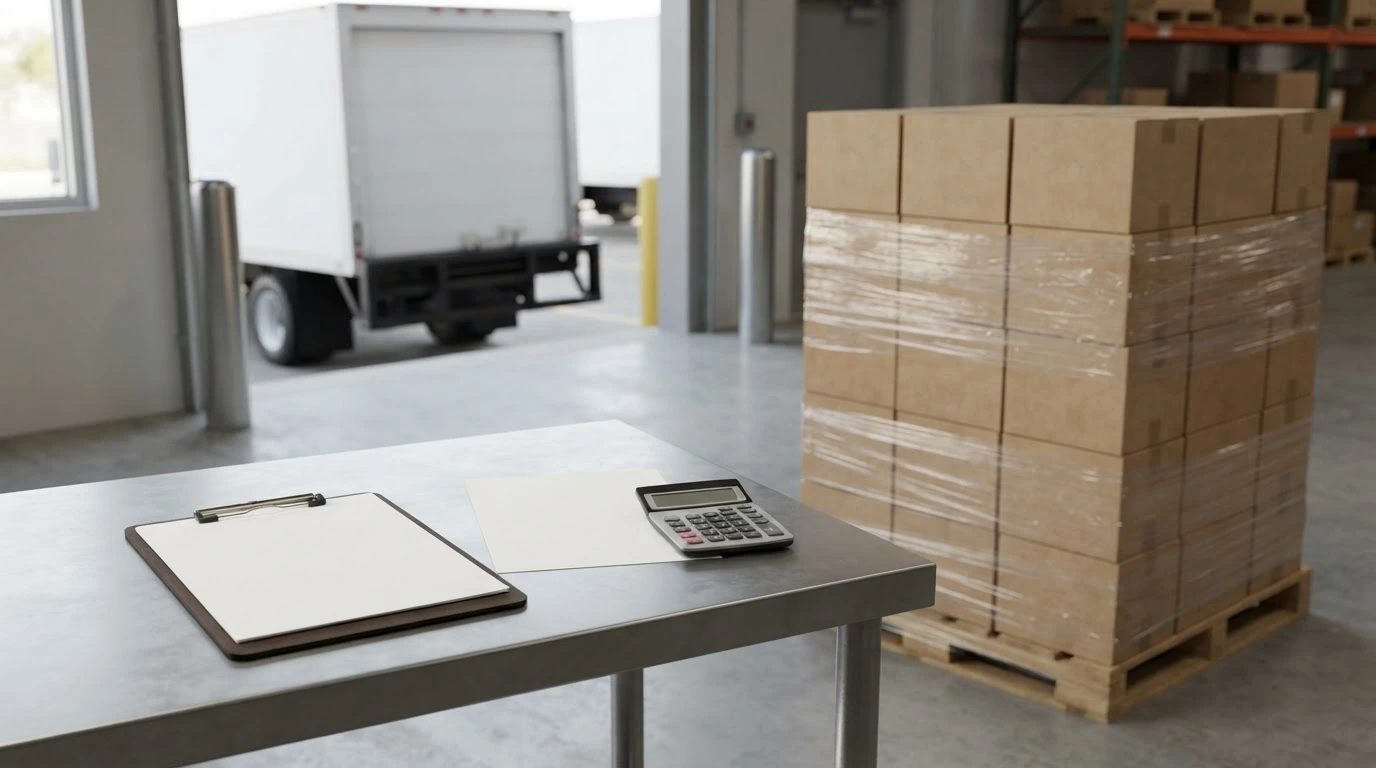
How to Measure a Pallet for a Freight Quote
Learn how to measure a pallet for an LTL freight quote, including length, width, height, weight, and common mistakes that lead to reweigh or reclass charges.
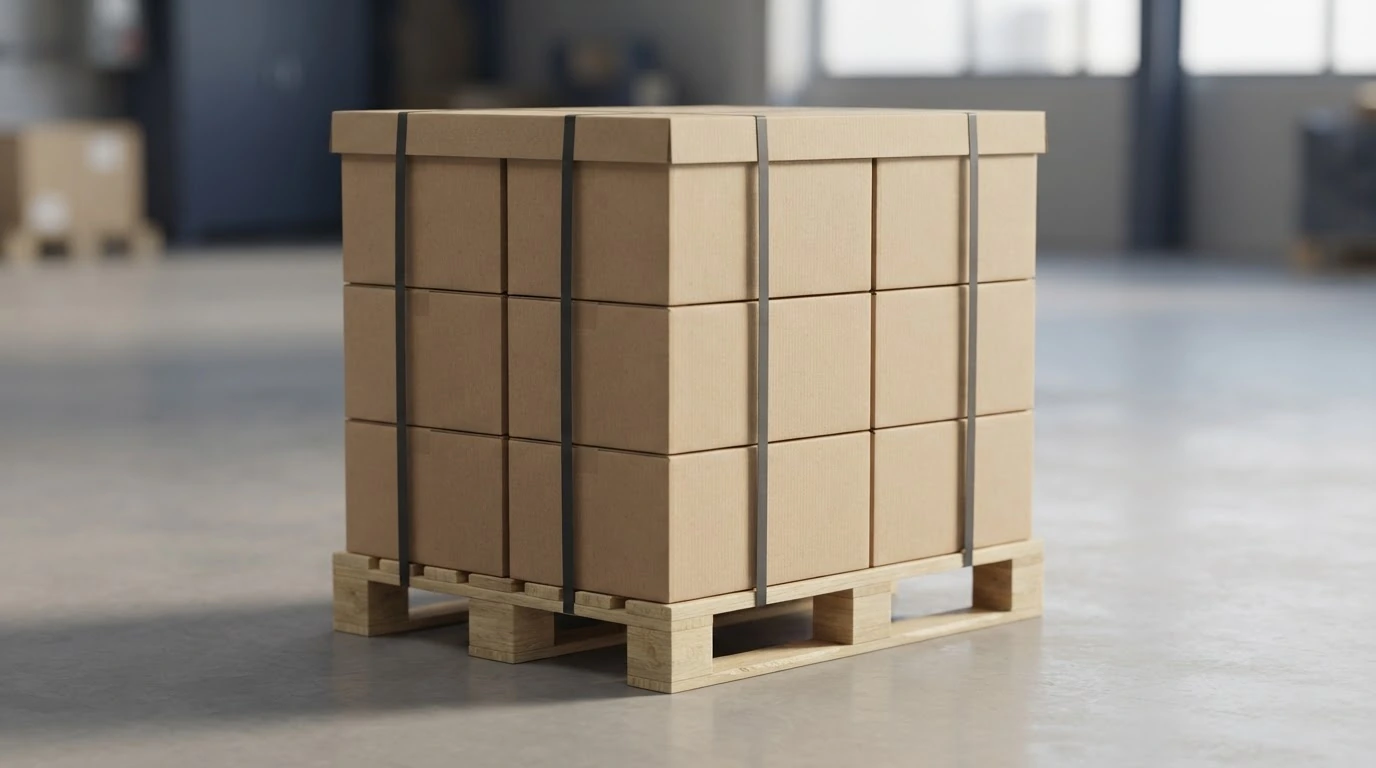
Measure the fully packaged handling unit at its greatest length, greatest width, and greatest height, including the pallet and every projection. Then weigh the finished unit, including the product, pallet, and packaging.
Think of the measurement as the smallest rectangular box that could completely enclose the shipment as it will be tendered to the carrier. Do not use the product dimensions, the nominal pallet footprint, or measurements taken before wrapping and securement are finished.
The measurements you need
For each pallet, record:
- Length: the greatest horizontal dimension from one extreme point to the opposite extreme point
- Width: the greatest horizontal dimension perpendicular to the length
- Height: the distance from the floor to the highest point of the finished handling unit
- Gross weight: the product, pallet, and all packaging combined
Use inches and pounds when the quote form requests U.S. customary units. If the form accepts only whole inches, follow its rounding instructions and never understate the finished size.
NMFTA’s current density guidance says to use the greatest straight-line dimensions, including projections, as the handling unit is tendered to the carrier. That means overhang, straps, corner boards, a top cap, runners, or any other part that extends beyond the main load can affect the measurement.
Measure only after packaging is complete
Finish the pallet before taking final dimensions. The load should already include:
- Pallet or skid
- Product and cartons
- Crate or enclosure when used
- Dunnage, blocking, and bracing
- Stretch film or other containment
- Bands and edge protection
- Top cap or protective cover
- Any attached handling or protective feature
Packaging can add inches in more than one direction. It can also compress, shift, or bulge during unitization. A measurement taken from the bare product may not describe what arrives at the dock.
Step-by-step pallet measurement
1. Place the finished pallet on a level surface
Use a location where you can reach all sides safely. Make sure loose packaging is secured and the unit is in the same configuration that will be picked up.
2. Find the greatest horizontal dimension
Measure between the two farthest horizontal points. This is the length. A protruding carton, runner, band, or product edge can extend the measurement beyond the pallet deck.
3. Measure the perpendicular horizontal dimension
Turn 90 degrees and measure between the farthest points on that axis. This is the width. Again, include the load and packaging rather than stopping at the pallet edge.
4. Measure from the floor to the highest point
Height begins at the floor, not at the top of the pallet deck. Include the pallet, load, top cap, corner protection, and anything else that remains attached for shipment.
If one corner is higher than the rest, use that highest point. Do not average an irregular top.
5. Record the dimensions clearly
Write the result as length x width x height and keep the units with the numbers. Swapping length and width does not change cubic volume because the same three dimensions are multiplied, but consistent labeling still helps the carrier evaluate orientation, equipment, and dimensional restrictions.
6. Weigh the finished handling unit
Use a scale appropriate for the completed pallet. Gross weight includes every component tendered as the unit. If the final pallet cannot be weighed as one piece, use documented component weights and verify the total rather than relying on a generic pallet estimate.
7. Repeat for nonidentical pallets
Measure and weigh each distinct handling unit. If several pallets truly have the same finished dimensions, weight, commodity, and packaging, record the count. If they differ, keep separate values so a heavy, tall, or oversized unit is not hidden inside an average.
How dimensions and weight become density
For a rectangular handling unit measured in inches:
- Multiply length x width x height to find cubic inches.
- Divide cubic inches by 1,728 to find cubic feet.
- Divide gross weight in pounds by cubic feet to find pounds per cubic foot.
In compact form:
Density = weight x 1,728 / (length x width x height)
NMFTA publishes an example of a pallet measuring 48 x 40 x 45 inches and weighing 450 pounds. Those dimensions equal 50 cubic feet, so the handling unit’s density is 9 pounds per cubic foot.
That calculation is useful for checking the data, but it does not mean density alone determines every shipment’s freight class. NMFTA identifies density, handling, stowability, and liability as the four classification criteria. The applicable NMFC item, subprovision, packaging requirements, and current rules still matter.
Why the nominal pallet size is not enough
A common wood pallet may have a 48-by-40-inch footprint, but the finished shipment may not. Product can extend beyond the deck. Film can bulge. A crate, runner, brace, or protective edge can create a larger extreme dimension.
Conversely, a load that sits inside the deck edges still occupies the pallet’s full footprint because the carrier handles the complete unit. Measure the outside of whichever is larger: the pallet or the packaged load.
Old Dominion Freight Line’s current data-accuracy guidance uses the same practical idea: visualize the outer box that would contain the entire shipment and capture its tallest, deepest, and widest points. The carrier also recommends basic tools such as a tape measure and suitable scales, provided they are used carefully.
Common measurement mistakes
Measuring the product instead of the handling unit
The carrier receives the palletized freight, so the pallet and packaging belong in the dimensions and weight.
Ignoring overhang or projections
Use the farthest points. An exposed corner or runner does not disappear from the cube because most of the load is smaller.
Starting height at the pallet deck
Height begins at the floor. Leaving out the pallet understates the finished handling unit.
Averaging nonidentical pallets
An average can conceal the unit that controls a dimensional, weight, equipment, or service limit. Record distinct units separately.
Guessing gross weight
Product weight alone is not gross weight. Include the pallet, crate or cartons, dunnage, blocking, bracing, film, bands, and other attached packaging.
Using parcel dimensional-weight math
Parcel dimensional-weight formulas and divisors are not substitutes for LTL density and classification rules. For LTL, calculate the handling unit’s cubic feet and pounds per cubic foot, then apply the correct current NMFC and carrier requirements.
Assuming the quote determines freight class for you
Entering dimensions, weight, and a commodity description helps produce shipment-specific quote options, but it does not replace accurate classification. If the NMFC item or freight class is uncertain, verify it through an authoritative classification source or qualified freight professional.
Carriers may verify the measurements
NMFTA’s current Item 250100 guidance confirms a carrier’s right to verify shipment weight and dimensions. If the verified handling unit differs from the information used for a quote or bill of lading, the shipment may be rated or billed using the corrected information under the applicable carrier rules.
Accuracy protects the integrity of the quote. It also helps the carrier plan trailer space, handling equipment, and pickup or delivery requirements before the freight reaches the dock.
Quote preparation checklist
Before requesting a rate, gather:
- Finished length, width, and height of each handling unit
- Gross weight of each handling unit
- Pallet or handling-unit count
- Specific commodity description
- NMFC item and freight class when known
- Stackability and special handling needs
- Origin and destination ZIP codes
- Pickup date
- Dock, forklift, pallet-jack, and liftgate availability
- Residential, limited-access, inside, appointment, hazardous-material, or other requested services when applicable
Photographs of the completed load can also help preserve a record of its packaging and condition, though they do not replace measurements.
Shipocity is backed by a team with more than 40 years of combined logistics experience. Through established industry relationships, the platform helps businesses compare competitive freight rates for their specific shipment.
With the finished measurements and gross weight ready, get a freight quote and create your Shipocity account.