
How Shipment Consolidation Reduces LTL Spend
Learn when shipment consolidation can lower LTL spend, how to compare every leg and service, and which freight details determine whether the plan works.
The short answer
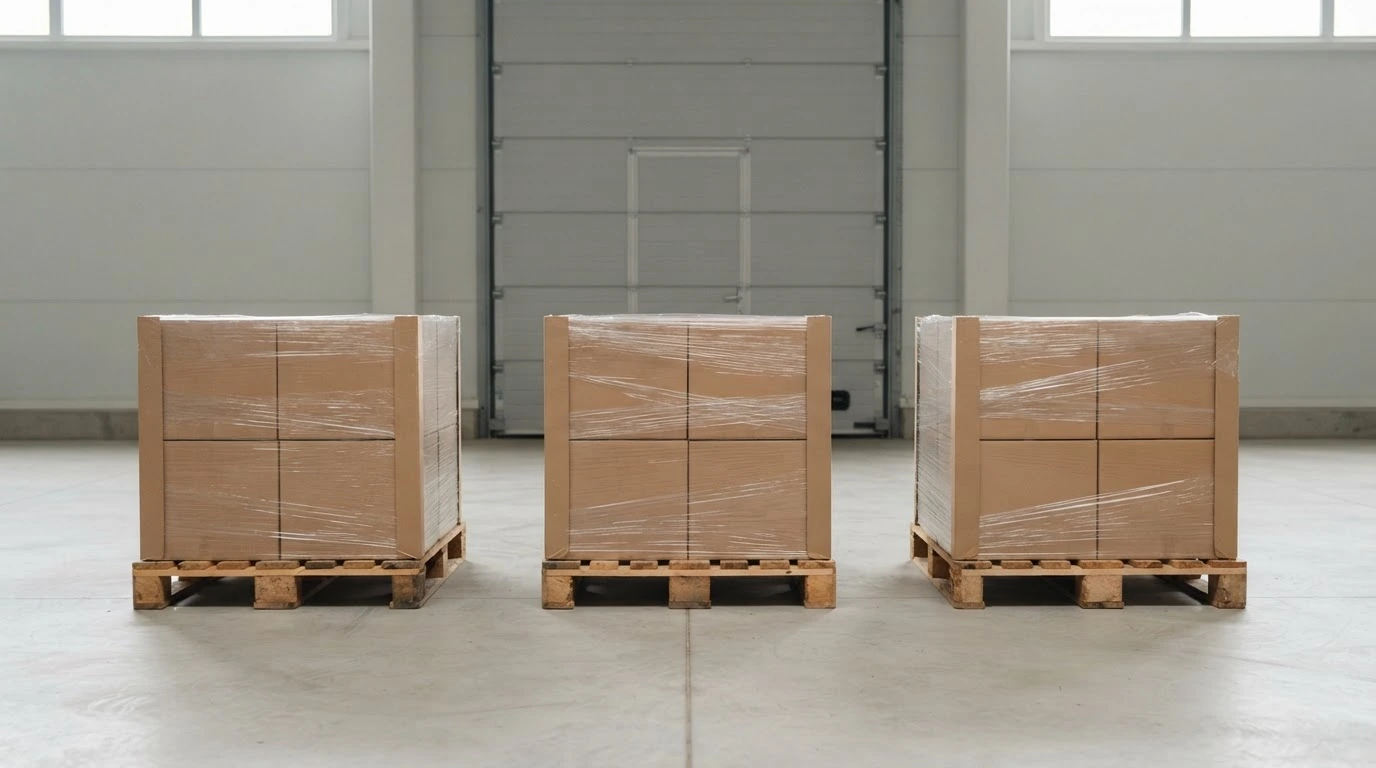
Shipment consolidation can reduce LTL spend when several orders share compatible origins, destination regions, ready dates, delivery windows, and handling needs. Instead of rating and moving every order as a separate long-haul LTL shipment, a shipper or logistics provider groups the freight for a fuller long-haul move and separates it closer to the final destinations.
The important word is can. Consolidation is worthwhile only when the all-in consolidated plan costs less than the separate-shipment baseline after pickup, staging, handling, linehaul, deconsolidation, final-mile delivery, and accessorial services are counted. It is a network decision, not an automatic discount.
What “consolidation” means in an LTL plan
Standard LTL already combines freight from different shippers inside a carrier network. A shipper-led consolidation plan changes what is tendered to that network or replaces part of the LTL movement with a fuller truckload-style leg.
Three common structures are:
| Structure | What is grouped | Where the freight separates | Best candidate pattern |
|---|---|---|---|
| Order consolidation | Multiple orders from one origin to the same consignee | It may not separate; the orders can arrive as one shipment | Same origin, destination, ready date, and receiving window |
| Regional pool distribution | One shipper’s orders for several consignees in one region | A regional pool point or cross-dock | Repeating volume into a concentrated destination region |
| Multi-shipper consolidation | Compatible freight from several shippers | A destination-region facility | Smaller loads whose lanes, timing, equipment, and handling requirements align |
C.H. Robinson describes ground consolidation as combining LTL shipments that cannot fill a trailer on their own. Averitt likewise notes that a shipper may batch its own similar freight or coordinate with other shippers serving the same area. The commercial terms and operating model still depend on the provider.
Where the cost opportunity comes from
Consolidation changes the shape of the transportation plan. It does not make the freight’s cost drivers disappear.
A fuller shared linehaul
The central opportunity is to move compatible freight together over the longest common part of the route. A fuller long-haul move can spread that leg’s transportation cost across more pallets or orders. The U.S. Environmental Protection Agency’s SmartWay materials identify combining LTL and low-density shipments into fuller truckload or intermodal movements as a freight-efficiency strategy.
That does not mean a truckload rate is always cheaper than the LTL alternatives. The correct test uses live, shipment-specific quotes for both plans.
Fewer separate shipment events
If several orders become one tender, the shipper may have fewer pickups, bills, tracking records, and separate rating events to manage. Some per-shipment services may also be incurred fewer times.
But this benefit depends on the design. If the consolidated trailer still feeds five final-mile deliveries, each stop can retain its own liftgate, appointment, residential, limited-access, or inside-delivery requirement. A consolidation quote should show which services are included on each leg and which remain separate.
A different handling pattern
A direct consolidated linehaul may bypass some intermediate terminal transfers. It also adds consolidation and deconsolidation handling. Count the actual planned touches instead of assuming there will always be fewer.
Packaging must remain suitable for the LTL portions of the trip. NMFTA’s guidance describes fork handling, vibration, shock, trailer loading, and other normal LTL conditions. Grouping shipments does not remove those conditions or guarantee that damage will fall.
Use an all-in comparison, not a linehaul-only comparison
Start with the invoices or quotes for the shipments you would otherwise tender separately. Then compare that baseline with every charge required by the proposed consolidated route.
Separate LTL baseline
sum of each shipment’s linehaul + fuel + pickup/delivery services + other applicable charges
Consolidated alternative
origin pickups + staging or storage + consolidation handling + shared linehaul + deconsolidation + final-mile deliveries + applicable services
Decision amount
separate LTL baseline - consolidated alternative
A positive result indicates a quoted transportation-cost opportunity. Before adopting it, compare delivery performance, inventory carrying cost, labor, claims exposure, and the operational cost of waiting for freight to become ready. Those costs may sit outside the carrier quote but still matter to the business.
A worked comparison without invented rates
Suppose six pallet orders become ready over three days. All leave the same plant, all go to consignees in one metro area, and none requires incompatible equipment or temperature control.
| Comparison input | Six separate LTL tenders | One consolidated plan |
|---|---|---|
| Origin activity | Six pickups, or several pickups arranged separately | One pickup or a defined collection plan |
| Long-haul movement | Six shipment-specific LTL ratings | One shared long-haul movement |
| Destination activity | Six deliveries | Deconsolidation plus six final-mile deliveries |
| Added cost to check | Repeated shipment-level services | Staging, handling, storage, pool-point, and final-mile charges |
| Timing question | Can each order move as soon as it is ready? | Can every order wait for the consolidation cutoff? |
| Evidence needed | Six all-in quotes or comparable invoices | One written, all-in consolidation quote with scope and exclusions |
The table does not predict a winner. It exposes the missing facts. If holding two early orders would miss a customer window, or if the collection and final-mile charges consume the shared-linehaul difference, separate LTL may be the better plan.
Freight details still control the quote
Consolidation does not excuse inaccurate shipment data. Build the comparison from the packaged freight that will actually be tendered:
- Origin, consolidation point, and each final destination ZIP code
- Ready date, consolidation cutoff, and required delivery window
- Number of handling units in each order
- Extreme packaged length, width, and height of each handling unit
- Gross weight, including pallets and packaging
- Commodity description, NMFC item when required, and freight class when known
- Stackability and any handling, stowability, or liability concern
- Hazmat, temperature-control, or equipment requirements
- Liftgate, residential, limited-access, inside-delivery, notification, and appointment needs at the relevant stops
NMFTA’s current classification guidance says LTL freight class is determined by density, handling, stowability, and liability. It is therefore unsafe to assume that combining pallets automatically creates a lower class. Classification should match the applicable NMFC provisions and the shipment as packaged.
Carrier rules also change the all-in amount. For example, FedEx Freight’s rules tariff effective January 5, 2026, and revised in June 2026 contains carrier-specific provisions for shipment data, additional services, and charges. That tariff is useful evidence that these items matter; it is not a universal price sheet for other carriers or contracts. Verify the current tariff, quote, pricing agreement, service coverage, and exclusions for every option being compared.
When consolidation is most promising
A consolidation review is more likely to be productive when:
- Several shipments repeat on the same lane or into the same destination region
- Ready dates fall within a predictable collection window
- Consignees can accept a coordinated delivery plan
- Freight can use compatible equipment and handling
- Shipment dimensions, weights, and services are known before tender
- The provider can state each leg, handoff, cutoff, and charge in writing
Use a rolling history rather than one unusual week. Group past shipments by origin, destination region, ready day, delivery requirement, pallet count, weight, cube, and accessorials. That shows whether a repeatable consolidation pool exists.
When separate LTL may be better
Consolidation can fail the all-in test even when the linehaul looks attractive.
- Urgent orders: Waiting for a cutoff can create a service failure or inventory cost larger than the freight difference.
- Scattered destinations: A long final-mile route or several distant pool points can erase the common-linehaul advantage.
- Conflicting requirements: Hazmat compatibility, temperature control, fragility, stackability, security, or equipment needs may prevent freight from sharing a plan.
- Different receiving windows: Appointments and narrow delivery windows can make a pooled route difficult or expensive.
- Extra handling or storage: Cross-dock, storage, sorting, and deconsolidation charges must be included.
- Weak shipment data: Reweighs, corrected dimensions, classification changes, or missed accessorials can change the billed result.
- Unclear custody: The shipper should know who controls each leg, which reference follows each order, and how exceptions or claims are handled across handoffs.
Do not force every order into the same rule. A practical program can consolidate stable regional freight while releasing urgent or incompatible orders as separate LTL shipments.
A repeatable four-step review
- Build the baseline. Use recent comparable invoices or current all-in LTL quotes, not a published base rate alone.
- Create candidate pools. Group only orders whose lane, timing, equipment, handling, and delivery requirements are compatible.
- Request equivalent scopes. Ask for written quotes that identify every leg, service, cutoff, assumption, exclusion, and responsible party.
- Measure the billed result. Compare quoted and invoiced totals, on-time performance, damage or exception records, and internal handling effort. Revisit the rule when order patterns or carrier terms change.
This turns consolidation from a general cost-saving idea into a controlled lane-level decision.
Compare the actual options
Shipocity is backed by a team with more than 40 years of combined logistics experience. Through established industry relationships, the platform helps businesses compare competitive freight rates for their specific shipment.
Bring the origin and destination ZIP codes, packaged dimensions and weight, commodity and class details, ready date, delivery requirements, and accessorial needs for the freight you want to compare. Compare rates for your next shipment.
Sources
- C.H. Robinson: What Is Consolidated Shipping and How Can Shippers Benefit?
- Averitt: Freight Consolidation — The Benefits and Drawbacks
- U.S. EPA SmartWay: Freight Consolidation and Port Supply-Chain Efficiency
- NMFTA: Classification FAQ — What Is a Freight Class?
- FedEx Freight: 100-Y Rules Tariff, Effective January 5, 2026