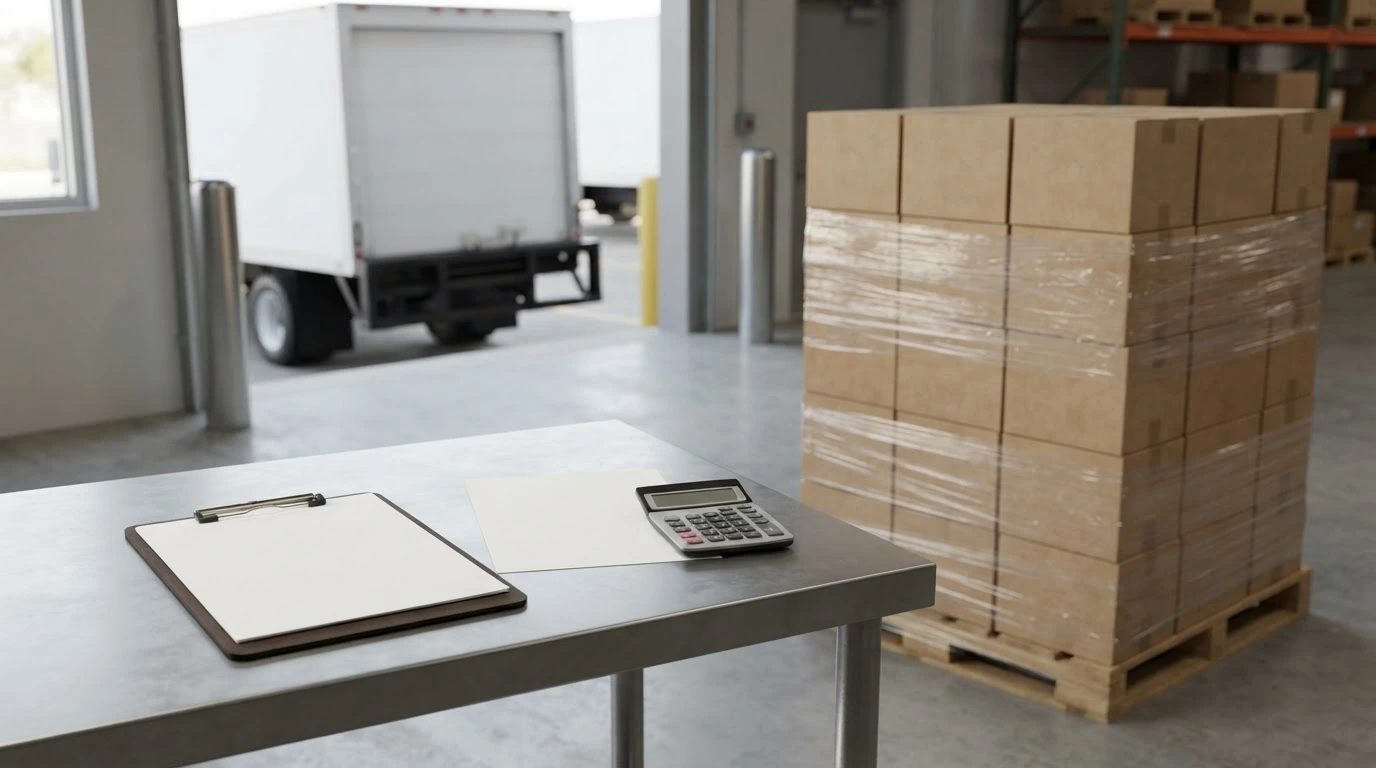
How Pallet Size and Density Affect LTL Pricing
Pallet size changes cubic feet, density drives freight class, and both feed into the LTL rate. Learn what to measure, why errors trigger reweighs, and what to enter in your quote.
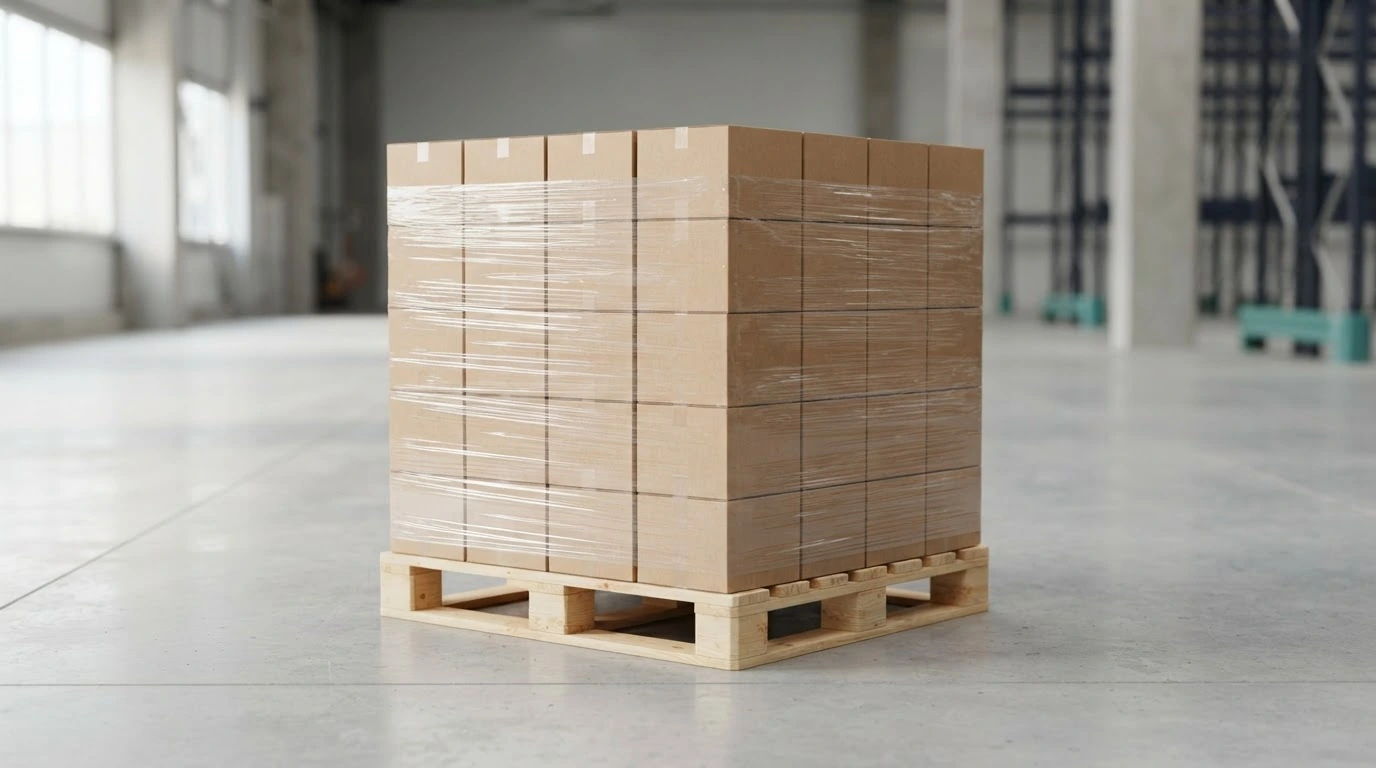
Pallet size and density can affect LTL pricing because they describe how much trailer space the packaged freight occupies in relation to its weight. A larger handling unit at the same weight has lower density; a smaller handling unit at the same weight has higher density.
When density is relevant to freight classification, that difference can affect the class used for rating. Size and density do not determine the entire quote, and not every commodity is classified by density alone.
Measure the freight as tendered
Use the outer dimensions and total weight of the completed handling unit, not the unpackaged product.
Include:
- Pallet or crate
- Cartons and product
- Padding, blocking, and bracing
- Stretch wrap or other outer packaging
- Overhang and protrusions
- The tallest, widest, and longest points
The carrier must handle the finished shipment. Product specifications that exclude packaging do not describe the space the freight occupies.
Measure each handling unit separately when units differ. Do not replace dissimilar pallets with an unsupported average.
What freight density means
Freight density is packaged weight divided by occupied cubic space. It is commonly expressed in pounds per cubic foot.
The relationship is straightforward:
- More packaged weight in the same space produces higher density.
- The same packaged weight in more space produces lower density.
- A change in outer dimensions can change density even when product weight stays the same.
Density is a description of the finished handling unit. It is not a rate, a guarantee of class, or a complete quote.
How pallet size changes density
Pallet size affects the cubic space used in the calculation. A wider footprint, greater height, overhang, or bulky outer packaging increases the occupied space.
That does not mean the smallest possible pallet is always correct. Packaging must still protect the freight and support safe handling under the applicable requirements. Compressing or under-packaging a load to influence density can create damage or handling problems.
Use packaging that fits the commodity, then quote the resulting dimensions honestly.
How density can affect freight class
The National Motor Freight Classification system includes density-based provisions for many commodities. When those provisions apply, a density change may lead to a different freight class, and a different class may change the line-haul rate.
Density is not the only classification consideration. Current NMFC provisions can also involve handling, stowability, liability, and commodity-specific rules. Carrier density tools commonly warn that not every item is classified on density alone.
Do not convert a density result into a class unless the applicable current classification method supports that step.
Why there is no universal price-per-pallet
Two pallets of the same outside size do not automatically cost the same to ship. Their weights, commodities, classes, lanes, location conditions, and required services may differ.
An LTL quote can also reflect:
- Origin and destination
- Carrier and service level
- Handling-unit count
- Packaged weight and dimensions
- Freight class
- Pickup date
- Fuel surcharge
- Accessorial services
- Quote validity and pricing terms
Pallet size and density are important inputs, not a standalone price formula.
For more on the lane component, read How Distance and Lane Balance Affect Freight Rates.
Reweigh, redimension, and reclassification
After pickup, a carrier may record a weight or dimensions that differ from the quote information. A different measurement can affect density and, when applicable, classification or rating under the carrier’s terms.
Reclassification occurs when the class used for the quote or shipping documents differs from the class the carrier applies. Depending on the reason and applicable terms, the final charge may be revised and an additional fee may apply.
Do not assume every adjustment means the carrier changed the class. Compare the quote, shipping document, charge detail, and available supporting records to identify whether the issue was weight, dimensions, class, or a service.
Measurement mistakes to avoid
Using product dimensions
Measure the complete packaged unit. Include the pallet height and anything extending beyond the nominal footprint.
Excluding packaging weight
Use the weight of the freight as tendered, including its pallet, crate, and packaging.
Measuring before packaging is complete
Final wrap, padding, and bracing can change the outside dimensions. Measure after preparation is finished.
Ignoring overhang or an uneven top
Record the furthest points. Do not measure only the most convenient flat surface.
Assuming density always establishes class
Confirm whether the commodity uses a density-based provision and review current classification information.
Reusing old measurements
Packaging, product configuration, and pallet selection can change. Verify the current shipment instead of copying an earlier record without checking it.
What to gather before requesting a quote
Prepare:
- Origin and destination
- Pickup date
- Handling-unit and piece counts
- Fully packaged length, width, and height for each unit
- Packaged weight for each unit and total shipment weight
- Clear commodity description
- Freight class or current NMFC information when known
- Stackability
- Pickup and delivery location conditions
- Required services at both endpoints
Keep the quote, shipping documents, and tendered freight consistent. If the load changes, update the information and obtain a current quote when appropriate.
Compare rates for the finished shipment
Shipocity is backed by a team with more than 40 years of combined logistics experience. Through established industry relationships, the platform helps businesses compare competitive freight rates for their specific shipment.
Enter the actual packaged dimensions, weight, commodity, class when known, lane, and services to review the options available for the freight.