How Corner Boards Protect Palletized Freight
What corner boards do on a pallet, how to apply them, the caliper ranges suppliers recommend, and what to measure before requesting an LTL freight quote.
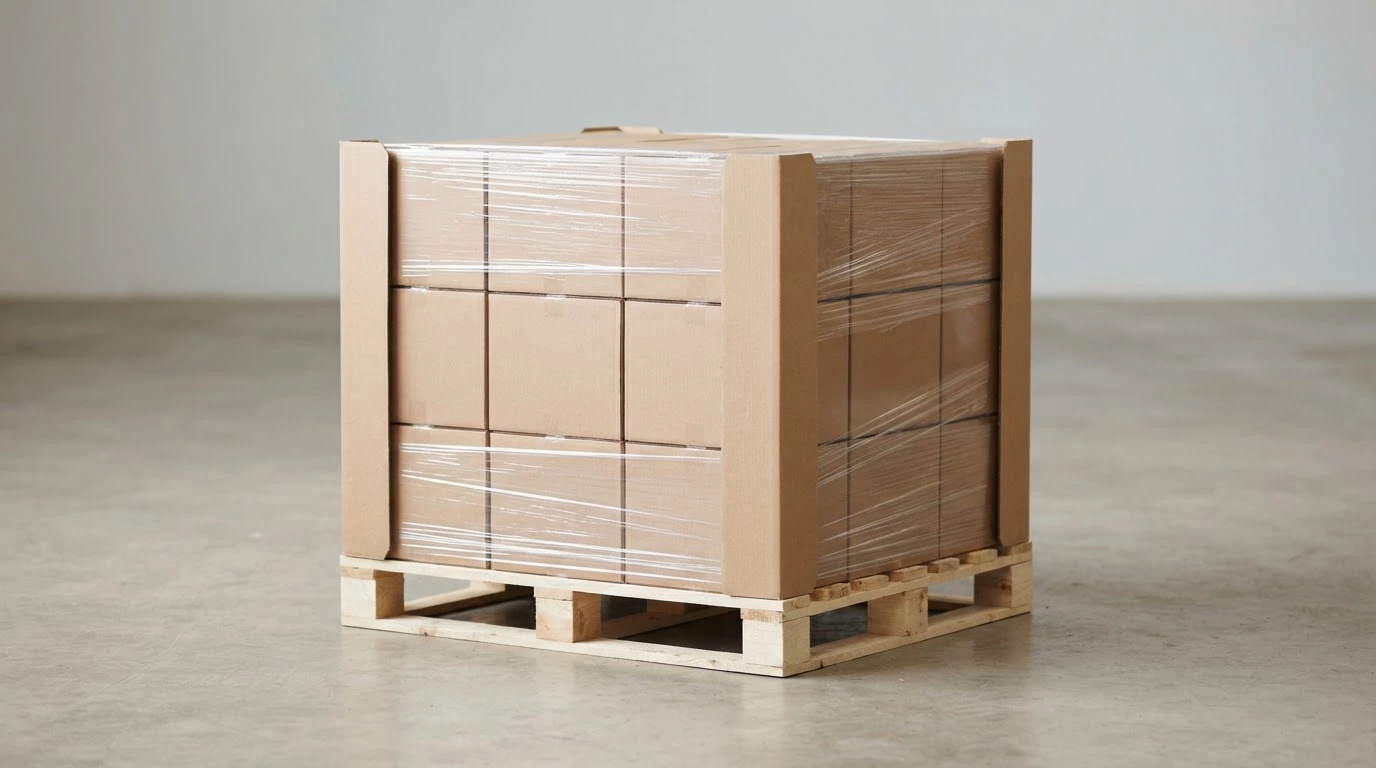
Corner boards are rigid, right-angle protectors placed along the vertical corners of a pallet load. They help keep cartons aligned, spread the pressure from stretch film or straps, protect exposed box edges, and improve the stability of the unitized load. For boxed freight, they normally run the full height of the stack so the restraint is distributed along the corner instead of concentrated on one carton.
They are useful packaging components, but they do not repair weak cartons, eliminate pallet overhang, or turn an unstable stack into a safe shipment. The correct board material and dimensions depend on the load and the rest of the packaging system.
Corner boards, edge boards, and edge protectors
Packaging terminology is not perfectly consistent. “Corner board,” “angle board,” and “edge board” are often used for an L-shaped length that fits a vertical corner. “Edge protector” can refer more broadly to shorter pieces placed under a strap or across a top or bottom edge.
The distinction matters less than the job each piece is meant to do:
- Full-height vertical boards support alignment and distribute restraint along a corner.
- Short strap protectors spread band pressure at a specific contact point.
- Top-edge or bottom-edge pieces protect the perimeter where film, straps, or stacking forces bear on the package.
- A top cap or load-protector pad covers a surface rather than only an edge.
Do not assume these products are interchangeable. A small strap protector does not provide the same column-length support as a full-height board.
What corner boards actually protect
Carton edges
Carton corners are important load-bearing areas. A strap or tightly applied film can concentrate force there, especially when the underlying carton is soft or partially filled. A suitable corner board spreads that force across a wider surface and reduces direct cutting or crushing at the contact line.
Stack alignment
Boards running the height of the load help cartons remain in a square, continuous stack while film or bands unitize the pallet. ABF Freight’s current LTL packaging guide recommends corner boards to help keep boxes aligned and prevent them from shifting off the pallet.
The unitization system
FedEx says full-length edge boards help unitize the load, increase vertical stacking strength, and reduce damage to the box edges forming the corners. The boards give stretch film and banding a straighter, more consistent surface to work against.
That does not make the boards structural columns capable of carrying any load placed above the pallet. Stackability still depends on the cartons, contents, pallet, load pattern, protectors, and tested package as a whole.
When corner boards are useful
Consider full-height corner boards when:
- Carton edges need protection from stretch film or straps.
- A tall carton stack needs help staying aligned during unitization.
- The load includes soft or easily marked outer surfaces.
- Top and bottom protectors need a continuous vertical edge between them.
- The packaging design or applicable NMFC provision calls for them.
- A carrier guide recommends them for the particular commodity or handling unit.
They can also be appropriate for recurring shipments with a validated packaging specification. Repeatability matters: boards of the same material and dimensions, placed consistently, help the wrapping or banding process produce a more uniform result.
Do not add boards simply because a pallet is heavy. A dense rigid item may need blocking, bracing, bolting, or a crate instead. A flexible bagged load may require trays, tier sheets, perimeter protection, and a different containment method. Start with the product’s likely movement and damage modes.
What corner boards cannot fix
Pallet overhang
If cartons extend beyond the pallet, their edges lack dependable support. NMFTA and FedEx both advise keeping freight within the pallet footprint. Corner boards placed over unsupported cartons do not restore the missing support.
Rebuild the case pattern or use a suitable pallet. Do not tighten film or straps until the boards pull an overhanging load inward; that can deform the cartons without correcting the base.
Weak or damaged packaging
A board can distribute pressure, but it cannot restore the strength of a crushed, wet, punctured, or improperly closed carton. Replace damaged packaging and confirm each package can protect its contents in the LTL environment.
Internal movement
Corner boards work on the outside of the load. They do not cushion a product moving inside a box or restrain an item rolling inside a crate. Use the required internal cushioning, blocking, bracing, or other protection first.
An unstable load pattern
Boards follow the shape they are given. If cartons are offset, unsupported, or stacked into a pyramid, four vertical protectors will not create a level, stable handling unit. Correct the stack before unitization.
How to choose corner boards
Choose the board as part of the complete packaging design. Consider:
- The finished stack height
- Carton strength and fill condition
- Load weight and weight distribution
- Film containment force or strap tension
- Corner radius and the amount of surface each leg covers
- Exposure to moisture, abrasion, temperature changes, and repeated handling
- Whether the board touches the pallet, top cap, or another protector
- Any applicable NMFC, carrier, receiver, or export-packaging requirements
Avoid selecting a board from a generic thickness table alone. Two boards with the same nominal thickness can differ in material, construction, compression performance, moisture response, and intended use. Ask the packaging supplier for specifications suited to the actual load, and use performance testing when the shipment is unusual or the consequences of failure are high.
NMFTA explains that shippers may use approved commodity-specific packages or develop performance-based packaging under applicable NMFC provisions. That is a better foundation than assuming a particular board thickness is “medium duty” or “heavy duty” for every pallet.
How to install corner boards
1. Finish the stack first
Build a square, stable load on a sound pallet. Keep all freight supported within the deck and correct gaps, leaning, or damaged cartons.
2. Cut or specify the correct length
For full-height protection, the board should cover the carton stack without protruding in a way that interferes with handling or creates an unsupported snag point. If the pallet is larger than the carton footprint, make sure the board placement and film path do not create a loose skirt or roll the securement away from the load.
There is no universal instruction to make every board touch the floor. The correct lower termination depends on the pallet footprint, load position, film path, and validated packaging procedure.
3. Place boards squarely on the corners
Seat each board evenly against both faces of the corner. A twisted or angled board can concentrate pressure rather than spread it. Use temporary positioning aids only if they are compatible with the package and do not damage or obscure it.
4. Apply film or straps as specified
Keep the boards in position while applying the unitization system. Use controlled, consistent film containment or strap tension. Stop if cartons bow, boards buckle, straps cut into the protector, or the load is pulled out of alignment.
If straps are used, ABF recommends strap protectors between straps and packaging and warns against placing bands where forklift tines or pallet-jack wheels may contact them. FedEx similarly advises keeping bands close to the load, engaging the pallet bottom correctly, and avoiding side-access notches.
5. Inspect the finished handling unit
Walk around the pallet and check:
- All boards remain straight and seated on the intended corners.
- Film and bands have not shifted or crushed the boards.
- Cartons remain square, supported, and free of overhang.
- The load does not rock, lean, or move independently of the pallet.
- Fork openings and pallet-jack access remain clear.
- Labels are visible and readable.
- Nothing protrudes beyond the finished dimensions unnoticed.
If a board is split, wet, bowed, or displaced, correct the problem before tendering the shipment.
Corner boards do not determine freight class
Adding corner boards does not automatically change an NMFC item or freight class. Classification can involve density, handling, stowability, liability, and the applicable commodity provisions. Packaging may affect the finished dimensions, weight, handling characteristics, or compliance with a required package, so record the final shipment accurately.
For hazardous materials, follow the current regulatory and carrier packaging requirements for the specific material. General corner-board advice is not a substitute for hazardous-material compliance.
Measure the pallet after packaging
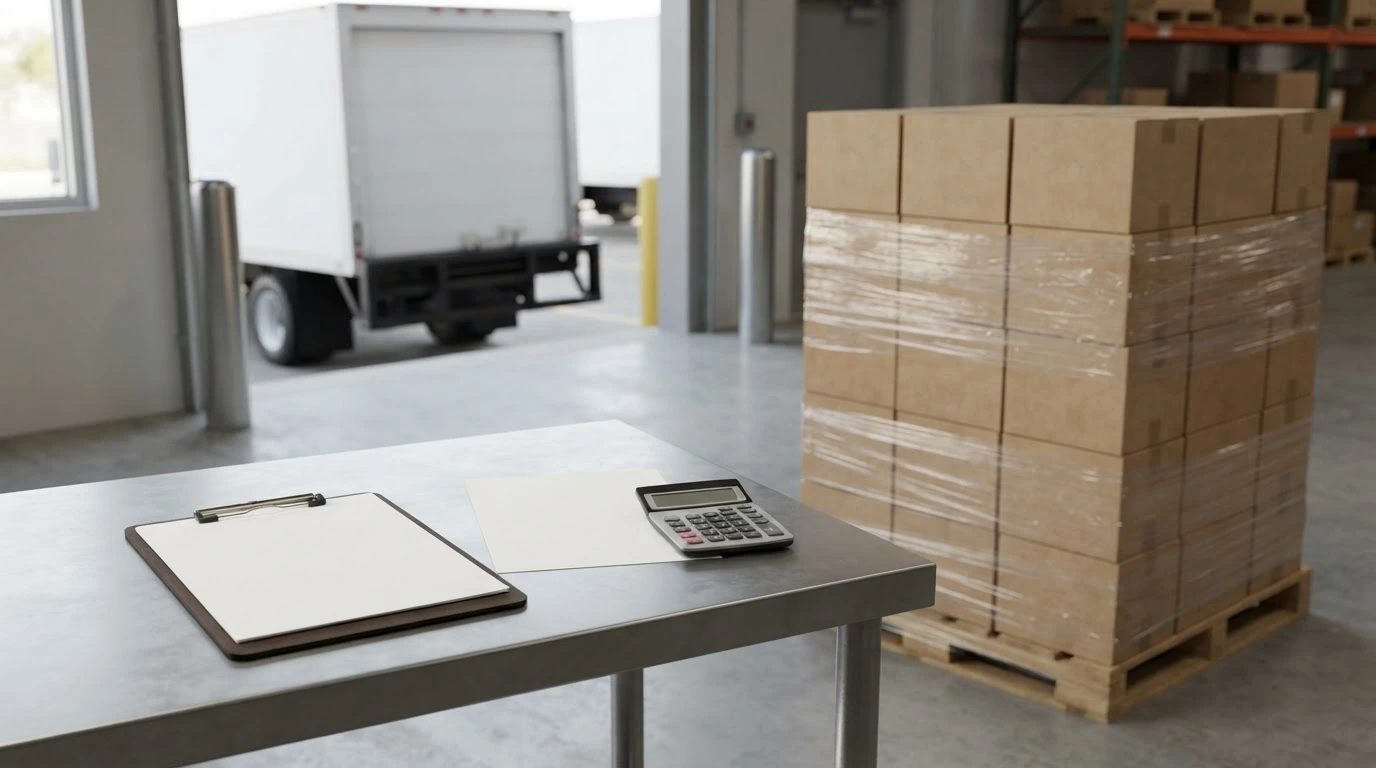
Take dimensions after the corner boards, top cap, film, bands, and all other packaging are installed. Record the greatest finished length, width, and height, including any projection. Weigh the complete handling unit, including the pallet and packaging.
Prepare the pallet count, commodity description, NMFC item and class when applicable, origin and destination ZIP codes, stackability, and any required pickup or delivery services.
Shipocity is backed by a team with more than 40 years of combined logistics experience. Through established industry relationships, the platform helps businesses compare competitive freight rates for their specific shipment.