
Freight Delivery to Airports, Hotels, and Retail Locations
Learn how airports, hotels, and retail sites can trigger carrier-specific limited-access rules and which handoff, equipment, timing, and contact details to quote.
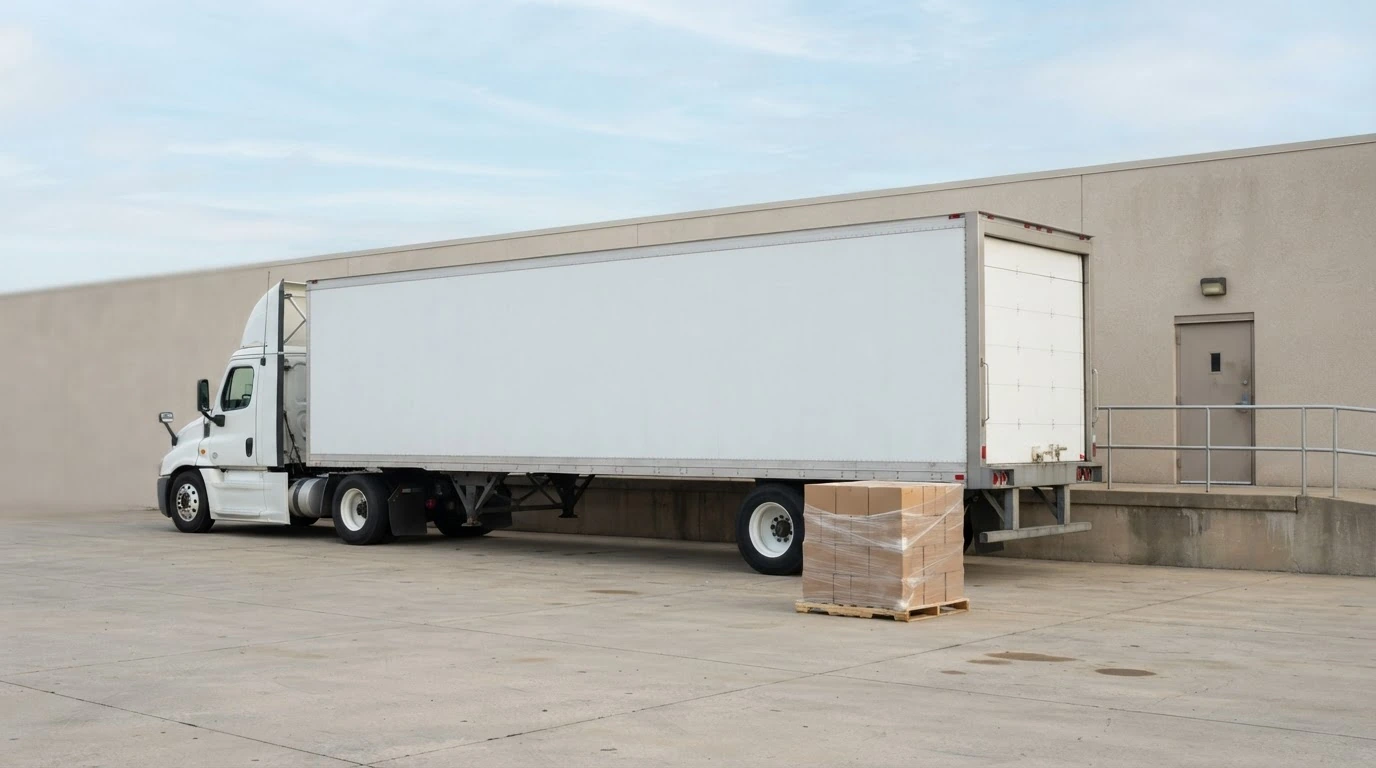
Airports, hotels, and some retail destinations can trigger limited-access charges or other special-service rules on an LTL shipment. The label is carrier-specific: one carrier may name the property type directly, while another may classify the address by its security process, restricted vehicle access, receiving staff, or business hours. Do not assume that a commercial address receives standard dock service simply because it belongs to a business.
The safest approach is to describe the actual pickup and delivery conditions when requesting the rate, select each service the shipment needs, and check the chosen carrier’s current rules before booking.
What current carrier rules show
Current official tariffs do not use one universal list.
- FedEx Freight includes airports in its examples of limited-access locations. Its rule also includes sites that require security inspection or assistance before the driver can enter the loading or unloading area.
- Estes lists airport property, hotels and resorts, and shopping malls in its limited-access rule. The same rule treats secured locations broadly, including sites with security checks, equipment scanning, or gated vehicle access.
- XPO lists lodging facilities and shopping malls. It also describes limited access in terms of conditions such as restricted gates, security processes, limited public access during normal business hours, or no personnel readily available to assist.
- Other carriers can organize the same situation differently. A tariff may use a dedicated airport rule, a limited-access item, or another property-specific service item.
That variation matters. A hotel named by one carrier’s tariff is not proof that every carrier will classify every hotel the same way. Likewise, a standalone retail store with a usable dock and an available receiving team should not automatically be treated like a store inside a restricted shopping mall. The selected carrier’s tariff and the actual receiving conditions control.
Start with the exact handoff point
“Deliver to the airport” is not enough detail for a freight quote. The destination could be an airline cargo facility, a freight forwarder’s warehouse, a tenant’s receiving dock elsewhere on airport property, or another agreed handoff point. Record the facility name, complete street address, receiving entrance, and receiving contact. If a forwarder or handling agent is involved, confirm which party is authorized to accept the freight.
The same principle applies to hotels and retail locations. A hotel’s guest entrance, loading dock, banquet receiving area, and off-site warehouse are different delivery points. A retail address may lead to a street-level stockroom, a shopping-center dock, or a mall receiving area shared by several tenants. The carrier needs the location where its vehicle can safely stop and the consignee can accept the shipment, not only the public-facing business name.
Before rating the shipment, ask the receiver:
- What is the full address of the freight receiving point?
- Is there a dock that can accept the carrier’s delivery vehicle?
- Can a tractor-trailer reach the dock, clear any gate, and leave safely?
- Are security check-in, escort, badge, or vehicle-screening steps required?
- What days and hours is freight receiving staffed?
- Is advance notice enough, or must a delivery appointment be scheduled?
- Who has authority to sign for the freight, and what direct phone number should the carrier use?
- Must the freight move beyond the carrier’s normal unloading position?
- Does the receiver require sorting, segregating, pallet removal, or another handling step?
Answers such as “use the service entrance” or “call when nearby” are still incomplete. Get a named entrance, a receiving contact, and any site instructions the carrier is expected to follow.
Limited access is not an all-in-one service
Several needs can occur at the same stop, but they are not interchangeable.
| Site condition | Service question to resolve |
|---|---|
| The property type or entry process meets the carrier’s limited-access rule | Is limited-access pickup or delivery required? |
| There is no usable dock or suitable unloading equipment | Is liftgate service available and required for this shipment? |
| The consignee wants the freight moved beyond the carrier’s normal unloading position | Is inside delivery available, and where will the carrier place the freight? |
| The receiver requires a scheduled date or time window | Is an appointment service required rather than simple notification? |
| The site requires unloading by a third party or sorting by store, department, or item | Does the carrier offer that work, and which handling service applies? |
| The requested stop is outside normal service hours | Is after-hours or another time-specific service available? |
R+L Carriers’ current accessorial documentation, for example, presents limited-access delivery, destination liftgate, inside delivery, and delivery appointment as separate selections. XPO’s current tariff likewise says notification and appointments are different services and that other charges can apply in addition to limited-access service.
Do not select a liftgate only because a location is limited access. A usable dock may make a liftgate unnecessary. Conversely, a location can need a liftgate even if the carrier does not classify it as limited access. Equipment availability, freight dimensions and weight, the receiving surface, and carrier limits still have to be checked.
Inside delivery also needs a precise definition. It does not automatically mean room placement, installation, unpacking, debris removal, or distribution to several departments. If a hotel wants freight taken to a ballroom staging area, or a retailer wants cartons separated for multiple departments, describe that requested work before booking and confirm whether the carrier will perform it.
Plan by location type
Airport property
Identify the exact cargo or tenant facility and determine whether the address is on airport property. Ask about vehicle gates, identification or screening, operating hours, and the authorized receiving party. Confirm whether the selected carrier treats the stop under a limited-access rule, an airport-specific rule, or another item.
Do not confuse delivery to airport property with booking air transportation. An LTL carrier delivering a pallet to an airport facility is performing a ground pickup or delivery. Any later air movement, transfer, screening, documentation, or handling by an airline, forwarder, or cargo operator is a separate part of the shipment plan unless the booked service explicitly says otherwise.
Hotels and resorts
Use the freight receiving contact, not a reservation desk or guest contact, unless the property has expressly designated that person. Confirm the service entrance, dock, receiving hours, elevator or doorway constraints that affect the requested handoff, and whether hotel staff will be present with suitable unloading equipment.
Some current carrier tariffs name hotels, motels, lodging facilities, or resorts as limited-access examples. That is enough reason to disclose the property type during rating, but not a reason to guess at the final charge or the services included.
Retail stores and shopping centers
Distinguish a standalone commercial receiver from a mall or shopping-center location. Confirm whether the truck uses a tenant dock, a shared receiving dock, or a curbside service area; whether property management controls the delivery window; and whether store personnel will be ready to receive the freight.
If the receiver requires floor-loaded cartons to be counted, sorted, or moved beyond the normal delivery position, spell that out. Those tasks may fall outside standard LTL delivery and outside limited-access service itself.
Put the location details on the shipment record
The delivery plan should not live only in an email thread between a buyer and a hotel or store. Make sure the quote request and shipping documents accurately identify the location and requested services. Estes directs shippers to state that limited-access service is required on the shipping order or bill of lading and to provide the delivery contact’s name, telephone number, and full address. XPO also directs the shipper to identify a residential or limited-access facility and list delivery-contact details when requesting an appointment.
At minimum, prepare:
- Origin and destination ZIP codes and complete addresses
- Packaged piece count, dimensions, and weight
- Accurate commodity description and freight class when known
- Exact pickup and delivery property types
- Dock and unloading-equipment availability at both ends
- Requested limited access, liftgate, inside, appointment, or other services
- Receiving hours, blackout periods, and site access instructions
- Contact name, direct phone number, and email when required
- Purchase-order, booking, or reference information the receiver requires
- Any known dangerous-goods status or other handling constraint that must be declared
Do not place sensitive gate codes or unnecessary personal information in a public note. Provide access instructions through the carrier-approved channel and confirm what belongs on the bill of lading.
A final pre-booking check
Before tendering the shipment, read the selected carrier’s current rule or obtain written confirmation for the rate. Carrier tariffs and accessorial terms change. TForce Freight, for example, explains that its current tariff remains effective only until the next version and that individual items may be revised during the year.
Confirm these points:
- The property is described accurately at both origin and destination.
- The exact handoff point and freight receiving contact are known.
- Vehicle access and dock conditions have been checked with the receiver.
- Every required service is included separately in the rate request.
- The carrier can perform the requested service for this freight and address.
- The shipping documents match the quoted conditions.
If any answer changes, re-rate or reconfirm the shipment before pickup. That is more reliable than assuming the driver can resolve a gate, dock, appointment, or inside-placement issue after arrival.
Shipocity is backed by a team with more than 40 years of combined logistics experience. Through established industry relationships, the platform helps businesses compare competitive freight rates for their specific shipment.
Build a quote with the right delivery services using the actual property type, receiving conditions, packaged freight details, and accessorials required at each end.