
Freight Delivery to a Military Base or Government Facility
Plan freight delivery to a military base or government facility by confirming contract instructions, limited-access service, facility entry, markings, and receiving details.
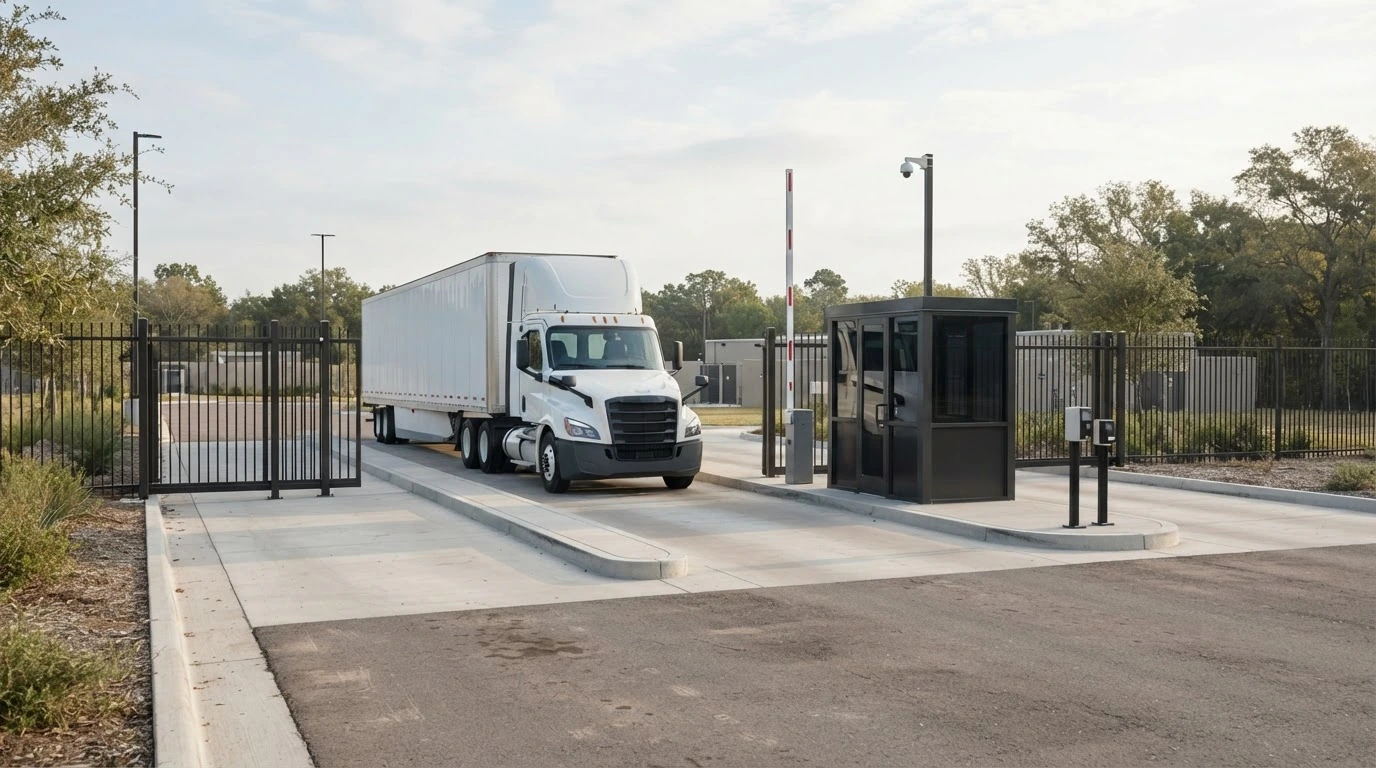
Freight delivery to a military base or government facility requires more advance coordination than an ordinary commercial-dock delivery. The shipper should confirm the receiving location, routing instructions, security process, delivery contact, and required markings before choosing a carrier. For many LTL carriers, a military installation is also a limited-access location, so that service needs to be identified when the shipment is quoted.
The important distinction is that “government facility” does not describe one universal shipping process. A shipment under a Department of Defense contract may have military marking and routing requirements. A delivery to a civilian government office, warehouse, or contractor site may follow a different contract and a different receiving procedure. The purchase order, contract, routing instructions, and receiving contact—not the destination name by itself—determine what applies.
Start with the contract and receiving instructions
Before requesting a rate, determine who controls the shipment and which instructions govern it. That may be the government agency, a prime contractor, a transportation office, or the consignee.
Confirm these items in writing:
- The complete ship-to address, including installation, building, warehouse, or dock information
- The purchase order, contract, shipment, or routing reference that must appear on the paperwork
- Whether the government or vendor selects the carrier and pays the transportation charges
- The required bill of lading, packing list, labels, and advance shipment notice
- The delivery contact, phone number, receiving hours, and appointment procedure
- Any driver, vehicle, escort, or gate-clearance information the receiving location requires
Federal Acquisition Regulation Part 47 contains several possible delivery terms and transportation arrangements. That is one reason not to infer responsibility from a government address alone. The contract may specify an origin or destination delivery term, government routing, or other shipment instructions.
If the routing instructions conflict with a carrier quote or the receiver cannot confirm access, pause before tendering the freight. A carrier that can price the lane may still need additional approval or coordination to complete delivery at the named facility.
When MIL-STD-129 applies
MIL-STD-129 is the active Department of Defense standard for military marking for shipment and storage. The Defense Logistics Agency’s official record describes it as the minimum standard for uniform military marking and notes that the contract or cognizant activity may require additional marking.
GSA’s Vendor Support Center says shipments to DoD customers in the contiguous United States, and shipments outside the contiguous United States moving through the DLA transportation network, must follow the applicable DoD marking, labeling, and packaging standards. Its guidance covers Military Shipping Labels and identification markings at the unit pack, intermediate pack, and exterior container levels, subject to the shipment’s requirements and any stated exemption.
For a shipper, the practical rule is simple: do not improvise a military label from a normal commercial label. Use the current contract data and official marking instructions. Confirm required identifiers, addresses, barcodes, piece information, weight, and any special marks before printing labels. The label must match the actual packaging level and shipment record.
MIL-STD-129 is not a blanket labeling rule for every delivery to every public building. A civilian government destination may instead have agency-specific or contract-specific instructions. Ask the receiving party which standard and documents apply to the exact shipment.
Treat the destination as limited access when the carrier does
Current LTL tariffs illustrate why the destination type must be disclosed during quoting. Southeastern Freight Lines includes military bases among its limited-access locations. FedEx Freight’s rules tariff likewise lists military bases or installations as limited-access locations. The definitions, charges, notification provisions, and service availability are carrier-specific and can change.
Select the applicable limited-access service when requesting the rate instead of assuming it can be added without consequence at delivery. Also provide a valid consignee phone number and the full delivery location. Omitting the destination condition can produce an incomplete quote, a billing adjustment, or a failed delivery attempt under the selected carrier’s rules.
Limited access does not automatically mean the shipment needs every other delivery service. A liftgate is relevant when freight must move between the trailer and ground and a usable dock or forklift is not available. Inside delivery concerns movement beyond the carrier’s standard delivery point. Notification or an appointment may be a separate service. Confirm each need rather than selecting services from the facility type alone.
Gate access must be confirmed for the specific facility
There is no single driver credential or gate procedure that can be promised for every military base or government site. Requirements may vary by facility, sponsoring agency, driver, vehicle, cargo, and current security posture.
Ask the receiving contact:
- Which gate commercial vehicles must use
- Whether the driver or carrier must be submitted before arrival
- Which identification or credentials are accepted
- Whether the vehicle, trailer, or cargo will be inspected
- Whether an escort or on-site sponsor is required
- What happens if the driver arrives outside the receiving window
Give the confirmed requirements to the carrier before pickup. Do not collect sensitive personal information that the carrier or facility has not asked the shipper to provide, and do not put sensitive access details into public-facing shipment notes. Use the facility’s approved process.
Prepare the freight and documents as one package
The physical freight, quote, and paperwork should describe the same shipment. Before pickup, reconcile:
- Piece and pallet count
- Fully packaged length, width, and height
- Total weight and any per-piece weight the carrier requests
- Accurate commodity description and freight class when known
- Hazardous-material status and required dangerous-goods documentation, when applicable
- Purchase order, contract, routing, and consignee references
- Delivery location, contact, hours, and confirmed accessorial services
- Required military or agency markings at the correct packaging levels
Package the freight for the service selected and keep labels visible and attached to the correct handling units. If a contract calls for military markings, verify those markings separately from the commercial bill of lading. Neither document substitutes for the other unless the governing instructions explicitly say so.
Hazardous, controlled, classified, export-bound, or otherwise sensitive cargo needs specialist review beyond an ordinary LTL quote. Do not infer eligibility from a carrier’s general service area. Confirm the commodity, carrier authority, routing, documentation, and receiving procedure with the responsible transportation or contracting contact.
A practical pre-delivery check
Use this sequence before releasing the shipment:
- Validate the destination. Confirm the exact building or dock, consignee, phone number, and receiving window.
- Read the controlling instructions. Identify the contract, purchase order, routing guide, and marking standard that apply.
- Quote the real conditions. Include limited access and only the additional services the site and freight require.
- Confirm carrier acceptance. Verify that the selected carrier will serve the facility under the stated conditions.
- Complete access coordination. Follow the receiver’s approved driver, vehicle, appointment, and gate process.
- Audit freight and documents. Make sure packaging, labels, references, dimensions, weight, and piece count agree.
- Send the delivery details. Give the carrier the approved contact and instructions early enough to avoid an uninformed arrival.
This check cannot replace the contract or the facility’s instructions. It is a way to surface missing information while there is still time to correct it.
Build the quote around the actual receiving conditions
Shipocity is backed by a team with more than 40 years of combined logistics experience. Through established industry relationships, the platform helps businesses compare competitive freight rates for their specific shipment.
Enter the exact origin, destination, packaged dimensions, weight, commodity, and delivery requirements. Then review the carrier’s service terms and confirm the facility-specific access process before booking.
Build a freight quote with the right delivery services