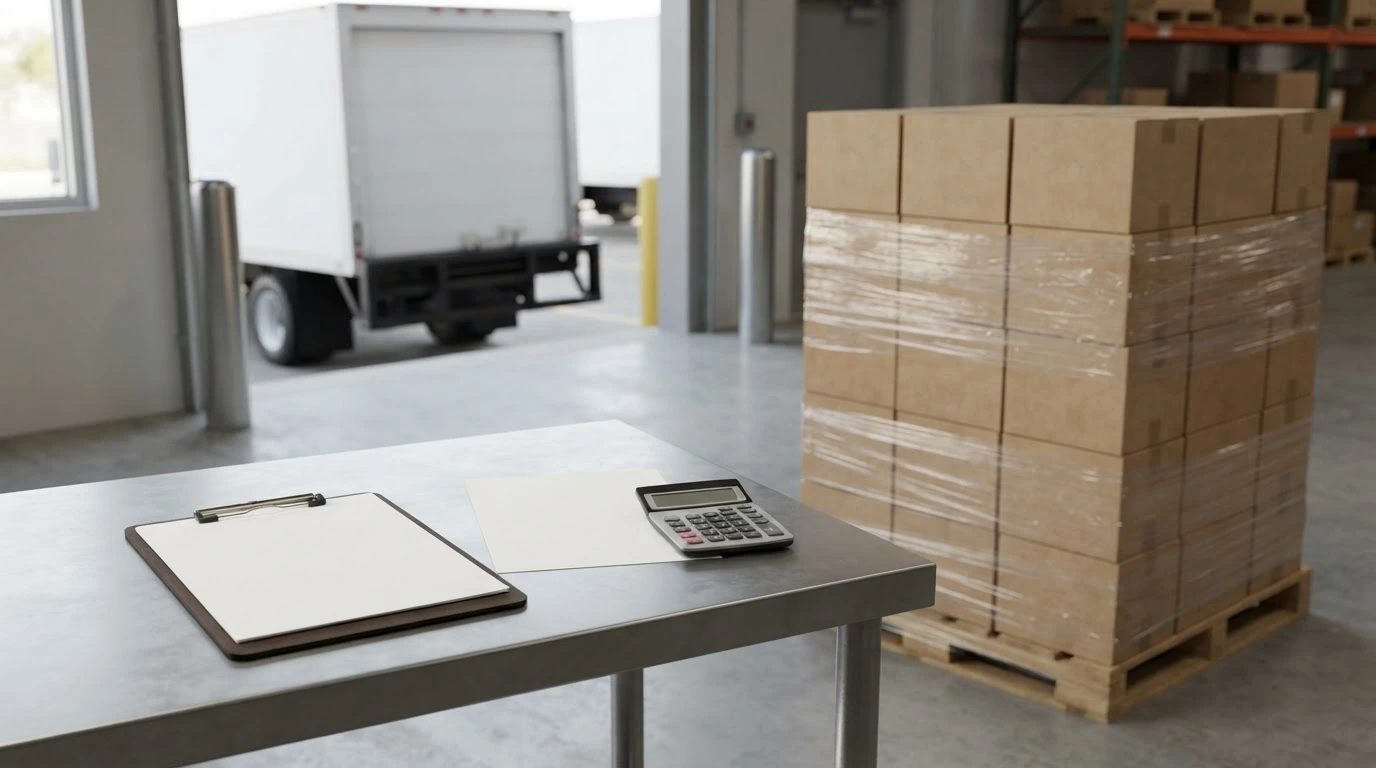
Freight Delivery to a Construction Site
Plan freight delivery to a construction site by confirming access, equipment, timing, contacts, and the carrier-specific services required for a safe handoff.
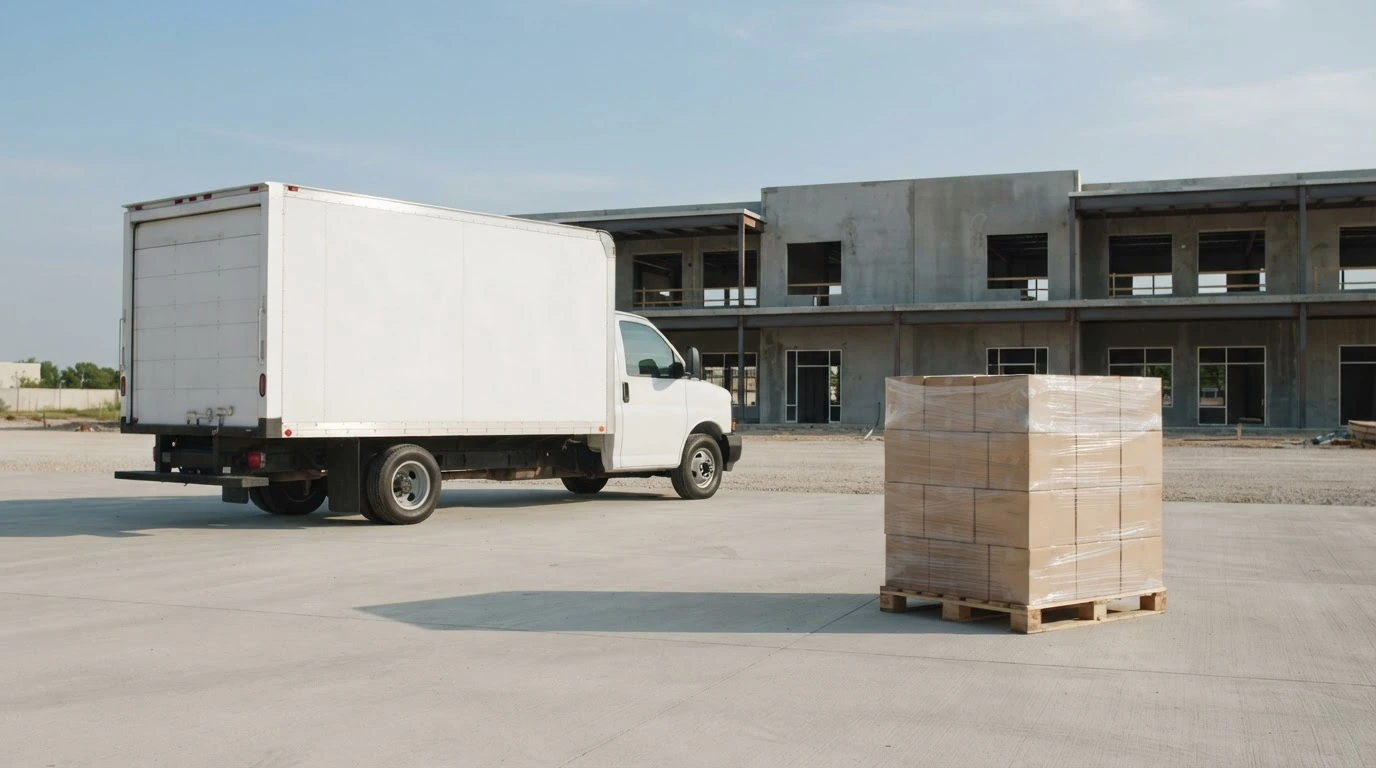
Freight delivery to an active construction site is commonly treated as a location-specific accessorial or limited-access service. The shipper should identify the site during quoting, provide a working contact and exact delivery point, and confirm vehicle access, unloading equipment, receiving hours, and site restrictions before dispatch.
The construction-site service itself does not automatically include a liftgate, forklift, crane, inside placement, debris removal, or a precise delivery appointment. Each additional need must be confirmed under the selected carrier’s current rules.
Why the address changes the service
Carrier tariffs do not define a construction site only as a muddy lot with no building. Their definitions can cover the entire property where buildings, roads, bridges, or other structures are being built.
Old Dominion’s tariff, for example, includes the entire construction property and facilities such as warehouses, depots, and supply houses located on it. Estes defines a construction site as an area where building, excavating, erecting, construction, or road building is carried on. ArcBest similarly includes the full property and facilities situated on that property.
That means a temporary warehouse or completed-looking receiving area inside an active project can still qualify. The presence of pavement, a dock, or a forklift does not necessarily remove the construction-site designation.
What the construction-site accessorial covers
At a high level, the accessorial accounts for the carrier serving a site that falls within its construction or limited-access rule. It may include the carrier’s required arrival notice and coordination process, depending on the tariff.
It does not create an unlimited delivery obligation. The carrier still needs a safe, reachable place to position its vehicle and perform the service it accepted.
| Requirement | What it addresses | Usually separate from construction-site delivery? |
|---|---|---|
| Construction-site or limited-access service | The location type and added conditions of serving it | This is the base site-specific accessorial |
| Arrival notice or appointment | Communication or a mutually arranged delivery window | Carrier-specific; notice may be included while a timed appointment may not be |
| Liftgate | Mechanically lowers eligible freight between trailer height and ground level | Yes |
| Inside delivery | Moves freight beyond the point immediately adjacent to the vehicle, as defined by the carrier | Yes |
| Forklift, crane, or other special equipment | Handles freight the truck’s ordinary equipment cannot unload | Yes, and it may require a different provider or equipment type |
| Extra labor | Adds personnel or labor beyond the standard service | Yes |
| Detention | Covers vehicle time beyond applicable free time | Yes |
| Redelivery | Covers a later delivery attempt after freight cannot be delivered | Yes |
Read the actual tariff and quote. Carriers group and name these services differently.
The liftgate question
A liftgate is useful when eligible freight must move between the trailer deck and ground level and the site does not have a usable dock or forklift. It is not a substitute for every unloading plan.
Before requesting one, confirm:
- The packaged piece fits the carrier’s liftgate platform and equipment limits
- The weight is within the carrier’s limit
- The freight can remain stable while being lowered
- The truck can park on a firm, level surface
- A pallet jack can move the freight on the receiving surface
- The carrier offers liftgate service on the selected equipment and lane
A pallet jack may not roll safely across gravel, mud, deep snow, loose aggregate, or broken ground. A liftgate also does not place long steel, large machinery, bundled lumber, or other freight that requires a crane, telehandler, forklift, flatbed, or rigging crew.
For those loads, arrange the correct equipment before booking. Do not rely on the driver to improvise at the gate.
Arrival notice is not a guaranteed appointment
Several carrier construction-site rules include an initial notification or an arrangement for delivery. That does not necessarily mean the carrier promises a narrow appointment time.
Old Dominion’s construction-site item says the carrier provides arrival notice and reaches a mutual arrangement before the initial delivery attempt. Estes’ limited-access item also calls for notice and a mutual agreement. ArcBest’s rule includes initial notification to arrange an agreed delivery time.
The service details still differ. A project that needs delivery at an exact hour for a crane reservation, lane closure, or installation crew may need a time-critical, guaranteed, or specialized solution rather than ordinary LTL notification.
Ask these questions explicitly:
- Is the service an arrival notice, an appointment, or a guaranteed delivery window?
- Who will contact the site, and how far in advance?
- What happens if the project contact does not answer?
- How much delivery-time flexibility does the carrier require?
- Does the selected service remain eligible for any transit guarantee?
Plan the final approach, not just the street address
A project mailing address may lead to a sales trailer, locked gate, or side of the property that trucks cannot use. Give the carrier operational directions for the final approach.
Confirm:
- The correct truck entrance and gate
- Whether the road and entrance are open on the delivery date
- Vehicle length, height, weight, or turning restrictions
- Overhead wires, temporary structures, scaffolding, or low clearances
- Pavement or other firm surface from the public road to the agreed stopping point
- Space for the vehicle to turn, position, and leave without backing into active work
- Security check-in, personal protective equipment, escort, and credential rules
- Temporary road closures, concrete pours, crane picks, blasting, or other scheduled conflicts
- Whether the carrier is allowed to wait or stage outside the gate
Send a simple map or written approach instructions when the carrier can accept them. Keep the directions current; site traffic patterns can change during a project.
Define the delivery point
“Deliver to the jobsite” is not precise enough. The agreed handoff might be:
- At the property gate
- At a paved exterior staging area
- Immediately adjacent to the carrier’s vehicle
- At a temporary receiving dock
- At the carrier’s destination terminal for customer pickup
- At another commercial address that can receive and transfer the freight
Moving freight farther into the site can require inside delivery, special equipment, or separate onsite labor. A driver should not be expected to cross an active work zone or place material at a floor, room, or installation point unless that service has been specifically arranged and accepted.
Some tariffs provide a terminal-pickup alternative. Old Dominion’s construction-site item says its construction-site charge does not apply when the consignee picks up at the destination terminal within the stated period after notice. ArcBest also states that accepting delivery at its terminal is not a chargeable limited-access service under that item. Confirm current free-time, identification, vehicle, loading, and release requirements before choosing terminal pickup.
Build a site-ready receiving plan
Assign one person who can answer the carrier, direct the truck, inspect the freight, and sign the delivery receipt. A general office number or a contact who is not onsite can turn a planned stop into a failed attempt.
The receiving plan should name:
- Primary and backup site contacts
- Receiving date range and operating hours
- Exact entrance, check-in point, and delivery location
- Unloading method and equipment provider
- Person authorized to operate site equipment
- Space where freight will be staged after unloading
- Process for inspecting visible damage and counting handling units
- Person authorized to sign the delivery receipt
- Escalation contact if access or unloading is unavailable
Have the receiving crew and equipment ready before the truck arrives. Carrier detention rules can apply if the vehicle remains onsite beyond the free time allowed by the tariff.
Packaging freight for a construction site
Construction-site conditions do not change the shipper’s responsibility to package freight for the normal hazards of transportation and the planned unload.
- Use a pallet, skid, crate, or other handling base appropriate to the commodity
- Keep the load within the pallet footprint when possible
- Block, brace, band, and wrap the load so it stays stable during terminal handling
- Protect corners, finished surfaces, controls, and protruding parts
- Use a crate or engineered base for machinery and irregular items
- Mark the lifting and center-of-gravity points when required by the equipment plan
- Keep labels and the BOL description accurate and visible
- Separate pieces that require different unloading methods
Long, oversize, unusually heavy, top-load-only, side-load, or crane-only freight may not fit a standard LTL network. Confirm equipment and handling before tendering it.
What belongs on the BOL and booking
Carrier rules commonly tell the shipper to identify the construction or limited-access location on the shipping order or bill of lading. Estes says omitting the notation does not remove responsibility for the applicable charge. Old Dominion says consignment to a construction-site address is considered a request under its construction-site item.
Include:
- Full project name and physical delivery address
- “Construction site delivery” or the carrier’s required service notation
- Onsite contact name and mobile number
- Exact handling-unit count, dimensions, and weight
- Accurate commodity description and freight class when known
- Liftgate, appointment, inside delivery, or other accepted services
- Gate, security, and approach instructions
- Delivery-point description
- Purchase order, project, or release number required by the receiver
The electronic quote, pickup request, BOL, package labels, and site instructions should describe the same shipment and delivery plan.
Common failure points
The site is not disclosed
The quote is built as a standard commercial delivery, but the carrier identifies the property as a construction site. The applicable accessorial can still be added under the tariff.
The shipment needs equipment that was not booked
A liftgate is requested when the freight actually needs a forklift, crane, flatbed, or specialized trailer. The carrier cannot complete the unload safely.
The contact is unavailable
The driver reaches the gate, but no authorized person can provide access or sign. Redelivery, storage, or detention may follow under the applicable rule.
The delivery surface is unusable
The planned pallet-jack path is soft, uneven, obstructed, or exposed to active work. Ground-level placement may not be possible even though a liftgate is present.
A narrow window is treated as an ordinary appointment
The site books a crane or crew for a precise time, while the carrier has only agreed to standard LTL notification or an estimated window.
Quote-preparation checklist
Gather these details before comparing rates:
- Origin and construction-site ZIP codes and full addresses
- Handling-unit count, final packaged dimensions, and weight
- Commodity description and freight class when known
- Longest piece, heaviest piece, and any loading restrictions
- Site type and current phase of construction
- Truck entrance, road surface, clearances, and turning space
- Receiving hours and required notification or appointment
- Dock, forklift, telehandler, crane, pallet jack, or liftgate availability
- Exact delivery point and permitted placement
- Limited-access, security, escort, and PPE requirements
- Primary and backup contacts
- Other services needed at pickup or delivery
If the equipment, access, or timing falls outside standard LTL capability, price the appropriate specialized option rather than forcing the load into the wrong service.
Match the quote to the jobsite
A successful construction-site delivery is a coordinated handoff. The carrier needs an accurate location designation, a reachable delivery point, correct equipment, a ready contact, and enough flexibility to perform the accepted service safely.
Shipocity is backed by a team with more than 40 years of combined logistics experience. Through established industry relationships, the platform helps businesses compare competitive freight rates for their specific shipment.
Once the freight and site requirements are confirmed, get a freight quote from Shipocity with the appropriate construction-site and unloading services.