Expedited Freight vs Hot-Shot Delivery
Compare hot-shot delivery with broader expedited freight by equipment, load fit, routing, handling needs, timing, and the shipment details required for a quote.
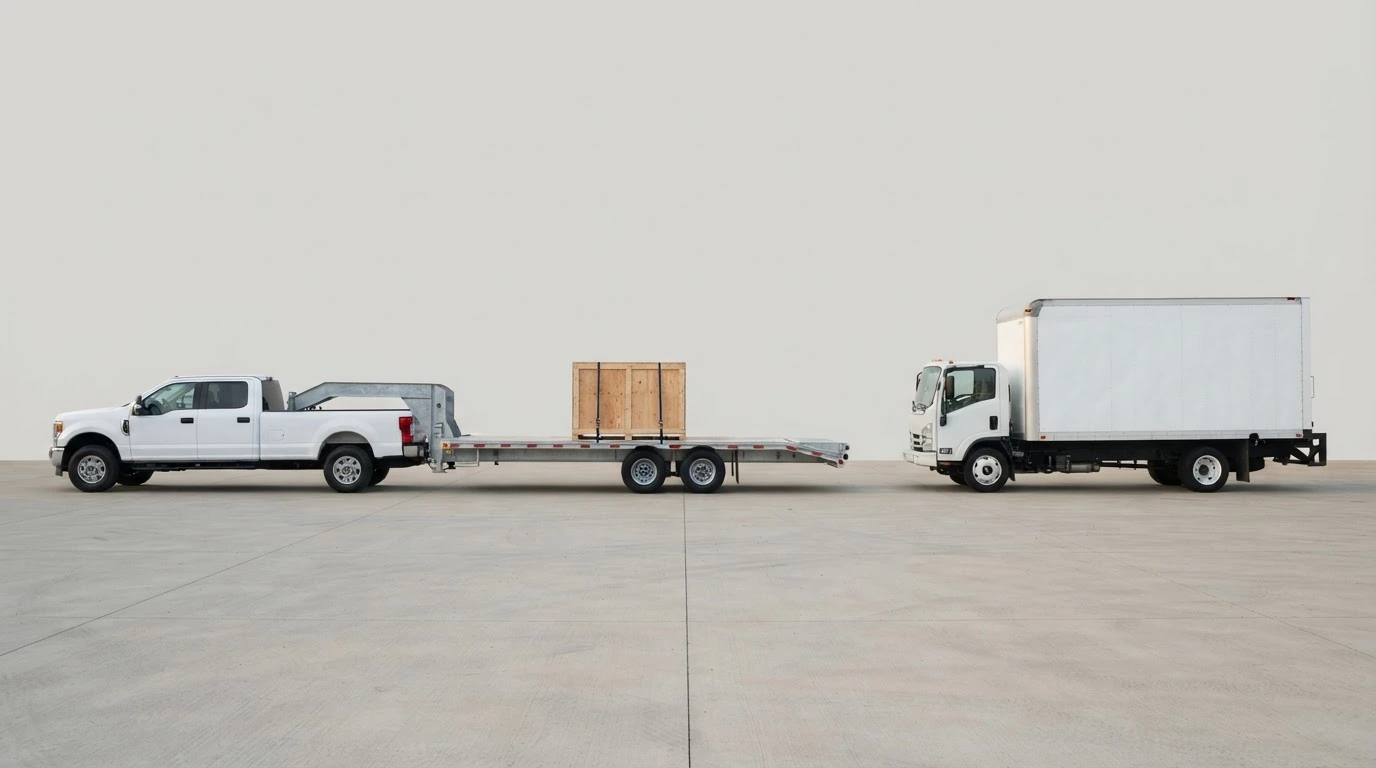
Hot-shot delivery is one way to expedite freight, but the terms are not interchangeable. Hot shot usually describes an urgent ground move built around a pickup or medium-duty truck and a trailer. Expedited freight is the broader service category: depending on the shipment and provider, it may use a cargo van, straight truck, tractor-trailer, specialized ground equipment, or air.
The right choice is therefore not based on urgency alone. Start with the freight’s dimensions, weight, loading method, protection needs, route, and required delivery time. Then ask which available service can meet those requirements without forcing the load onto unsuitable equipment.
The practical difference
Hot shot is most useful as an equipment-and-use-case description. Current carrier guidance commonly associates it with smaller, time-sensitive loads moved on a dedicated pickup-and-trailer combination. Industrial parts, machinery, construction materials, and other freight that benefits from open-deck loading are familiar examples. A hot-shot move can be local, regional, or long-haul; distance by itself does not define the service.
Expedited freight describes the service objective rather than one vehicle type. Current expedited-service pages show cargo vans, straight trucks, 53-foot tractors, exclusive-use ground vehicles, and specialized or air options. That range matters when the urgent freight is enclosed, palletized, temperature-sensitive, high-security, too large for common hot-shot equipment, or better served by a different mode.
Direct, dedicated movement is not a reliable dividing line. Hot-shot service is commonly dedicated, but expedited ground carriers also offer exclusive-use vehicles and uninterrupted routing. Likewise, neither label creates a universal pickup time or delivery promise. The actual commitment depends on capacity, lane, equipment, cutoff time, operating conditions, and the carrier’s quoted terms.
Hot shot and expedited freight side by side
| Decision point | Hot-shot delivery | Broader expedited freight |
|---|---|---|
| What the term usually identifies | An urgent ground move associated with pickup or medium-duty truck and trailer equipment | A faster-than-standard service category that can use several ground equipment types or air |
| Common freight fit | A smaller time-critical load, especially machinery, parts, or material suited to open-deck loading | Urgent freight ranging from small enclosed loads to pallets, full trailers, specialized cargo, or air shipments |
| Equipment question | Does the complete shipment fit the available truck-and-trailer combination, and can it be loaded and secured correctly? | Which mode and vehicle meet the size, protection, security, handling, and timing requirements? |
| Routing | Often dedicated and direct | May also be dedicated and direct; the exact routing is service-specific |
| Main advantage | A focused equipment option for urgent freight that matches the trailer and loading method | More equipment, mode, and service-level choices for different urgent-shipment needs |
| Main constraint | Capacity, enclosure, loading, securement, and equipment availability can narrow the fit | More possible service designs mean the shipper must compare the actual quoted plan, not just the label |
This table is a selection guide, not a statement that every provider uses the same definitions. Carriers and logistics providers may package or name urgent services differently.
Choose hot shot when the equipment is the reason it fits
Hot shot is a strong candidate when all of the following are true:
- The shipment is urgent and can travel by ground within the required window.
- Its total packaged dimensions and weight fit a specific available truck-and-trailer combination.
- The freight is compatible with the offered trailer, such as a flatbed or gooseneck, and can be secured and protected for the route.
- Pickup and delivery locations can safely receive that equipment.
- A dedicated move is operationally justified by the cost of delay.
For example, a crated replacement component needed at a plant may be a hot-shot candidate if it fits the offered trailer, can be loaded at both ends, and the carrier can make the required window. That is only a decision example. It does not establish a particular vehicle, transit time, rate, or service availability for a real shipment.
Do not choose hot shot merely because the load is urgent or relatively small. A weather-sensitive item may require an enclosed vehicle. A high-value or temperature-controlled shipment may need security or monitoring features that the proposed hot-shot setup does not provide. A compact but very heavy piece can also exceed an available truck, trailer, axle, or securement plan even when its footprint looks small.
Choose a broader expedited service when the service design is the reason it fits
Look beyond hot shot when the shipment needs one or more of these capabilities:
- An enclosed cargo van, straight truck, or tractor-trailer.
- More capacity than the available hot-shot equipment can safely provide.
- Temperature control, enhanced security, specialized handling, or another documented service feature.
- An air option because the required delivery window cannot be met by ground transportation.
- Cross-border coordination or a provider-specific network that is material to the lane.
- A particular exclusive-use, nonstop, or time-critical service whose quoted terms fit the shipment.
The broader expedited category does not automatically mean a larger vehicle, a transfer between modes, or a less direct route. ArcBest, for example, describes exclusive-use ground expedite across several vehicle sizes, while FedEx Custom Critical lists both surface-expedite and specialized options. Those are carrier-specific examples, not promises about every expedited provider.
Three comparisons that prevent the wrong choice
1. Compare usable capacity, not the freight’s name
“One machine part” can still be too long, tall, heavy, or awkwardly balanced for a particular trailer. Quote the complete packaged unit, including the pallet, crate, skid, bracing, and any overhang. If there are multiple pieces, provide the dimensions and weight of each piece rather than only a shipment total.
The provider should confirm the proposed vehicle and loading arrangement. A generic statement that the freight is “hot-shot size” is not a substitute for equipment-specific capacity and securement review.
2. Compare the documented movement plan
Ask whether the quoted service is exclusive use, whether intermediate handling is expected, when the vehicle can arrive for pickup, and what delivery commitment is actually offered. Do not assume that every hot-shot load is nonstop or that every expedited shipment changes hands.
If timing is critical, put the required delivery date and time in the request and confirm how the provider documents the commitment. “As soon as possible” is less useful for planning than a precise ready time, site hours, and need-by time.
3. Compare total operational fit, not the line-haul price alone
The least expensive urgent option is not useful if the equipment cannot load the freight, the destination cannot receive it, or the service misses the required window. Compare the quoted equipment, timing, route assumptions, special handling, and additional charges together.
Price can change with distance, capacity, urgency, equipment, dimensions, weight, protection requirements, pickup or delivery constraints, and permit needs. A shipment-specific quote is more reliable than a generic hot-shot-versus-expedited price rule.
Questions to ask before booking
Use the same questions for both service labels:
- What exact vehicle and trailer or mode will be used?
- What are the usable weight and dimension limits for that equipment?
- Is the vehicle exclusive to this shipment?
- Is the quoted movement direct, or are transfers or intermediate handling planned?
- What pickup time and delivery commitment are written into the quote?
- How will weather, traffic, driver-hour limits, or other operating constraints be handled?
- What loading equipment is required at origin and destination?
- How will the freight be secured and protected from weather or damage?
- Are permits, escorts, hazardous-material requirements, temperature control, or special security involved?
- Which charges or conditions are not included in the initial rate?
For interstate commercial transportation, carrier registration and compliance requirements can depend on vehicle weight, cargo, and operation. FMCSA states that interstate operators hauling cargo in vehicles or combinations at 10,001 pounds or more generally require a USDOT number, while additional rules can apply based on the shipment and vehicle. Shippers should use a properly qualified provider and let the carrier determine the regulatory requirements for the actual move rather than relying on the marketing label “hot shot.”
Details to have ready for an accurate comparison
Current expedited quote forms ask for concrete shipment facts because those facts drive equipment and service selection. Prepare:
- Origin and destination ZIP codes, full site type, operating hours, and contact details.
- The ready date and time plus the required delivery date and time.
- Piece count and packaged dimensions and weight for every handling unit.
- Commodity description and freight class when applicable and known.
- Packaging method, loading orientation, and whether stacking is allowed.
- Dock, forklift, crane, ramp, liftgate, or other loading requirements at both ends.
- Any limited-access, appointment, inside-service, residential, job-site, or after-hours condition.
- Hazmat status, temperature range, declared value, security needs, and other special handling.
- For exposed freight, weather-protection and securement requirements.
With those details, a provider can compare real equipment and service plans instead of treating “hot shot” and “expedited” as abstract choices.
Make the decision shipment by shipment
Hot shot is a focused urgent-ground option when the freight, loading method, and available pickup-and-trailer equipment line up. Expedited freight is the wider category to consider when the shipment needs a different vehicle, more capacity, specialized handling, air, or another time-critical service design. The deciding evidence is the quoted equipment and movement plan, not the service name alone.
Shipocity is backed by a team with more than 40 years of combined logistics experience. Through established industry relationships, the platform helps businesses compare competitive freight rates for their specific shipment.
Compare expedited freight options.