Expedited Freight vs Air Freight
Compare expedited ground and air freight by door-to-door timing, service commitment, shipment fit, handoffs, restrictions, and complete quoted cost.
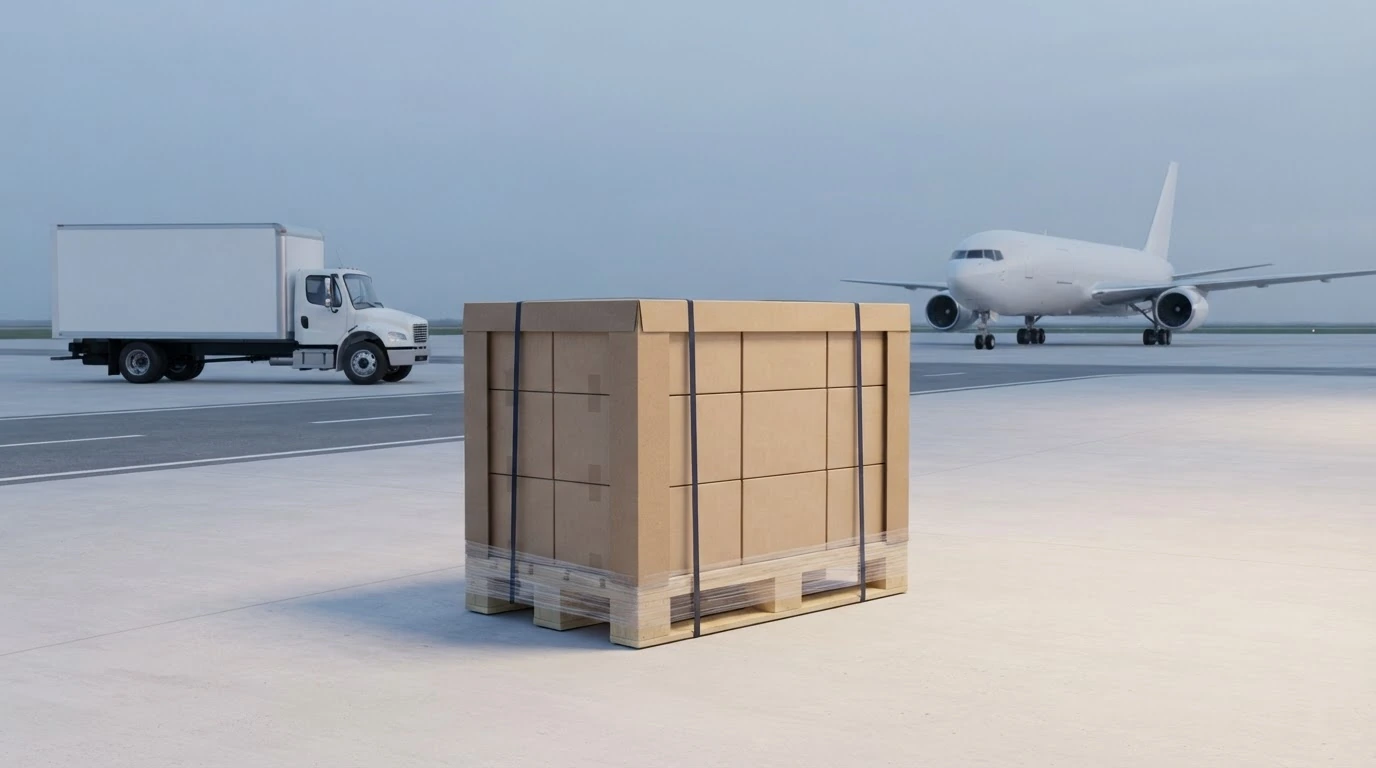
Expedited freight and air freight answer different questions. Expedited freight describes the service objective: move a shipment fast enough to meet a time-critical requirement. Air freight describes the transportation mode: move cargo by aircraft for at least part of the route. An expedited plan may use a dedicated ground vehicle, a scheduled flight, a next-flight-out service, a charter, or more than one mode. Air freight, meanwhile, can be urgent or can move under a slower, non-guaranteed service.
For a shipper, the useful comparison is usually ground expedited service versus an air-based option for the same packaged freight and required delivery outcome. Air deserves serious consideration when ground transit cannot meet the deadline. Ground expedited may be the stronger option when it can meet the requirement without airport tender, flight, recovery, and final-mile handoffs.
The carrier and agency pages referenced below were checked July 22, 2026. Service names, availability, cutoffs, restrictions, and commitments can change by shipment and lane.
The labels are not opposites
Current provider menus show why the terms overlap. UPS Express Critical lists expedited options that include next-flight-out, surface, charter, and hand-carry services. Its surface product uses exclusive-use ground equipment, while its next-flight-out product uses commercial airline capacity. FedEx separately describes an Air Expedite service for deadlines that ground transportation or conventional air freight cannot meet.
Those examples establish two practical points:
- Expedited freight does not automatically mean air.
- Air freight does not automatically mean the fastest or most committed service.
UPS currently lists multiple international air-freight tiers, including faster and consolidated options, and marks several as non-guaranteed. FedEx likewise presents air services with different delivery speeds. A shipper should therefore compare the quoted route, service level, and commitment rather than treating the word “air” as a delivery promise.
Ground expedited and air freight side by side
| Decision point | Ground expedited option | Air-freight option |
|---|---|---|
| What it describes | A time-critical service performed by road | A transportation mode with multiple service levels |
| Typical operating plan | May use dedicated or exclusive-use equipment, direct routing, or specialized coordination; the exact model is provider-specific | May use scheduled aircraft, next-flight-out capacity, or a charter, plus ground pickup and delivery |
| Best question to ask | Can a road vehicle meet the required door-to-door time? | Which air service and complete routing can meet the required door-to-door time? |
| Handoffs | Potentially fewer on a dedicated move, but this must be confirmed | Usually includes pickup, airport tender, air movement, recovery, and delivery; international moves may add customs |
| Shipment fit | Depends on equipment availability, distance, dimensions, weight, commodity, and location access | Depends on aircraft and service limits, dimensions, weight, commodity, dangerous-goods rules, airport access, and capacity |
| Commitment | Only what the quote and applicable terms state | Only what the selected air service, quote, and applicable terms state |
| Main planning risk | Assuming “expedited” means nonstop, exclusive use, or guaranteed when the quote does not say so | Comparing flight time instead of total door-to-door time, or assuming every air service is expedited |
This is a decision framework, not a universal carrier rule. Providers use different product names and may combine surface and air segments differently.
When ground expedited is worth pricing first
Start with a ground-expedited option when the origin-to-destination distance and freight-ready time make the delivery requirement feasible by road. It can be especially relevant when:
- both locations are reachable without an air transfer;
- the packaged freight is awkward for a scheduled air service;
- a dedicated or exclusive-use vehicle is available for the lane;
- the shipment requires controlled handoffs or specialized road equipment; or
- the complete ground plan satisfies the deadline with enough operational margin.
Do not assume that every expedited-ground quote includes exclusive use, nonstop movement, team drivers, proactive monitoring, or a guarantee. UPS describes those features for specific Express Critical products, not for the entire expedited market. Confirm the vehicle type, whether the freight shares capacity, the planned stops or transfers, pickup timing, tracking process, and stated delivery commitment.
Ground can also lose its apparent simplicity if the shipper overlooks driver availability, weather, traffic, permits, location access, or the actual time at which the freight will be ready. The correct comparison begins with a feasible pickup, not merely a transit estimate that starts after an assumed tender.
When an air-based option deserves the comparison
Evaluate air when a feasible ground plan cannot reach the destination by the required date and time, or when an international lane makes aircraft movement operationally appropriate. Current carrier offerings span several distinct choices:
- scheduled domestic or international air freight with different transit tiers;
- next-flight-out service for especially urgent freight;
- air-expedite networks that coordinate ground pickup and delivery around the flight; and
- charter service when scheduled capacity or routing cannot meet the requirement.
The fastest-sounding product is not automatically the best fit. The quoted plan must account for freight-ready time, pickup travel, airport acceptance and cutoffs, space confirmation, screening, flight routing, recovery, customs when applicable, and delivery from the destination airport. A flight can be fast while the complete shipment misses its required outcome.
Air eligibility also needs to be checked before price becomes the deciding factor. Dimensions, weight, stackability, packaging, commodity, declared value, temperature needs, and aircraft capacity may change the available services. Dangerous goods require particular care. The FAA states that federal Hazardous Materials Regulations govern classification, communication, handling, and stowage, and that U.S. certificated air carriers must have processes for recognizing and refusing noncompliant dangerous-goods shipments. A shipper should disclose the commodity accurately and obtain qualified guidance rather than assuming that a ground-eligible item can travel by air under the same preparation.
Compare the complete door-to-door plans
A useful quote comparison holds the shipment facts and required outcome constant. For each option, ask for the complete movement rather than a headline mode or isolated linehaul segment.
- Define the required delivery outcome. Record the latest acceptable delivery date, local time, receiving hours, and consequence of missing it.
- Confirm the freight-ready time. Include packaging, labeling, documentation, and any time needed to release the shipment.
- Build the ground option. Verify vehicle availability, pickup time, equipment, transfers, tracking, delivery commitment, and accessorial services.
- Build the air option. Verify pickup, airport cutoff, confirmed capacity, service level, flight routing, recovery, customs responsibility when applicable, and final-mile delivery.
- Check eligibility and exceptions. Review dimensions, weight, commodity, dangerous-goods status, location conditions, exclusions, and any required advance booking.
- Compare total quoted cost and commitment. Include pickup and delivery charges, special handling, customs or brokerage when applicable, accessorials, and the precise remedy attached to any guarantee.
This method prevents two common mismatches: comparing dedicated ground service with airport-to-airport air pricing, and comparing a promised door-to-door ground time with an air estimate that excludes pickup or final delivery.
Three shipment scenarios that clarify the choice
These examples are hypothetical decision patterns, not transit promises.
A regional component needed by a fixed receiving time
If a dedicated road option can pick up after the component is ready and still reach the consignee before its receiving cutoff, ground may satisfy the requirement with a simpler movement. Air adds no useful advantage unless the complete air plan improves the delivery outcome.
A long-distance shipment that cannot make the deadline by road
If every feasible ground plan arrives too late, compare scheduled air, next-flight-out, and any other appropriate time-critical options. The choice should be based on confirmed capacity and door-to-door timing, not flight duration alone.
An urgent regulated or unusual commodity
Do not select the mode first. Confirm classification, packaging, documentation, aircraft or vehicle limits, and provider acceptance. The fastest eligible plan may differ from the initial assumption, and an incomplete commodity description can invalidate the comparison.
Information to prepare for both quotes
Provide the same accurate shipment record for every option:
- origin and destination addresses, including ZIP or postal codes;
- contact names, operating hours, and location constraints;
- freight-ready date and time;
- required delivery date, time, and time zone;
- handling-unit count and packaging type;
- final packaged length, width, height, and weight for each unit;
- accurate commodity description and dangerous-goods status;
- declared value and any security or temperature requirements;
- pickup and delivery services such as liftgate, appointment, inside service, or limited-access handling; and
- customs documents and broker responsibility for an international move.
Ask each provider to identify what is included, what remains estimated, what is guaranteed, and which exceptions or refund terms apply. A service name by itself does not answer those questions.
The bottom line
Expedited freight is the urgency requirement; air freight is one possible mode. Price ground expedited first when a feasible road plan meets the real door-to-door deadline. Price air when ground cannot meet it or when the lane and shipment make air the more workable plan. In either case, choose the quoted service that fits the packaged freight, confirmed capacity, complete routing, required commitment, and applicable restrictions.
Shipocity is backed by a team with more than 40 years of combined logistics experience. Through established industry relationships, the platform helps businesses compare competitive freight rates for their specific shipment.
With the shipment details and required delivery outcome defined, compare expedited freight options.