
Expedited Freight Shipping Checklist
Use this expedited freight checklist to confirm the deadline, ready time, packaged measurements, accessorials, service terms, documents, and handoffs before booking.
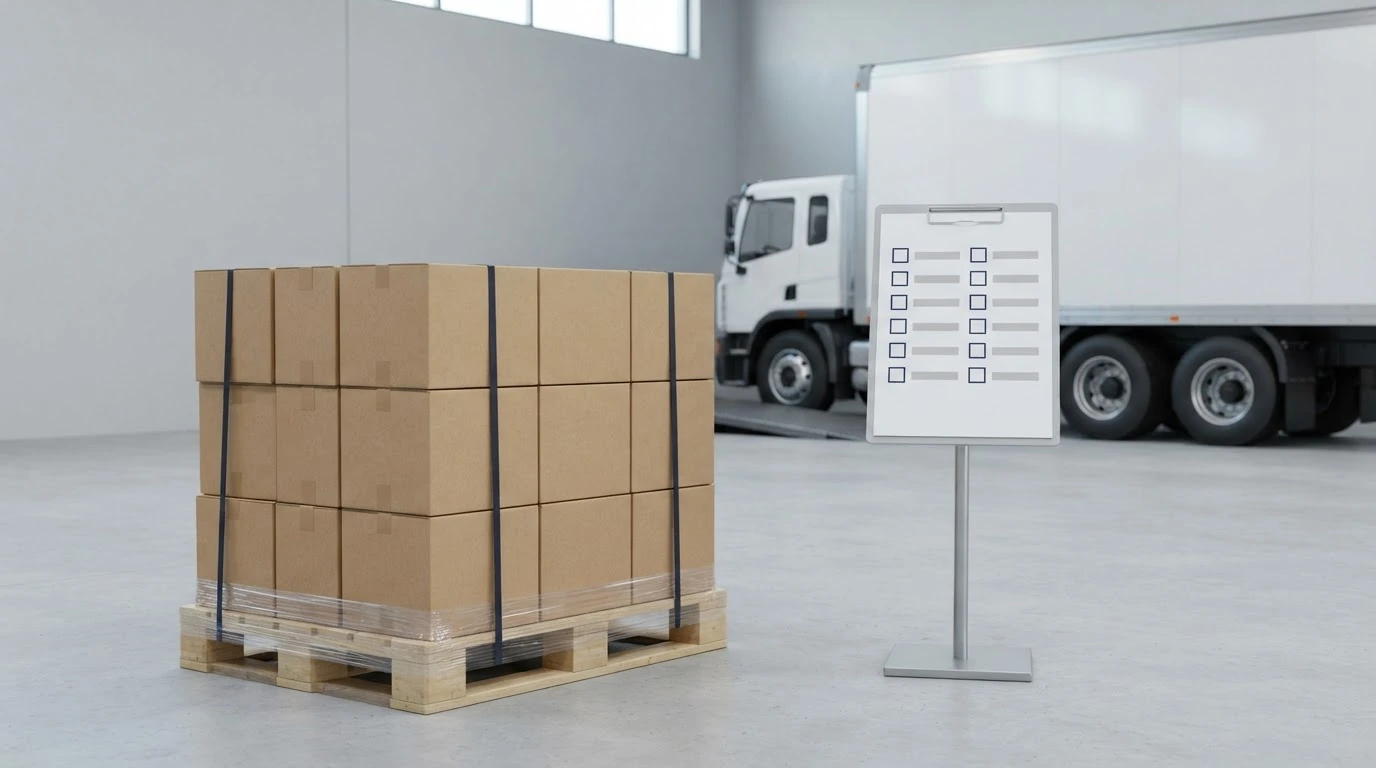
An expedited freight shipment is ready to quote only when the deadline, freight-ready time, packaged dimensions and weight, commodity, pickup and delivery constraints, and required service terms are all confirmed. Speed does not remove those requirements. It makes missing or estimated information more costly because there is less time to correct it.
Use the checklist below before requesting a rate and again before releasing the shipment. It is intentionally carrier-neutral: expedited products, eligibility, capacity, schedules, commitments, charges, and restrictions vary by provider, lane, shipment, and mode.
The official pages referenced below were checked July 22, 2026. Confirm the selected carrier’s current quote and governing terms before booking.
First decide what the shipment actually needs
Write the delivery requirement as a date, local time, time zone, and receiving window. Then distinguish a hard operational deadline from a preference. A production restart, scheduled installation, or customer receiving cutoff may justify urgent transportation; a shipment that can arrive later without a material consequence may not.
Do not use “expedited” as if it named one standard service. UPS, for example, lists separate urgent options including exclusive-use surface transportation, next-flight-out, charter, secure service, and hand carry. FedEx presents several expedited package and freight services with different delivery designs. Those carrier-specific portfolios show why the correct question is not simply, “Is this expedited?” It is, “What exact pickup, transportation, and delivery plan does this quote provide for this shipment?”
Before moving forward, confirm:
- the latest useful delivery date and local time;
- the consequence if the freight arrives later;
- when the packaged freight will actually be ready;
- when the origin can release it and the destination can receive it;
- whether the requested service is available for the lane and shipment; and
- whether the quoted timing is estimated, scheduled, or guaranteed under named terms.
Complete the pre-quote checklist
1. Record the full route and contacts
Provide the origin and destination street addresses, ZIP or postal codes, on-site contacts, phone numbers, operating hours, and time zones. Note whether either location is residential, limited access, a construction site, a school, a government facility, or another location with special entry procedures.
For a hard deadline, call the receiver before quoting. Confirm the delivery entrance, dock or ground-level conditions, appointment rules, receiving cutoff, and who can accept the freight. A faster transit plan is not useful if the destination will be closed.
2. Set a realistic freight-ready time
The ready time should be when the freight is fully packaged, measured, weighed, labeled, documented, and available for pickup, not when packing is expected to begin. UPS states that ready time is one of the factors that can affect transit time for its Express Critical service. Treat a supplier’s unconfirmed release time as a risk, not as a firm pickup plan.
Include the local date, time, and time zone. If loading requires an appointment, security clearance, special equipment, or an on-site escort, include that lead time as well.
3. Measure and weigh the shipment after packaging
Record the final length, width, height, and weight of every pallet, crate, or other handling unit. Include the pallet, wrap, corner protection, bands, and any overhang. ArcBest’s current measurement guidance tells shippers to measure after packaging and include pallets and protective materials in total weight.
Do not estimate from product specifications or reuse dimensions from a differently packed shipment. Save the measurements you submit. Accurate final measurements help the provider evaluate equipment, capacity, handling, and the rate using the shipment that will actually be tendered.
4. Inspect the packaging and handling base
The packaging must suit the product and the selected service. Check that the handling base can support the load, the freight is stable, and the unit can be moved using the equipment expected at pickup and delivery. Keep the load within the pallet footprint when practical, protect vulnerable edges, and secure the freight so it remains unitized.
Carrier rules are service-specific. FedEx’s freight packaging guidance, for example, describes forklift-accessible bases, palletizing, banding, stackability, and prior-approval conditions for particular FedEx freight services. Use that kind of carrier guidance only after identifying the actual service; do not assume one provider’s limits or packaging rules apply to another.
5. Describe the commodity accurately
Provide a plain, specific commodity description and the freight class when it is known and applicable. Also disclose whether the freight is fragile, high value, non-stackable, temperature-sensitive, unusually shaped, or subject to special security or handling requirements.
If the material may be hazardous, stop and have a qualified person determine the applicable requirements before tender. FMCSA explains that hazardous-material offers can require compliant packaging, marking, labeling, placarding, shipping papers, and emergency-response information. An expedited label does not waive those obligations.
6. List every handling unit
State the number and type of handling units: pallets, crates, drums, cartons, or other units. Match the count across the quote request, labels, pickup instructions, and bill of lading. Identify anything that cannot be stacked or that requires orientation controls.
If units differ, provide dimensions and weight for each one rather than only a shipment total. That gives the provider a more useful picture of floor space, equipment fit, and handling needs.
7. Add required accessorials and site constraints
Tell the provider what must happen at both ends of the move. Depending on the location and shipment, that may include a liftgate, inside pickup or delivery, a delivery appointment, residential service, limited-access service, notification before delivery, or specialized loading equipment.
Do not select an accessorial because its name sounds close to the need. Describe the physical situation and confirm which carrier service applies. For example, “no dock; pallet must move from ground level” is more useful than assuming a liftgate alone solves every loading constraint.
8. Confirm the service plan and capacity
Ask what mode and equipment the quote uses, when capacity becomes confirmed, and which handoffs are planned. For air options, ask whether the schedule depends on flight availability. For urgent ground service, ask whether equipment is exclusive use or shared. Do not infer either feature from the word “expedited.”
FedEx notes that the right expedited option depends on what is shipping, where it is going, how quickly it must arrive, and the shipper’s budget. Compare feasible options using the same shipment facts so differences in price and timing reflect the service rather than mismatched inputs.
9. Read the timing commitment precisely
Capture the quoted pickup window and delivery objective in writing. Then ask:
- Is the delivery time an estimate, an appointment, a time-definite commitment, or a guarantee?
- What event starts the service clock?
- Which shipment, location, commodity, weather, holiday, capacity, or documentation exceptions apply?
- Are special bill-of-lading or booking instructions required?
- What remedy, if any, applies if a stated guarantee is missed, and how is it requested?
Do not turn an estimated transit time into a promised arrival in internal notes or customer communication. The quote and governing service terms control the commitment.
10. Prepare matching shipment documents
Make the bill of lading and other shipping documents agree with the accepted quote: shipper and consignee information, handling-unit count, packaging type, commodity description, dimensions, weight, class when applicable, and required services. Include the carrier’s required reference or service notation when the governing instructions call for it.
For hazardous materials, use trained personnel and the applicable regulations. FMCSA states that a carrier may not transport hazardous material unless it is accompanied by a properly prepared shipping paper under the Hazardous Materials Regulations.
11. Set the pickup and delivery handoffs
Give the shipping contact the carrier or provider reference, pickup window, equipment expectation, and escalation contact. Give the receiver the expected arrival window, handling requirements, and inspection instructions. Confirm who will be available if the schedule shifts outside normal hours.
Keep the freight, paperwork, and loading area ready before the pickup window begins. If any material fact changes, such as unit count, dimensions, weight, commodity, ready time, or destination availability, notify the provider before tender and request an updated plan when necessary.
12. Save the final record
Retain the accepted quote, service terms, bill of lading, measurement record, packaging photos when appropriate, pickup confirmation, tracking references, and delivery documentation. Record which dates and times are local to each location.
This file is useful even when the move goes smoothly. It also gives operations, billing, and claims teams a common record if a reweigh, service exception, invoice question, or delivery issue arises.
Use this final go or no-go check
| Check | Go when | Pause when |
|---|---|---|
| Deadline | The required delivery date, time, time zone, and business consequence are documented | “As soon as possible” is the only requirement |
| Freight readiness | Packaging, measurements, weight, labels, and documents will be complete before pickup | The ready time depends on unconfirmed production or supplier release |
| Location readiness | Origin and destination contacts, hours, equipment, and access rules are confirmed | The receiver or loading conditions have not been verified |
| Shipment facts | Commodity, handling units, special characteristics, and accessorials are complete | Material facts are estimates or missing |
| Service | Mode, equipment plan, capacity status, and handoffs are understood | “Expedited” is the only service description |
| Commitment | The written quote and terms explain the timing, exceptions, and any remedy | An estimate is being treated as a guarantee |
If any row is in the pause column, correct it before release. A short delay to obtain accurate information can prevent a rushed booking that never had a feasible door-to-door plan.
What to have ready for the quote
Gather this minimum set in one place:
- origin and destination addresses, ZIP or postal codes, contacts, hours, and time zones;
- freight-ready date and local time;
- required delivery date, local time, receiving window, and consequence of delay;
- handling-unit count and packaging type;
- final packaged dimensions and weight for every unit;
- specific commodity description, freight class when known, and hazardous-material status;
- stackability, declared value, temperature, security, and specialized-equipment needs;
- pickup and delivery accessorials and site constraints; and
- the exact service terms that need confirmation.
Shipocity is backed by a team with more than 40 years of combined logistics experience. Through established industry relationships, the platform helps businesses compare competitive freight rates for their specific shipment.
When the checklist is complete, compare expedited freight options.